

# Son of the Soil.
Nairobi, Kenya
Joined August 2011
- Tweets1.6K
- Following1.5K
- Followers171
- Likes894






Otorison Desmond retweeted

The second man to ever walk on the moon came home and ended up selling Cadillacs at a dealership in Beverly Hills.
Buzz Aldrin was 39 when he stepped onto the moon in 1969. About two years later he was sitting in an Air Force doctor's office in San Antonio, telling someone for the first time that he was depressed. By the end of the '70s he'd been through two divorces and a drinking problem that nearly killed him.
If you've ever hit a big goal and felt weirdly flat a week later, you've had a tiny version of what happened to him. And there's a real reason for it.
Back in the '90s a neuroscientist named Wolfram Schultz recorded single dopamine neurons in monkeys while giving them juice. When the juice came out of nowhere, the neurons lit up. Then he started flashing a light right before the juice, and pretty quickly the monkeys figured out what the light meant. The neurons started firing at the light instead. The juice itself, the thing they actually wanted, didn't get a spike anymore. And if the light flashed and no juice showed up, the neurons dropped below normal.
So your brain cashes in on the dream the moment it starts looking real. By the time you actually get there, it already spent the money, and the only thing left that can still surprise you is losing it.
That's the anxiety this guy is talking about, the one about making it and becoming somebody, and every one of us is walking around with that wiring.
Jim Carrey learned this the hard way. He was the first actor Hollywood ever paid $20 million for one movie, and in 2005 he told a reporter he wished everybody could get rich and famous and get everything they ever dreamed of, just so they could see it's not the answer.
Honestly, the oldest version of this video is in the Bible. Ecclesiastes is written as a king in Jerusalem looking back on his life. He built houses, planted vineyards, dug pools and stacked up silver and gold, and then he called all of it hevel. He uses that word 38 times. It means vapor, like your breath on a cold morning that's gone in a second. Most English Bibles just say "vanity."
My favorite part comes in chapter 9. He tells you to eat your bread with joy, and a few verses later he says "whatsoever thy hand findeth to do, do it with thy might." The guy who called everything vapor still told you to go all in.
Aldrin got sober in 1978 and spent the decades after that trying to get people to Mars, chasing the next big thing without needing it to make him somebody.

Otorison Desmond retweeted
Our parents, the boomers and the X-Gen that we despise, raised doctors, lawyers, teachers and other people of high repute.
They did this out of patience, commitment and determination
We, millennials, are raising idiots, self-entitled rats, hypersexualised characters, social media dimwits and obese bastards.
"I don't want my children to suffer the way I suffered at the hands of my parents."
It is that suffering that made you a successful adult.
Think.
Otorison Desmond retweeted
Rwanda is building an airport big enough for every person in the country to fly through it once a year.
About 14 million people live there. The new airport is designed for 14 million passengers a year. The one they have now handles around 2 million.
So how do you fill that thing? You go get Formula 1.
The track F1 just announced goes in Bugesera, about 40km south of Kigali, right next to that new $2 billion airport. It's a 10-year deal starting in the early 2030s, and it'll be the first Grand Prix in Africa since 1993.
Now look at who owns the airport. Qatar Airways has 60% of it. Qatar Airways is also F1's official airline.
This is where it gets really smart, because Qatar has done this exact thing before. Doha opened Hamad International in 2014 and spent the next decade giving the world reasons to land there, with a World Cup in 2022 and a Grand Prix locked in through 2032. Hamad now handles over 50 million passengers a year in a country of about 3 million people. Rwanda is basically running Qatar's playbook with Qatar as its business partner.
And Rwanda has been setting this up for years. Visit Rwanda, the country's tourism board, got its logo on Arsenal's sleeve back in 2018 for a reported £10 million a year, and later added PSG, Bayern and Atlético. Kigali hosted the FIA's big awards night in 2024, which is where President Kagame first said out loud he wanted a race. The next year it hosted cycling's world championships, the first time they'd ever been held in Africa. It hosted 165 international conferences last year alone.
Tourism brought in $685 million last year from 1.49 million visitors, and gorilla treks were $248 million of that by themselves. For Rwanda that's real money. But you can't fill a 14 million passenger airport with people coming to see gorillas, so the country keeps buying bigger pieces of the world's attention.
South Africa wanted this race too. It has the history, the old Kyalami circuit, and a sports minister who kept saying F1 was coming back. Talks there stalled over problems with the local promoter. Rwanda walked in with government money behind it and a former F1 driver, Alexander Wurz, already drawing the track.
People are going to have strong feelings about this one. Arsenal and Visit Rwanda wrapped up their sleeve deal after last season, following fan protests and a letter from DR Congo's foreign minister calling the club's sponsorship "blood-stained." Five months later, the same tourism board's name is on the title of a Formula 1 race. Critics have called the whole Visit Rwanda strategy sportswashing for years. Kagame's pitch today was about young Africans finally getting to watch the sport at home and picture themselves in it as engineers, and one day as drivers.
The airport is supposed to open in 2028, with the first race a few years after that. If the plan works, a country smaller than Maryland becomes one of the places people across Africa change planes, and the airline that already pulled that off in the Gulf will own most of the terminal.

Africa, we’re back. 🌍
From the early 2030s, the African Grand Prix will join the calendar and take place in Bugesera, Rwanda 🇷🇼
#F1


Otorison Desmond retweeted

With respect, this is nonsense. If you say that a point is 2 steps after the 30th post but within the space enclosed by post 31, that is a very clear location.
Any person who says that it must be 2 steps beyond post 31 is frankly not sane. This is what Mr. Electric posts is trying to suggest.
While you tried to introduce the thesis of sets (understandable since Economics is really just College 1 statistics), the operative field is actually vectors.
Take election day as a vector in ℝ: eₙ₊₁ = eₙ + T.
The dispute is the scalar T.
IEBC: T = 5 years. Pure translation. Fixed step, orbit stable, e₂₀₂₂ → e₂₀₂₇.
Court: the year index is a floor function, ⌊t⌋. "Fifth year" selects the interval [4,5), then the map picks the first admissible Tuesday inside it.
What the Constitution supplies is a partition. Article 259(5)(c) tessellates time into year-cells [eₙ + k, eₙ + k+1). The election operator selects cell k = 4, then projects onto the first admissible Tuesday inside it.
Otorison Desmond retweeted

People defend capitalism because they confuse it with commerce. They believe “capitalism” is when people start businesses and sell things.
If people understood that the thing they call capitalism and love so much is actually just commerce and that it’s not the same thing as capitalism, they would feel very different.
This is because a local baker selling bread, a mechanic fixing cars, or an artisan selling wares on a digital storefront is a sign of commerce in a market economy, which is simply a mechanism for exchanging goods and services based on supply and demand.
Needless to say, this has existed for thousands of years before capitalism was created.
As economic historian Fernand Braudel pointed out, commerce and capitalism are not only distinct; but historically, they have often operated at cross-purposes.
According to Braudel, ordinary commerce is competitive and transparent, while capitalism is anti-competitive and deliberately opaque, making it a zone of privilege held by a small elite who bend the rules in their favour.
Braudel further argues that commerce, or the market, is horizontal, transparent, and competitive and as old as civilization itself. It involves individuals or small groups trading goods, where barriers to entry are low, no single player dominates, and profit is a reward for fulfilling a specific need.
Capitalism, meanwhile, is a specific institutional arrangement that emerged relatively recently in human history, around the 16th to 17th centuries. It is NOT just people “trading stuff”. It is instead the legal and financial system where the means of production are privately owned, and the primary objective is the continuous, infinite accumulation of capital.
Because of this accumulation-obssessed nature of capitalism, when it scales up, it seeks to eliminate the free play of commerce to protect its investments. True market competition is risky for massive capital as it drives prices down and threatens profit margins.
Braudel contended that capitalism only begins where commerce ends. It is the zone of high finance and state collusion. Because it operates across vast distances such as the 17th-century spice trade, information takes months to travel, which creates a deliberate lack of transparency.
Braudel noted that the great capitalists of the early modern era in Madeira and Venice or the Dutch East India Company, never wanted to compete in a fair, transparent market because competition slices profit margins to the bone. Instead, they secured royal charters, exclusive trading rights, and naval protection. At the same time, the state granted them legal monopolies, effectively outlawing competition.
Therefore, capitalism naturally trends toward creating monopolies and securing state interventions like bailouts, subsidies, and regulatory capture to shield itself from the very market forces it claims to champion. In fact, the most important takeaway from Braudel’s analysis is that capitalism is NOT the natural evolution or the highest form of the free market, it is its dark shadow.
So, when our lizard overlords use “free market” and “capitalism” interchangeably, they’re deliberately hiding this distinction and using the moral legitimacy of the hard-working, transparent business owner to defend the structural privileges of the protected financial elite and its regulatory capture.
If ordinary people could comprehend these distinctions, many self-described “capitalists” would realise they are just pro-commerce, and actually anti-capitalist, because it would be clear that defending “capitalism” means defending the right of a small parasite class to bypass the market entirely.


Otorison Desmond retweeted

Once You Decide You Want to Move Forward in Life, Cut These 7 Things Off Immediately
Otorison Desmond retweeted
If You’ve Suddenly Become Prayerless, Lazy, or Spiritually Cold — Do These 9 Things Immediately Before it Becomes Too Late!
Otorison Desmond retweeted

Someone rich once told me:
"Money loves water."
It took me years to understand...
Otorison Desmond retweeted

A while back I met a guy who told me a very interesting story.
While working as a storekeeper for an electronics shop, he started stealing items and selling them. At first it was one item, then two, but very soon he was in deep. With a stock take looming, he came up with a plan.
He started frequenting a local changaa den where criminals, pastors, lawyers, and politicians all mixed. He pretended to be drunk and lamented how broke he was - even though the store he worked in kept the money stored in buckets. Very soon there was a break-in. After the stock take, all the items he’d stolen were added to the police OB. This was before CCTV was common.
*Misinformation can be wielded like a sword.* We must always ask ourselves: who stands to benefit from any misinformation being peddled? Nothing is random. Absolutely nothing.
Otorison Desmond retweeted
My cousin told me two days ago that the strike won't happen. She was right.
I actually suspected from the beginning the strike was a set up. It was staged as a vent to deflate our frustrations with fuel prices. Since when have Matatu owners cared for passengers? If it wasn't for their lobbying, we would probably have a mass transit system by now. They released the vent, now the steam with which Kenyans could have protested against the fuel prices is gone.
It's called catharsis, a term which many of us don't know because we believed literature is irrelevant to the market, and which most of your children will never hear about because literature is now a pathway.

Otorison Desmond retweeted

The quiet grief of adult friendship: One of the most beautiful articles I've read in a while. Hits hard
timesofindia.indiatimes.com/…

Otorison Desmond retweeted

Winston Churchill fought his depression with bricks. He'd lay them for hours at his country home in Kent. He joined the bricklayers' union. And in 1921 he wrote about why it worked. It took psychology another 75 years to catch up.
He called his depression the "Black Dog." It followed him for decades. His method for fighting it back was as basic as it sounds: laying brick after brick, hour after hour.
Churchill spelled out his theory in a long essay for The Strand Magazine. People who think for a living, he wrote, can't fix a tired brain just by resting it. They have to use a different part of themselves. The part that moves the eyes and the hands. Woodworking, chemistry, bookbinding, bricklaying, painting. Anything that drags the body into a problem the mind can't solve by itself.
Modern psychology now calls this behavioral activation. It's one of the most-studied depression treatments out there. Depression sets a behavior trap. You feel bad, so you stop doing things, and doing less means less to feel good about. Feeling worse makes you do even less. The loop tightens until you can't breathe inside it.
Behavioral activation breaks the loop from the action side. You schedule the activity first, even when every part of you doesn't want to. Doing it produces small rewards: a wall gets straighter, a painting fills in, a messy room gets clean. Those small rewards slowly rewire the brain. Action comes first, and the feeling follows.
Researchers at the University of Washington put this to the test in 2006. They studied 241 adults with major depression and compared three treatments: behavioral activation, regular talk therapy, and antidepressants. For the people who were most severely depressed, behavioral activation matched the drugs. It beat the talk therapy. A 2014 review of more than 1,500 patients across 26 trials backed up the result.
Physical work like bricklaying does something extra on top of this. It crowds out rumination, the looping bad thoughts that grind people down during the worst stretches of depression. Bricklaying needs both hands and gives feedback brick by brick: each one is straight or crooked. After an hour you can see exactly how much wall you built. No room left for the mental chewing.
The line George Mack used in his post, "depression hates a moving target," is good poetry. The science behind it is sharper. Depression hates a brain that has somewhere else to be.


Otorison Desmond retweeted
Nimekaa hivi nikakumbuka kuna ng’ombe imezaa mara saba saa hii na haijawahi shiriki kwa tendo la uzazi 😩😩. Kila inapopata joto, inaitiwa binadamu anaiwekea mkono West Pokot. Zero romance zero concent ata githeri haipewi jameni . What a terrible life.
It has also occurred to me that the last untribal election was 2002 when Kibaki went against Uhuru. Anybody born after that has suffered tribal elections like our friend ng’ombe.
This election looks like we are gearing for another hand inside West Pokot. Eloi Eloi, mashada fangi gani.
---
Otorison Desmond retweeted
#BookReview
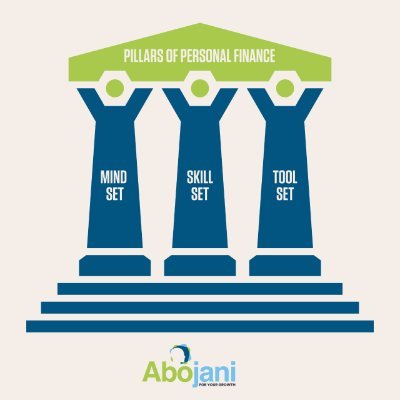
5 MANTRAS OF RETIREMENT by Dr. Edward Odundo
After 16 years as CEO of Kenya’s Retirement Benefits Authority, Dr. Edward Odundo finally retired in June of 2017, facing the very system he had long helped shape. For 4 decades, he had been busy right at the heart of Kenya’s financial markets having worked at the NSE, IRA, KRA and now RBA……but nothing ever prepared him even for the silence in his own home on the next Monday after his retirement.
The transition was just deeply personal.
His three phones, once constantly alive with calls and decisions, went quiet. His wife, who was also an early riser, was still working and his four daughters were all grown with a life of their own……


Otorison Desmond retweeted

Yesterday, Someone told me: "The places you guys go for walks are so green, clean and beautiful"
Yes.. they are! And do you know why? Because the humans that live there have intentionally let the places stay green by not aimlessly cutting down trees, and they also keep the places litter free by being intentional about how they manage their waste.
A beautiful environment doesnt come by chance. It takes everyone's collective effort.
The places we walk are in people's residential areas. No kanjo hovering around to ensure people don't litter and no KFS to protect the trees.
We can all make an effort to protect our environment. And we can all help reduce concrete jungles by creating our own green spaces.
I once read a quote that said " If everyone keeps their front yard clean, the whole street will always remain clean"
Think about that..


