

The premier technology platform for breakthrough mental health treatment and research.
San Francisco, CA
Joined May 2020
- Tweets1.2K
- Following372
- Followers969
- Likes791





Pinned Tweet
Learn more about our collaboration with the APA: osmind.org/blog/osmind-apa-c…

Some people have tried three antidepressants. Five. Seven. And still haven’t found meaningful relief. That’s treatment-resistant depression (TRD), and an estimated 4 million Americans are living with it. Today, for the first time, it has its own awareness day.
We’re proud to join @COMPASSPathway and leading advocacy organizations in marking #TRDawarenessday.
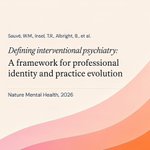
Across the Osmind community, we see what’s possible when people with TRD reach clinicians who specialize in interventional treatment. Earlier this year, we helped define “interventional psychiatry” in Nature Mental Health, because shared language is how a field grows and how more patients find their way to it.
Awareness is the first step. Earlier recognition is the next. Our mission is to help clinicians bring evidence-based treatments to the patients who need them most.
If you or someone you love is living with TRD, you are not alone.
#TRDawarenessday #DepressionAwarenessMonth #MentalHealth #InterventionalPsychiatry

"Anything that isn't directly related to that is something that we can potentially partner with Osmind with." - Michael Dinh, MD
Revenue cycle management, charting, claims are all integrated. The alternative was two psychiatrists spending their week fighting for billing and haggling with insurance instead of being present with patients.
Amast Health never had to build a back office because Osmind handles it all. Now Amast can focus on deliverying breakthrough treatments safely and profitably.
Amast Health built a Spravato practice from scratch, but operations consumed precious time.
"The things that we didn't have a plan for yet were the things that Osmind was gonna take care of."
Compliance, claims, payer contracts, and the revenue cycle required for scaling with insurance in interventional psychiatry.
“ Osmind had already really positioned themselves as the EMR for interventional practices. I knew they really built out their system very well.“
Full story on Amast Health building for psychiatry's next era at the link in comments.
full story: osmind.org/blog/amast-health…

For two years, Sahab Yaqubi, M.D. ran his EHR in one system and his billing in another, connected by a clearinghouse and a shared folder.
"The problem was that there were several systems. Here it's all one."
PathWave Psychiatry now runs more than 220 encounters a month with Dr. Yaqubi as its only prescribing clinician, offering Spravato, TMS, and medication management to patients with treatment-resistant depression and anxiety.
On Osmind 360, the practice collects from payers in about 26 days, ahead of the 35-day industry norm.
For the first time, he can see his own revenue cycle numbers.
“If you want to do simple medication management, without depending on Spravato prior authorizations, maybe other options can be helpful. But for an interventional psychiatry practice like ours, having the EHR, billing, and authorization workflows integrated in one platform has been a significant improvement”
osmind.org/blog/pathwave-psy…

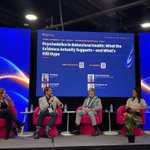
That's a wrap on back-to-back conferences: Behavioral Health Tech in Nashville and ASKP³ Mastering the Essentials in Denver. Thank you to everyone who stopped by our booth and to the speakers who sharpened our thinking.
At BHT, our CEO Lucia Huang joined the psychedelics panel, which quickly converged on one theme: psychedelics in real-world practice will bring a level of complexity clinical trials haven't yet contemplated.
Takeaways from both events:
Matching patients to treatments. If multiple psychedelic therapies reach FDA approval, how will clinicians know which is right for each patient, and when? Nate Mohatt of ARPA-H made a compelling case for precision psychiatry and objective biomarkers to tailor treatment.
Practice guidelines can't come soon enough. Sarah Norman shared the work BrainFutures is doing to establish them, while earning more laughs than any moderator we've seen :)
Treatment is changing shape. Scott Shannon, MD, of The Wholeness Center put it well: the field is moving from three visit types (evaluations, therapy, and medication management) to complex, multi-hour treatments that combine dosing, therapy, and monitoring. In Denver, we saw it firsthand. More practices are offering ketamine, Spravato, and TMS together, and many are preparing for psychedelic treatments if and when they're approved.
The field now has a shared definition. Our team recently published "Defining Interventional Psychiatry" in Nature Mental Health (link in comments).
Operations set the ceiling on growth. Credentialing, prior authorizations, billing, charting, patient intake and retention, and REMS submissions all cost practices revenue and time.
That last one is where Osmind comes in. As the partner to 1,000+ practices and 15+ life sciences companies, we give clinicians psychiatry's leading technology platform plus back-office services like revenue cycle management, so they can bring these treatments to the patients who need them most.


What breaks when your interventional psychiatry practice grows faster than the systems supporting it?
More inquiries can mean more missed follow-ups. More referrals can leave teams chasing the next step. More capacity can sit unused while the same bottlenecks keep people from starting treatment.

We ran a session with Rise4 to help you find and close those bottlenecks, and wrote-up a practical guide (linked in comments) on non-obvious ways to find more patients in your own panel.
In a typical 300 to 400 patient panel, at least 50 to 60 patients would likely clear prior authorization for TMS or esketamine right now.
Most practices go looking for new demand before they look at that.
This pt. 1 of this guide, Jake Buchanan, Justin Gammill, and our own William Sauvé, MD cover:
•How to find patients in your own panel
•A five-part referral engine
•An exit folder idea you can take with you
Before you spend money on marketing or ads, start with shoring up your systems and look to your existing patient panel. Full guide:
osmind.org/blog/find-tms-spr…

We’re honored to have @TIME recognize Osmind as one of the World's Top Health Tech Companies of 2026!
This is the second year we made this list. What makes our mission worthwhile is the people we serve—psychiatrists and nurse practioners delivering novel treatments for depression, researchers advancing psychedelic medicine, practices scaling operations with our platform.
2026 and 2027 are breakthrough years for fast-tracking psychedelic approvals. As we sail into uncharted waters, we're working hard to ensure practices can deliver them safely and profitably when the time comes.
Thank you TIME and thank you to all the mental health innovators that inspire us every day!

In 2020, our co-founders, Lucia Huang and Jimmy Qian started knocking on clinic doors because they’d seen what ketamine could do for patients who'd run out of treatment options, and how hard it was for independent practices to actually offer it. That's why they built Osmind.
Today, Osmind powers the largest network of interventional psychiatry practices in the country, and we're proud to sponsor @American Society of Ketamine Physicians, Psychotherapists and Practitioners (ASKP3)s Mastering the Essentials again this year.
Whether you're launching your first ketamine program or scaling into Spravato and TMS, we're here to help you automate admin and capture more revenue, so you focus on what matters. Good medicine can and should be good business.
Find our team at our table in Denver, September 25–27. We've got an offer just for Mastering the Essentials attendees.

You know the patient who arrives with a coping strategy that was adaptive at twenty-four and calcified into a constraint at thirty-four?
Your psychiatry practice can do the same thing.
The systems that got you from zero to one work fine at low volume. They work because someone knows the workarounds.
Then you add a clinician, a treatment room, and another modality.
Growth starts feeling like overhead, because you’re likely running your practice on tools that constrain over time.
If your net collection rate is under 95%, revenue is leaking somewhere for care you already delivered. We've seen gaps run well into six figures a year, on work already done.
We wrote up the six places that gap costs practices money, and the four-minute test that tells you whether it's costing you (link below)👇

diagnose and fix your revenue gaps: osmind.org/blog/where-is-you…

“Interventional psychiatry” has been part of the field’s vocabulary for years, but there has never been a formal definition of what it really means.
Our new paper published in Nature Mental Health, “Defining interventional psychiatry: A framework for professional identity and practice evolution,” offers a clear framework for what the field is, what distinguishes it, and how it should evolve.
Nine leaders spanning clinical practice, research, academia, and industry came together to develop it: William Sauvé, MD, Thomas Insel MD, Brittany Albright MD, MPH, DABOM, Martha B. Koo, M.D., LFAPA, FASAM, FCTMSS, Rob Berman, Stephen M. Stahl, MD, PhD, DSc(Hon), DMedSci (Hon, Cambridge), Husseini Manji, MD, FRCPC, Roger McIntyre, and Jimmy Qian.
Their central argument is simple: interventional psychiatry is not defined by a list of tools or procedures. It is defined by the integration of psychiatric judgment with the direct delivery or oversight of specialized treatments, including responsibility for patient selection, real-time management, and longitudinal care.
The paper also proposes a risk-based framework for training and credentialing, with standards matched to procedural complexity and safety rather than a one-size-fits-all certification model.
Osmind is proud to support more than 1,000 interventional psychiatry practices nationwide. A clearer definition can help establish the field’s boundaries, strengthen its professional identity, and guide the next chapter of training, practice, and patient care.


If COMP360 is approved, what will it actually take for a clinic to deliver psilocybin treatment safely?
Join Stephanie Knatz Peck, Ph.D. (Co-Founder and CCO, Strata Mental Health) for a 30-minute conversation in the Psychiatry Collective on what site readiness really looks like.
We'll cover:
• Preparing patients before dosing
• Managing distress during a session
• Safeguarding patients in non-ordinary states
• What changes between trial conditions and real-world delivery
Dr. Knatz Peck was an investigator and therapist on pivotal Phase 2 and 3 psychedelic trials and helped build COMP360's support and monitoring training.
Second half is open Q&A.
Register: link in comments →
COMP360 is investigational and not currently approved by the FDA.

Join the Psychiatry Collective to join: osmind.org/join-community?ut…
Already a member? Register for the event here: community.psychiatrycollecti…

SPRAVATO® providers: "What's the lesson you learned too late?"
That question sparked a lively discussion inside the Psychiatry Collective last week.
Several clinicians answered directly regarding what caught them off guard and what they would tell themselves if they could go back in time.
Also trending in the Psychiatry Collective right now:
•rTMS with an Inspire implant. A provider had a patient who met every criterion except the hardware in his neck. Clinicians are split on this one.
•A growing vault of COMP360 and psychedelic practice resources. Guides to staffing, infrastructure, rollout timing, and a checklist of what to do before these treatments reach the market.
•Get support from your interventional psychiatry peers and join weekly live virtual events.
Join free at with the link below:

Not a member yet? Join the Psychiatry Collective for free: osmind.org/join-community?ut…