

Individually tailored academic and wellbeing support for neurodivergent students and apprentices across the UK.
United Kingdom
Joined March 2024
- Tweets266
- Following306
- Followers21
- Likes182




Why do apprentices with learning difficulties and disabilities face higher dropout rates?
This often happens because their needs aren’t fully met.
Societal barriers and misconceptions can create challenges and hinder success.

➡ Improved performance: When people have the tools and support they need, they can work more efficiently and effectively.
How we can help:
Our 5 step wrap around support services at Optimum Student Support help reduce dropout rates by removing barriers and providing the necessary support for apprentices to complete their programmes. Learn how lnkd.in/eGkJjpzT
Dyslexia is often misunderstood as a barrier or weakness, but it’s actually an opportunity to embrace a new way of thinking 🙌
When we make our workplaces more accessible, we can empower dyslexic individuals to embrace their talents.

Why dyslexia is a strength:
- Creative Problem-Solving: Dyslexic people often think differently and find creative solutions to problems.
- Innovative Thinking: Many dyslexic individuals have great creative skills, bringing new ideas and solutions.
- Strong Visual Skills: People with dyslexia often have strong visual and spatial skills, which are valuable in many tasks.
Discover our dyslexia support services: lnkd.in/eGkJjpzT
Did you know there’s funding available to help you create a more inclusive and supportive environment for your apprentices? 👀

How can LSF help?
➡️ Reasonable Adjustments: Tweak training programmes to fit the needs of apprentices with learning difficulties and disabilities, so they can fully take part and succeed.
Learn more
Optimum Student Support guides you in maximising this funding, ensuring you can provide the best possible support to your apprentices: optimumstudentsupport.co.uk/…
Did you know nearly 20% of individuals aged 16-64 in England have a learning difficulty or disability?
And many don't feel safe declaring their needs.
This is why we are dedicated to working with employers and training providers in supporting their apprentices.

Our goal is to remove barriers, create safe and supportive environments where every apprentice can thrive.
Discover how we can help: optimumstudentsupport.co.uk/…
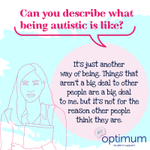
The diagnostic criteria for autism focuses on a deficit in socio-communication–but let's look at it from a different angle 👀
The way autistic people and neurotypical (NT) people socialise can be different, not wrong.
🧠 Autistic sociality tends to be more logical, while neurotypical sociality follows more unspoken social rules.
Neither is better or worse—just different.
Learn how we support neurodivergent learners optimumstudentsupport.co.uk/…