

Authenticate Everything. Trust Nothing Less.
Joined August 2025
- Tweets141
- Following4
- Followers23.2K
- Likes49





Deutsche Bank building regulated custody for BTC and ETH. JPMorgan pushing JPM Coin onto Ethereum. Banks won't touch an asset without proper verification rails first.
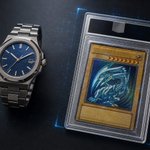
Your Rolex or your Charizard deserves the same standard. That's what OpenCheck validators are built for.

Hot CPI print, Fed staying hawkish, tech stocks bleeding across Asia and the US. Classic risk-off week.
Meanwhile a verified Rolex or a graded Charizard doesn't care about inflation data. Authenticity isn't something a Fed speech can reprice.
That's what a DAV Certificate locks in, permanently.

Tokenized assets on Citi's radar hitting $8.2T by 2030, CCIP becoming the interoperability standard. TradFi keeps building verification rails for everything that moves value.
Physical collectibles are still catching up. A Rolex or a Charizard needs the same trust layer, just on-chain instead of a vault.


How does AI Vision actually catch a fake?
It checks things human eyes miss at normal speed:
- micro print patterns
- edge wear consistency
- material reflection under light
- serial/engraving precision
Then validators confirm with real expertise. Machine speed + human judgment.

You: *sends Charizard to PSA*
PSA: see you in 2027
You: *uploads to OpenCheck*
Validators: already staking BNB on it
AI Vision: already scanning
You: wait that's it?
Some of us just don't have 90 days to give away for free.
Quick breakdown: what makes a DAV Certificate different from a PDF cert?
1. Can't be edited or deleted
2. Tied to validator consensus, not one person's opinion
3. Lives on BNB Chain forever, checkable by anyone
4. Follows the item through every resale
Provenance that actually holds up.

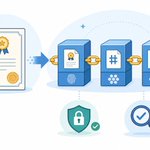
Paper certificates of authenticity get lost, faked, or shoved in a drawer. A DAV Certificate lives on-chain forever, tied to the item itself, checkable by anyone, erasable by no one.
That's the gap between a piece of paper and real provenance. #OpenCheck

Charles Schwab just added LINK for 40M brokerage accounts. Institutions are done arguing whether tokenized assets need trust infrastructure.
Physical collectibles still lack that layer. A Rolex or a Charizard needs someone to actually verify it's real.
That's the validator's job. Stake BNB, assess the item, earn when consensus backs your call. Entry starts at 0.5 BNB.

CME launching regulated BCH and UNI futures because institutions won't touch an asset without proper risk infrastructure first.
Same logic applies to a $50K Rolex or a graded Charizard. No verified data, no informed decision.
OpenCheck's validator network is building that missing risk layer for physical collectibles.

Centralized graders get paid the same whether they're right or wrong. Our validators only earn when their call holds up under community consensus. That's the whole idea behind Trust-to-Earn. Stake 0.5 BNB, start validating, build reputation on-chain. OpenCheck

S&P Global just acquired OpenZeppelin to bring risk assessment onchain. TradFi wants trust infrastructure for smart contracts now.
Physical assets need that same layer. A Rolex or a Charizard can't be audited like code, but it can be verified by decentralized validators.
That's the gap OpenCheck fills.

CLARITY Act stalls, BTC ETFs bleed, market panics on regulatory uncertainty.
Meanwhile a Rolex or a Charizard doesn't care about Senate votes. Authenticity isn't subject to legislation, it's verified by consensus.
That's why we're building trust infra that doesn't wait on DC.

Quick lesson: centralized grading = one expert, one opinion, one point of failure. Decentralized authentication = multiple validators independently verify, each staking BNB on their call. Wrong calls cost them, right calls earn them. That's Trust-to-Earn, consensus applied to physical goods.

TCG card auction volume keeps setting records this year. PSA backlog still sits over 2M submissions, months of waiting for a single grade.
OpenCheck validators stake BNB and clear items in 48hrs avg. Authentication turns into a yield source, not a bottleneck.

Block just filed for a bank charter to custody BTC and stablecoins. Institutions building trust layers for digital assets, finally.
Physical collectibles still don't have that. A Rolex or a Charizard has zero on-chain trust layer.
That's the gap OpenCheck fills.

$320M gone from Liquid Network. Attackers call themselves "white hats," no proof funds are coming back.
"Trust me" isn't a security model. Never was.
OpenCheck exists because every claim needs on-chain proof, not a promise. DAV Certificates, validator consensus, nothing taken on faith.

$900M into BTC/ETH ETFs. BTC at 81K. Institutions racing back in.
Dormant wallets holding 626 BTC just woke up too, first move in years.
Capital moves in seconds now. Your graded Charizard still sits in a warehouse for 65-150 days.
OpenCheck fixes the physical side. 48hr authentication, on-chain certs.

Hands On with Our CEO!
A huge thank you to everyone who joined our verification experience event! Our CEO personally walked everyone through the platform workflow on site, successfully completing real time verifications for both watches and collectible trading cards.
✨ Coming Soon: Our Physical Verification Tool!
⚙️ Seamless Hardware Integration: Faster, smoother, and more reliable authentication.
