

OpenEvidence is the most popular AI for doctors in the United States. Founded with the mission to organize and expand the world's collective medical knowledge.
Miami, FL & San Francisco, CA
Joined November 2022
- Tweets585
- Following410
- Followers38.2K
- Likes1.7K





OpenEvidence retweeted

Huge news from @OpenEvidence.
@MSKCancerCenter is one of the world's leading cancer centers, has partnered with @OpenEvidence to bring MSK's expertise to oncologists nationwide.
An amazing example of where @OpenEvidence is having real world impact on cancer patients nationwide!

Over 85% of oncologists at Memorial Sloan Kettering Cancer Center use OpenEvidence.
Together, @MSKCancerCenter and OpenEvidence have built OncoKB, MSK’s expert interpretation of a tumor’s genetics, directly into OpenEvidence, putting it in the hands of oncologists across the United States.
As Dr. Anaeze Offodile puts it: “Our mission is to end cancer for life.” As of today, we are widening OncoKB’s reach so that patients everywhere benefit from the same rigor as patients at MSK. Watch the story.
OpenEvidence retweeted

Big counterattack in the fight against cancer. Memorial Sloan Kettering is a gold standard for cutting edge cancer care. Now @OpenEvidence and MSK have built OncoKB, MSK’s expert interpretation of a tumor’s genetics, directly into OpenEvidence!
Over 85% of oncologists at Memorial Sloan Kettering Cancer Center use OpenEvidence.
Together, @MSKCancerCenter and OpenEvidence have built OncoKB, MSK’s expert interpretation of a tumor’s genetics, directly into OpenEvidence, putting it in the hands of oncologists across the United States.
As Dr. Anaeze Offodile puts it: “Our mission is to end cancer for life.” As of today, we are widening OncoKB’s reach so that patients everywhere benefit from the same rigor as patients at MSK. Watch the story.
OpenEvidence retweeted
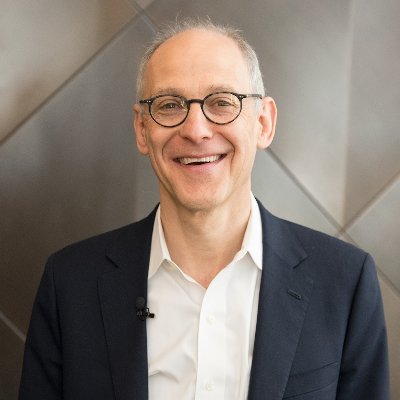
AI is already inside the doctor’s visit, even when patients don’t realize it. More than half of physicians consult OpenEvidence AI tools regularly.
The evidence on where AI helps most is becoming clear: diagnostic accuracy and the guideline-driven management of chronic conditions like hypertension, diabetes, and high cholesterol.
Great chatting about how AI can help doctors improve accuracy on @CBSMornings with @GayleKing, @NorahODonnell, and @nateburleson.
OpenEvidence retweeted
amazing work by Daniel Nadler and @OpenEvidence - using intelligence is going to help oncologists.
Over 85% of oncologists at Memorial Sloan Kettering Cancer Center use OpenEvidence.
Together, @MSKCancerCenter and OpenEvidence have built OncoKB, MSK’s expert interpretation of a tumor’s genetics, directly into OpenEvidence, putting it in the hands of oncologists across the United States.
As Dr. Anaeze Offodile puts it: “Our mission is to end cancer for life.” As of today, we are widening OncoKB’s reach so that patients everywhere benefit from the same rigor as patients at MSK. Watch the story.
OpenEvidence retweeted

Through a recent collaboration, Memorial Sloan Kettering Cancer Center (MSK) and @OpenEvidence are making precision oncology expertise more accessible within clinicians’ everyday workflows.
The collaboration brings OpenEvidence and MSK's OncoKB™ knowledge base together to help deliver trusted, evidence-based guidance when and where it’s needed most.
Watch to learn more ⬇️
OpenEvidence retweeted

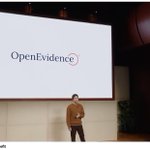
Dr. Travis Zack from @OpenEvidence delivers his talk on "Synthesizing Medical Literature: The New Era of AI-Driven Evidence" at our Virtual Healthcare in the Mainstream Symposium & Research Forum.

OpenEvidence retweeted

How are clinicians using AI in patient care?
A new @MassGenBrigham study in @JAMA_current analyzed 271 million queries to OpenEvidence to find out.
Read more: mgriblog.org/project/study-c…
DOI: doi.org/10.1001/jama.2026.21…

OpenEvidence retweeted

In this edition of STAT Health Tech: A new paper in JAMA offers a glimpse into clinicians's use of OpenEvidence, and a look at Isomorphic Labs. trib.al/4QQ6Q2E

OpenEvidence retweeted

Are you using @OpenEvidence?
In @JAMA_current, Patel, @AnupamBJena et al show rapidly rising use with 271M queries from >950K clinicians spanning info treatment, management, diagnosis, & more.
Our Editor's note discusses what AI platforms mean for education & clinical care
jamanetwork.com/journals/jam…

OpenEvidence retweeted

I’ve long felt that @OpenEvidence query data is the medical equivalent of the Google street view cameras, providing a first-hand look at how clinicians navigate the terrain of clinical knowledge, both knowns and unknowns.
IMO there is so much utility in using these data to discover trends in our practice, holes in our guidelines, emerging clinical needs, opportunities for impact.
But obviously, any mining of these data has to be approached with great care, for patient safety and clinician trust. This paper is a first measured step in publishing trends from OE data (other than implicitly through work with, eg society guidelines). It focuses on basic trends in who is using the platform and for what purpose. Excited to see it out. So much fun working with @TravisZack2 and our colleagues from Harvard on this.
Other efforts are in the works and I hope there is much more to come in the genre of @OpenEvidence -> new evidence.

In @JAMA_current led by @vrpatel97, @IAmSamFin and @AnupamBJena: how are US 👨⚕️ actually using AI? We analyzed 271M queries from 950K+ clinicians on @OpenEvidence over 2.5 years. Monthly active users grew from 355 to 700K+, and 9/10 kept coming back.
Link: jamanetwork.com/journals/jam…

OpenEvidence retweeted

.@HopkinsMedicine taps @OpenEvidence to bring AI into medical education, clinical care
bit.ly/4z8mIup

OpenEvidence retweeted

Thrilled to partner with @OpenEvidence 🩺
Quite simply the finest AI tool available to surgeons. We use it every single day in the hospital—and now, to craft innovative surgical education content.
Big things coming as we integrate OE knowledge into our platform, and vice versa. Stay tuned! 🚀
It happened. We got Behind the Knife.
@BehindTheKnife's surgical education library will feed into OpenEvidence answers, and OpenEvidence will be built into their ABSITE and oral board prep.
@AmbarMehta, a vascular surgeon who leads surgery initiatives at OpenEvidence, puts it this way: the toughest surgical decisions live between the lines of the evidence.

ALT Behind the Knife and OpenEvidence logos
OpenEvidence retweeted

Good people & an absolutely incredible product ➡️ the recipe for success 🚀
Thanks @AmbarMehta for all you do! We are thrilled to integrate @OpenEvidence into the content we develop @BehindTheKnife.

Extremely excited to share this collaboration between @OpenEvidence and @BehindTheKnife, with @georgoff and team. Exciting developments ahead!
OpenEvidence retweeted

Excited to collaborate with leading educators on how OpenEvidence can in fact lead to 'upskilling' rather than the opposite!
Johns Hopkins established the model for American medical education more than a century ago. Today @HopkinsMedicine and OpenEvidence announced a collaboration to define what that education should look like in the AI era, and to ground clinical care in the latest evidence.
As AI learns to synthesize the world's medical knowledge in seconds, the clinician's role moves toward clinical judgment, first-principles reasoning, and the human work of caring for patients. The education model Johns Hopkins and OpenEvidence will design builds on those foundations, with a deeper grounding in pathophysiology and evidence-based medicine. Knowing why an ACE inhibitor works is understanding a physician carries through an entire career.
Together we'll also build human-first AI that puts the best available evidence in the context of each patient's medical history and Johns Hopkins' best practices, so clinicians can reason through that information faster and make the best decision for their patient.
Sanjay Desai, Vice Dean for Education at Johns Hopkins Medicine, says AI "invites us back to the bedside."
For the educators here: which skills do you want every trainee to keep sharp?

OpenEvidence retweeted

Really excited for the opportunity to work with Dr. Murray, Dr. Desai, Josh and the whole JHU team on projects around medical education and improved integration of clinical intelligence within workflows!
Johns Hopkins established the model for American medical education more than a century ago. Today @HopkinsMedicine and OpenEvidence announced a collaboration to define what that education should look like in the AI era, and to ground clinical care in the latest evidence.
As AI learns to synthesize the world's medical knowledge in seconds, the clinician's role moves toward clinical judgment, first-principles reasoning, and the human work of caring for patients. The education model Johns Hopkins and OpenEvidence will design builds on those foundations, with a deeper grounding in pathophysiology and evidence-based medicine. Knowing why an ACE inhibitor works is understanding a physician carries through an entire career.
Together we'll also build human-first AI that puts the best available evidence in the context of each patient's medical history and Johns Hopkins' best practices, so clinicians can reason through that information faster and make the best decision for their patient.
Sanjay Desai, Vice Dean for Education at Johns Hopkins Medicine, says AI "invites us back to the bedside."
For the educators here: which skills do you want every trainee to keep sharp?
OpenEvidence retweeted

Fresh NPJ Health Systems study confirms the reliability of Daniel Nadler’s OpenEvidence — Reports Jordan Finkle. digitaljournal.com/article/f…

OpenEvidence retweeted

AOSSM is coming to @OpenEvidence!
Research from AOSSM journals will soon be available, making trusted sports medicine evidence easier to access when it’s relevant to clinical questions.
ow.ly/EMKe50ZTL3e
#SportsMedicine #OrthoTwitter #EvidenceBasedMedicine
OpenEvidence retweeted
YES! Absolutely. We have been working with societies and expert groups (such as @JACCJournals ) to create a virtuous cycle of knowledge gap identification --> knowledge creation. This pulse on the clinical knowledge requirements, paired with the evidence gaps uncovered by our engine is truly one of the projects @IAmSamFin and I have been most passionate about working on


Rough back of the envelope math: if 40% of US physicians are OpenEvidence DAUs (60%+ are registered users) and there's ~22 workdays a month, 42m queries in August implies ~5 queries per workday day per physician (Google is ~4.2 searches per day and ChatGPT is ~2.5 queries per day).
This kind of pulse on real-time clinical uncertainty is remarkable. Imagine you could now categorize those queries to create a map of the frontier of knowledge / know-how in medicine, and what's missing. By doing so, OpenEvidence is creating the closest thing to a universal ledger of medical problems and solutions.
OpenEvidence can see for which flavors of clinical uncertainty existing knowledge / know-how / solutions are most scant (or don't exist at all). They can then find and plug in that knowledge / know-how, create it by funding studies / initiatives, and eventually even discern the best heuristics / simulation environments to train the judgement of the next generation of human capital in the life sciences. You start to see how OpenEvidence's flywheel will start to spin a lot faster than the labs in terms of medical capabilities.
The general lesson here is that it's all about your product sensing and enumerating demand in some valuable subset of economic reality faster than competitors. In this case, OpenEvidence enumerates physician demand for medical knowledge / know-how that can help solve patient problems. They do this faster and with higher fidelity than anyone else. This is incredibly valuable.

OpenEvidence retweeted

I joined OpenEvidence!
At Anthropic, I created Claude Science, a product built so that scientists' curiosity, not their capacity to execute, sets the limit on what they can discover. It takes on the heavy lifting across the early stages of the discovery and translational pipeline and scales what a single researcher can carry out. Building Claude Science has been the most fulfilling work of my career so far.
Now I'm excited to help build the future of AI in medicine at OpenEvidence, bringing that same leverage to doctors at the point of care. OpenEvidence already reaches the majority of patients in America. It doesn't get more translational than that.
OpenEvidence retweeted
.@OpenEvidence partners with @AnthropicAI, @PennMedicine to expand physician access to AI across Africa and Asia
bit.ly/4ABPDI6
