

FREE Test: Discover Your Tharp Trader Type ! Uncover the trader you really are | 👉https://xitter.cf/t.co/EXOsk6UUu2 Trading Community of Van Tharp graduates.
Joined January 2026
- Tweets8.1K
- Following85
- Followers614
- Likes11


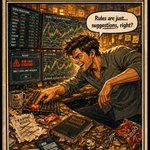


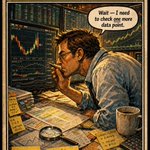

The Independent Trader (Type 7) is analytical, skeptical, builds their own models and trusts their own thinking. A genuine strength
The risk? Getting lost in the theory. Over-engineering ideas that never actually get executed
Stay practical. Stay in the feedback loop. That's when the non-conformist edge becomes an advantage instead of an intellectual hobby

If you’re trading without knowing your specific trader type, you’re giving up profit on almost every trade
Take the free test and uncover your strengths, blind spots, and trading psychology, then trade with a clear edge 👇
oneyeartrader.com?v=8

✅ Year 1: random entries, random exits
✅ Year 2: better system, same psychology
✅ Year 3: new system, same results
✅ Year 4: "Maybe it's my mindset"
✅ Year 5: burnout
I've watched this repeat across hundreds of traders. The 5-year struggle isn't a rite of passage it's what happens when you skip structure. With system + deliberate practice + psychology, that timeline compresses to under a year. I've seen it
If you’re trading without knowing your specific trader type, you’re giving up profit on almost every trade
Take the free test and uncover your strengths, blind spots, and trading psychology, then trade with a clear edge 👇
oneyeartrader.com?v=8
"I need to make as much money as possible this month"
That single belief drives overtrading, overleveraging, and emotional decisions. I've seen it wreck traders with solid systems
Replace it with: "One good trade per week is enough." It's not even literally true. But held with conviction, it kills FOMO and over-trading instantly. Useful beliefs don't have to be true. They have to work
If you’re trading without knowing your specific trader type, you’re giving up profit on almost every trade
Take the free test and uncover your strengths, blind spots, and trading psychology, then trade with a clear edge 👇
oneyeartrader.com?v=8
Van Tharp invented the R-concept. 1R = your initial risk. Lose 1R, you lost what you planned. Make 3R, you made 3× your risk
This pulls your mind off emotional dollars and onto process. That's where professionals live
Amateurs obsess over entries. Professionals obsess over position sizing. That's not a coincidence
If you’re trading without knowing your specific trader type, you’re giving up profit on almost every trade
Take the free test and uncover your strengths, blind spots, and trading psychology, then trade with a clear edge 👇
oneyeartrader.com?v=8
If you're practicing bad habits in live markets, you're cementing them
Deliberate practice in a simulator lets you run 100+ repetitions without paying market tuition. You rewire the counter-intuitive skills cutting losses, letting winners run, staying patient before real money is on the line
This is how athletes train. It's how traders should train too
The Detailed Trader (Type 3) is methodical, thorough, fact-driven. Doesn't miss anything and that's both the strength and the problem
Under stress, I watch them zoom in further, digging into the wrong idea instead of stepping back. The market doesn't care how thorough your thesis is
The upgrade isn't more detail. It's managing the self-criticism and adding big-picture context. Then the analytical edge becomes real

The Spontaneous Trader (Type 6) adapts fast, acts decisively, seizes the moment. When engaged, they're excellent
The danger? They also move when they shouldn't. Systems get abandoned. Rules feel like cages. Boredom turns into over-trading
The fix isn't becoming a different person. It's external structure stop orders for entries, a position sizing calculator, a written exit algorithm. You don't fight your Type. You build around it

If you’re trading without knowing your specific trader type, you’re giving up profit on almost every trade
Take the free test and uncover your strengths, blind spots, and trading psychology, then trade with a clear edge 👇
oneyeartrader.com?v=8
I've watched traders lose $50,000 "learning" in live markets what a structured 5-day workshop teaches in a week
The market is a brutal, expensive teacher when you show up without structure
The traders who make it don't skip steps. They build competence in simulation first, then move to live markets with a real edge. Slow is smooth. Smooth is fast
Van Tharp identified 15 distinct Trader Types. Each has specific strengths, specific blind spots, specific failure patterns
About 10 people take the Tharp Trader Test daily. What surprises most of them is how accurately their result explains the last 3–5 years of their trading
Self-awareness isn't soft. It's the most practical edge you can build. Free test: TharpTraderTest.com
If you’re trading without knowing your specific trader type, you’re giving up profit on almost every trade
Take the free test and uncover your strengths, blind spots, and trading psychology, then trade with a clear edge 👇
oneyeartrader.com?v=8
Van Tharp studied peak performers for 30 years. He didn't find a magic indicator or a secret entry
He found that the trader psychology, beliefs, mental state drives the outcome far more than the system
That's not motivation. That's what the research showed with the Turtle Traders in the 1980s. Still true today
If you’re trading without knowing your specific trader type, you’re giving up profit on almost every trade
Take the free test and uncover your strengths, blind spots, and trading psychology, then trade with a clear edge 👇
oneyeartrader.com?v=8
The Strategic Trader (Type 1) is one of the strongest types out there. Big-picture, analytical, decisive they don't just follow markets, they map them
But after 30+ cohorts, here's the pattern I see: the need to be right quietly takes over. Logic dominates, and the emotional blind spots get ignored
Do the self-work. Lock in risk management. That's when this type becomes formidable not because they got smarter, but because they got honest

"I have a system," a trader told me last cohort. Then he described it: "I buy when momentum looks strong"
That's not a system. A real system has a clear setup, a defined entry, an initial stop, a multi-layer exit algorithm, a position sizing strategy, and a defined market type
If you can't hand it to a stranger as a rulebook, you don't have a system yet. You have a feeling with a chart attached
The Spontaneous Trader (Type 6) is one of the most naturally decisive types I work with
Quick to act. Adaptable. Comfortable with change. When the market moves, they move
The problem is they also move when they shouldn't. Systems get abandoned. Rules start feeling like cages. Boredom turns into over-trading
The fix isn't forcing a different personality. It's building external guardrails pre-defined entries via stop orders, a written exit algorithm, a position sizing calculator you can't override on impulse
You don't fight your Trader Type. You build a system that works with it

If you’re trading without knowing your specific trader type, you’re giving up profit on almost every trade
Take the free test and uncover your strengths, blind spots, and trading psychology, then trade with a clear edge 👇
oneyeartrader.com?v=8