

Wealth management, IE Business School, BITS, Sherwoodian, home chef, bodybuilding. Gentleman of leisure, tech geek, gamer, fast cars & bikes.
ephemeral
Joined April 2013
- Tweets18.6K
- Following1.1K
- Followers3.3K
- Likes45.4K





Pinned Tweet
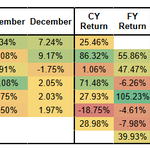
Factor Investing Oct-26 Update (in %)
DIY -1.15
N50 1.91
N500 -0.80
ALPHA50 -2.92
N200M30 -3.23
CY26
DIY 27.49
N50 -11.77
N500 -8.28
FY27
DIY 38.31
N50 3.23
N500 6.66
CAGR S.I.
DIY 31.81
N50 12.16
N500 14.82
ALPHA50 21.97
N200M30 15.42
abimehrotra.wixsite.com/mysi…


2
2
224


Mutually Assured Destruction: The AI War between America & China could trigger a Global Recession, by @TheNavroopSingh nitishastra.substack.com/p/m…
1
253
Abhinav Mehrotra retweeted

Funny you should say this, knowing what you know about India's regulatory environment.
India is fast becoming the new Europe. EU restricts startup growth through overregulation.
India restricts it via inconsistent, arbitrary, reactive, flexible and adversarial regulation. It's why young founders and technologists are moving out. Look at what happened to policy bazaar recently, and in 2011(2013?). Look at angel tax and how long that took. Look at retrospective taxation. Inconsistent regulation of the gig economy across states, with whimsical cancellation of licenses. GST and ED raids. The impending SIM binding disaster. Consistent threats to remove safe harbor, and CCPA ignoring it. How long it takes to shut down a pvt ltd: we don't make it easy to fail. I could go on.
Regulatory stability doesn't exist in India. Startups in India are built despite the state. The Indian state leeches off businesses and citizens, not enables them.
Meanwhile, Singapore works with its startups to create an enabling environment because it values business growth and citizen welfare.


Abhinav Mehrotra retweeted

Nov. 18, 2026, 5:16am EST
The Voyager 1 spacecraft has reached a distance of one light-day from Earth.
The House of Cards: How Nvidia’s Scandal risks popping the AI Bubble in America, by @TheNavroopSingh nitishastra.substack.com/p/t…
241
The free float weighted indices are designed for capacity not for risk.
The Phantom Bear dollarendgame.substack.com/p…
225
youtu.be/wQRI5CpZDk8
Future will forge on, dont bet against it.
1
330
Weekend Thoughts: Datacenters, AI Stocks and the AI Religion, by @JohnHuber72 basehitinvesting.substack.co…
1
225
Abhinav Mehrotra retweeted

The Invespar India Factor dataset expanded to 6,541 firms. Key takeaways from new paper:
• Historical continuity holds
• Data cleans > adding stocks (this time)
• Watch single-month swings
🖇️ on @SSRN
papers.ssrn.com/sol3/papers.…
#QuantFinance #IndianEquities #FactorInvesting


Abhinav Mehrotra retweeted

How India Can Seize Technology Leadership: Dr. Mashelkar’s Blueprint
India’s top scientist who ignited Mukesh Ambani’s Jio ambitions shares eye-opening INSIGHTS on India’s technology potential and what is stopping India:.
Poverty Provokes Innovation
a. Padma Vibhushan Raghunath Mashelkar transformed India’s premier scientific organizations CSIR and NPL. Mukesh Ambani waited for him to retire, and then asked him to create Reliance Innovation Council with Nobel Laureates and global academics.
b. When Jio was just an idea, Mukesh Ambani remarked: “Doc, we must leapfrog.” Dr. Mashelkar replied: “Mukesh, do you know why does a frog leap? Because it is afraid of the predator. So, it jumps a few feet. You don’t have to jump a few feet. You must pole vault. That involves risk.”
Jio became one of the largest corporate bets in history with the untested 4G LTE technology.
c. In Dec 2025, Mukesh Ambani spoke in his honour at an event: Dr. Mashelkar was brought up by his widowed mother in a chawl in utter poverty.
His mother was refused a daily-wage job because the minimum qualification was third standard. That’s when she vowed her son would receive the highest education in the world.
How India Can Pole Vault
a. India’s Weakness: “Indian industry has never come forward to invest in R&D. Bulk of R&D work in India remains confined to Technology Readiness Level TRL 1 to 4 (laboratory level).
Why? Because TRL 5 to 7 requires long-horizon risk capital. (TRL 9 is commercial). That is missing in India,” says Dr. Mashelkar.
b. India’s Strength: “India’s talent is its strength. See how Indians perform in Silicon Valley. When legendary GE CEO Jack Welch set up the Jack Welch R&D Center in Bangalore 25 yrs ago, he was asked why are you here?
He replied: “Because I get the highest intellectual capital per dollar in India.”
c. Until 1989, India had zero international patents. In 1989, Dr. Mashelkar took over as director of National Chemical Laboratory (NCL).
Within 3 hours of joining, he made a daring claim to the NCL team of 1,100 (note: just like Elon Musk does): “India will license patents to the rest of the world.”
d. “We had zero culture of patenting, and here I was telling the NCL community we will license our technology to multi-billion global chemical giants like DuPont and Dow Chemical.
Why was I doing that? Because I knew that the NCL scientists sitting in that auditorium had world-class talent.”
e. A young scientist approached me after the lecture and said: “Do you know GE’s R&D budget is 2.5 times entire India’s R&D budget?” I told him what matters is the power of an idea and mindset. We will change the rules of the game.
f. We had no budget, no imported equipment, no industrial ecosystem. But we could do mathematical modeling and simulation end-to-end in the lab. That required only talent.
We aimed for a new breakthrough in polycarbonate, where GE was the leader with 40% world market share.
g. My team said: “If this technology was doable, GE would have done it.” In India whenever you talk of cutting-edge technology, the industry asks: “Has the US done it? Has Japan done it? So how can we do it?”
Tech innovators in US & China don’t ask this question. They don’t care what others have done or not done.
h. “You know what? We got the global patent. GE R&D in the US was surprised that some crazy lab in Chennai had beaten them. They sent down a team. When they saw our talent, they said we will partner with you. That’s how the Jack Welch R&D Center came up.”
i. Rising to Your Potential: The same people at NCL who were just copying others, were able to achieve international patents. From import substitution, we became an export-oriented lab in one year.
All that had changed was the mindset. It became a case study at Harvard Business School. “Every individual has a Mukesh Ambani in them. It’s just a question of rising to your potential," says Dr. Mashelkar.
5 Ways to Become a Tech Powerhouse
a. Dr. Mashelkar’s 5-Pillar Framework: The 1st way is you invent a new technology. The 2nd way is you buy a technology (strategic acquisition).
The 3rd way is: “Buy to Make Better.” It means you buy with an intention to make cheaper & better yourself. China does that using iterative R&D (reverse engineering).
b. 4th Way: “Make to Buy Better”: India needed AOS chemical technology. We went to Arimitsu, then Chevron, then Shell. All refused. They viewed us as a potential competitor.
So, we decided to make it ourselves. We reached pilot plant stage (TRL 4). At that point, finance dept turned us down.
c. A competitor told me: “We were keeping a watch on you. If you had gone for the pilot plant, we would have given you the technology. Because we knew you will become our competitors.”
That is called “Make to Buy Better.” When you want to shake hand with someone, they will look at the strength of your hand.
d. 5th Way: “Make it Together”: When I was heading CSIR in 2000, the Finance Minister called me and said he wanted to give something to scientists in the first budget of the new millennium. “Give me an idea in 30 minutes.”
e. I wrote my idea: “Indian industry is behind the curve due to no risk-taking. So, let govt take the risk and give money to pvt sector.” FM granted ₹50 cr. It was a big amount in 2000 just for “gambling” in risky technologies. Govt doing that was unheard of.
f. It worked because Ministry of Science, Planning Commission, and Bureaucracy were all bypassed. We formed a public-private initiative with ₹50 cr seed money. Our first product was a cutting-edge bioinformatics software. TCS and 19 Indian genomics labs worked in sync like an orchestra.
g. In 18 months, our software product BioSuit was launched in Silicon Valley, and proved 10x better & cheaper than best-in-class. “By the time I retired in 2006, we had 250 public institutions and 100 private companies working together on new technologies.”
h. Govt Has to Have Ambition: China has refused Lithium-Ion battery tech to India. KPIT has created its own sodium-ion battery. It is at TRL-7 now. To reach TRL-9 (commercial), it needs govt’s backing. (Just the way China supported BYD & others.)
i. Technologies that make the world bend before you don’t emerge from playing it safe. Chasing moonshot ideas (like US/China innovators) requires a culture where failure is celebrated.
Chandrayaan-3 succeeded because Chandrayaan-2 failed. Every mistake of Chandrayaan-2 was identified and not repeated.
Endpiece: Convex Lens Leadership
At his municipal school, Dr. Mashelkar’s physics teacher Principal Bhave gave a demo of convex lens under the sun. He then turned and said:
“Mashelkar, if you concentrate your energies like this and not diffuse (waste) them, you can burn the world.” Dr. Mashelkar says: “India needs convex lens leadership today.”


Abhinav Mehrotra retweeted
Good Time to Enter India: “Dean of Valuation” Prof. Aswath Damodaran
(a) FIIs will return in a herd when AI trade ends (b) AI bubble burst is coming (c) Retail investors ill-served in India; trapped at high PE (d) Wealth of Investing INSIGHTS:.
Indian Valuations Getting Better
a. Professor of Finance at NYU Stern, Dr. Aswath Damodaran is globally regarded as the “Guru of Valuation.” His free-to-access stock valuation lectures are the world’s most watched finance class on YouTube.
b. On Feb 8, 2025 Damodaran wrote on his blog: “The world’s most expensive market is India. No amount of storytelling about India can justify paying 31x Earnings, 3x Sales, and 20x EBITDA.” Investors ignored the Professor’s warning.
c. Nifty PE Now Down to 20x: “My advice to investors now is: The old narrative was “India is a great story.” The new narrative is “India has no story at all.” Markets move from extreme optimism to extreme pessimism.
d. Time to Enter for Long-Term Investors: (1) Valuations have improved (2) Long-term India story has legs. “Given these two facts, this is a good time to enter. Compared to past, I feel relatively upbeat about equity valuations now.”
FIIs Leaving Is a Good Sign
a. FIIs are sheep (they have herd mentality). When the herd leaves, it is a good time to enter. Herds reflect the mood of the moment. That’s the time to be a contrarian and act against crowd behaviour.
b. FIIs Exits: We assume foreign investors are deep thinkers that do fundamental analysis of countries. In reality, they are looking at the exit door. They see two other people exiting the door, they will exit as well.
c. FII Entry: Similarly, they are watching the entry door. If two other people went in through the door, they will enter as well. FIIs are the biggest sheep in the investing community.
d. People think professional investors with data & models are smart. In reality, professional investors are capable of some of the stupidest investing decisions. Retail, on the other hand, has better collective wisdom.
e. FIIs are exiting because they have a fear of being left alone. The worst thing a professional investor can do is be wrong alone. It’s the end of their career. So, they will stay with the herd even they don’t agree with the herd.
FIIs Will Return in a Herd
a. FIIs will be back to India as suddenly as they left. They are mood-and-momentum driven; not driven by any serious assessment of the future. The mood shift may come from the rest of the world turning bad (AI going bust) rather than India turning good.
b. Markets have a short memory. Remember Argentina as a classic example. It has defaulted 5 times on its sovereign debt. It has a crisis every 3-4 yrs. Yet, every few years I get an email: "Argentina is back. Foreign investors are pouring in."
c. Remember: India growth story began when China story was crashing. Investors had to go somewhere. It’s the same thing now in reverse. AI story is sucking money out of India. So, this too shall pass.
Retail Investors Ill-Served
a. Indian retail investors have been ill-served now for a decade. So much of their money has gone into Indian equity at false valuations. That happened because retail investors had no other choice.
b. FD rates in India were low. Real estate was high. Global investing is intentionally made difficult & expensive for retail. So, India is the world’s worst home-bias market: a single-country bet for retail investors.
c. Long-Term Entry Point: Considering these limitations, investing your money in India at 20x PE is a fair deal for long-term retail investors. Your existing portfolio is bleeding. But your new money will go in at a much better trade-off.
AI Bubble Is Waiting to Burst
a. AI is absolutely a bubble that will burst. Think of AI as the largest factory we have built in the history of mankind with trillions of dollars in capex.
But we don’t know what the factory will make (no AI apps, AI products, AI services yet: except AI search & AI generated content.)
b. The only people who have benefited so far from this factory are the people who supplied the parts to the factory. Chip makers, electrical equipment makers, power companies, and real estate for data centers.
c. That’s why I call Nvidia the drug dealer. AI capex is the drug, and the high that it gives is “hope.” These drug suppliers are the people who want the factory to get bigger and bigger. They don’t want the party to end.
d. This AI factory without any products is like the ghost cities of China. Millions of empty apartments: and no one to buy them. Right now, the AI product & service business generates $250B in revenue versus a capex of $3 trillion.
e. AI product & service revenue has to be much, much, much bigger than $250B for the factory cost to break-even. If you build too large & expensive factory, and there is not enough demand, it is bound to end badly for the shareholders.
f. Which Stage Is AI Bubble Now: The last dance performance has begun. Yesterday during Meta Earnings Call, the CFO said they need more AI capex for Muse model. The stock price dropped in real time while the CFO was talking about more capex.
g. Two years ago, if you were talking about AI capex, your stock price went up. People were buying the buzz. Now they want to see evidence of money in instead of money out. That’s the stage before the final reckoning.
There will write-downs of capex. It’s coming.
Endpiece: Advice for Investors
If I were to wish a quality on an investor that will make them successful, I would say: Have a perspective across time periods, across markets.
It will make you much more grounded about your investing decisions rather than being reactive (impulsive, emotion-driven), which is the most dangerous place for an investor to be.
Clouded Judgement 10.30.26 - Dispelling the Myths of the Anthropic S-1, by @jaminball cloudedjudgement.substack.co…
1
322
Anthropic S-1, the Claude Loop and Economics of Frontier AI open.substack.com/pub/trungp…
1
294


