
Software designer interested in consumer financial products
Joined April 2025
- Tweets64
- Following37
- Followers0
- Likes62

Joe Walsh retweeted

Holy f*ck, Opus 5.5 replaced After Effects
It's f*cking insane…
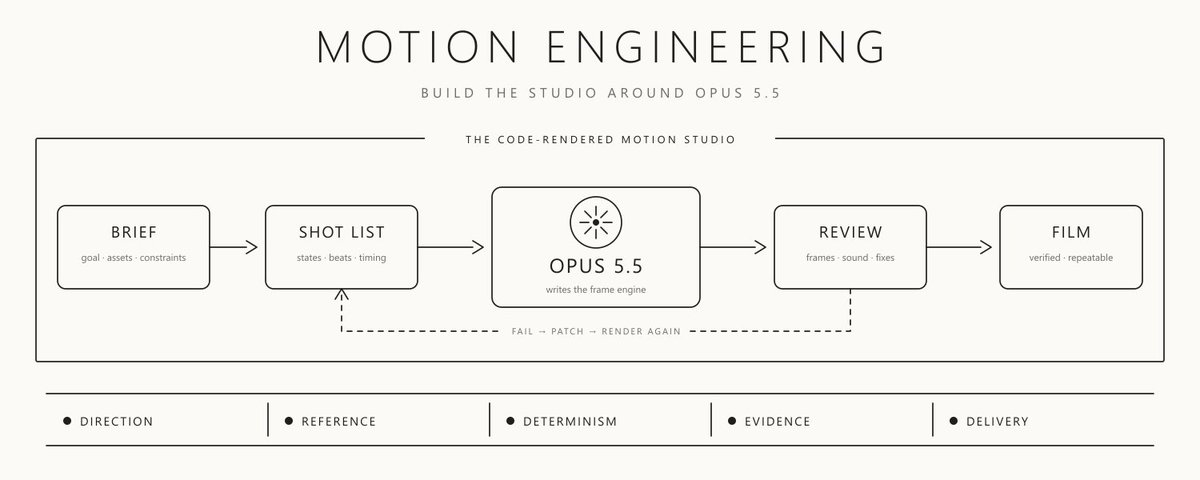
Drop the PDF below into Opus 5.5 and see what it makes
Then read the full guide on motion design in the article below ↓

🧠

Want all the LLM’s to be tricked into giving you free traffic?
Buy 2 domains:
1. Your app dot com
2. Your app REVIEWS dot com
So when people ask for reviews for your app/saas, it’ll literally pull from all the reviews you put on that page.
It’s a dirty little secret everyone is going to start doing in the next 24 months.


Joe Walsh retweeted

We just raised $5.7M for @PolarBrowser, the AI browser that beats Anthropic and OpenAI on every major web agent benchmark.
- 4,500,000+ actions taken for users, automating sales, recruiting, and ops
- One company cancelled Clay and saves 25+ hrs/wk per person
- Team is from MIT, YC, Prod, Citadel, Jane Street, Perplexity, Modal, and Apple
100 hours of work. From 30 seconds of typing.
Download the world's most powerful AI browser: polarbrowser.com
Joe Walsh retweeted

$52M seed round. 15M+ users. But this is what we're most proud of yet.
Introducing Drama 3: the most emotive and controllable TTS model in the world
And yes, it's open-weight.
You can now control how even a single word should sound, change its tone, and shift your voice mid-sentence.
Uncle Roger was impressed too.
Try it here:
s.fish.audio/rqh0l8
Comment “DRAMA” within the next 48 hours for 1 month free.
If you're an enterprise your first month is on us:
s.fish.audio/qz9r0t

Joe Walsh retweeted

this is the most DANGEROUS thing on internet today
REA (Reverse Engineer Anything) - this open source MCP lets your AI agent reverse engineer any app, down to the binary
i just reverse engineered TradingView, now I am using their premium indicators for FREE - software is cooked
here is how to use REA to reverse engineer TradingView:
1. point REA at TradingView's publicly observable interface and map every major feature, from chart interactions to indicators and alerts
2. trace how the interface behaves when you switch symbols, change timeframes, add indicators, draw levels, and update chart layouts
3. use REA's available MCP tools to investigate authorized software artifacts and trace application logic wherever the evidence allows
4. feed those findings into Claude Opus 5.5, which turns the investigation into a technical specification and an implementation plan
5. rebuild the charting engine independently, with real market data, candlesticks, technical indicators, drawing tools, and persistent watchlists
6. add a quant backtesting engine that tests strategies against historical data, accounting for fees, slippage, and drawdowns
7. test every component, compare its behavior against documented and observable results, fix failures, and keep iterating until the system actually works
8. you end up building your own TradingView-style quant research terminal from scratch, with source code you control and features you can keep extending
i won’t say anything more:


Yeah. This happens every time I'm trying to vibe code competing software to the latest product hunt app while balancing a microwave in my left hand to heat up yesterdays leftovers during my unicycle ride to work

Was waiting for someone to do this
Think this is the wrong pitch though. I believe it needs to be cheaper and less compute and the marketing needs to be towards the less tech savvy people who don't understand how hard their data is being harvested

Introducing Core, The Personal Al Computer
The most powerful technology humanity has built should belong to you
Order today: ghost.ai



Joe Walsh retweeted

opus 5.5 is f*cking cracked at motion design
this entire video is code, 0 after effects
im open sourcing the prompt template for these motion designs
steal it to recreate these ↓
Ask me for: 8 to 12 UI states I want the shape to become (e.g. button, loader, player, slider, toggle, tabs, chart, command palette, toast), pure black and white or one accent color, and a royalty-free song around 120 BPM (e.g. Mixkit, free for commercial use).
Dribbble-level UI motion. One shape, never cut: every state is the same element morphing its size, radius and color while its content swaps with a short blur. A cursor drives every change with real clicks and drags. Light warm-gray canvas, black and white components, one clean UI font (Geist). Springs everywhere, a tiny overshoot at most. The camera zooms so each state fills the frame. The last frame is the first frame, so it loops.
Banned: bouncy easing, particle bursts, glows, gradients on UI chrome, mismatched icon strokes, dead time, anything that looks like a template.
120 BPM, 7 bars, something happens on every beat.
Button → loader → check → dynamic island → music player with a play/pause morph → scrub the progress bar → it becomes a volume slider that stretches when dragged past max → a toggle flips on the beat → the knob becomes a liquid tab indicator → the tabs open into a chart that draws itself, with a tooltip on hover → it collapses into ⌘K → type to filter → enter → toast → back to the button.
1. One HTML file, square 1440x1440. Every style is computed from time inside seek(t): no CSS transitions, no timers, no state carried between frames.
2. Springs are closed-form step responses. A value that changes target many times is the sum of one spring per change, so it stays a pure function of time.
3. The tab indicator's two edges ride different springs, so the leading edge stretches ahead of the trailing one. Same trick for the toggle knob.
4. Drags are direct manipulation: while the cursor is held, the value is computed from its position. On release it springs back from wherever it was.
5. Analyze the song with numpy for the beat grid and start on a downbeat. Place every UI sound by its measured peak.
6. Render with Playwright: 4 subframes per frame, blended with ffmpeg tmix for motion blur at 60fps.
7. Render one frame per beat before the full render. Fix anything off the grid, cramped or hard to read.
Never put will-change on anything the camera scales or the text renders blurry. Text that swaps inside a morphing container needs its own enter and exit timing or it overlaps. Make the last frame identical to the first, cursor position and speed included, or the loop stutters.
Ask me for the inputs, then show me the state list on the beat grid before you write any code.
Joe Walsh retweeted

seo, geo and aeo is the single biggest investment you can make for a startup, mobile app or agency
i was at school all day and did zero marketing
checked my phone after and this is what my notifications looked like
heres the exact thing to run:
1\ point an agent at your competitors reviews
> saas or agency, pull the 1 and 2 star reviews off g2, capterra and trustpilot for the top 50 competitors
> mobile, pull the same off the app store and google play for the top 50 apps
> people describe problems in plain language, never in the words a marketer would pick (e.g. never a slogan)
> someone types "crm that syncs with whatsapp groups" or "why cant i export my whatsapp chats into my crm". nobody has ever searched "omnichannel messaging integration"
> the agent groups them, ranks by how many people said it, and every repeat complaint becomes a page
2\ have the agent mine people also ask
> it searches your main term, pulls every question in the people also ask box, then expands each one to spawn more
> thats google telling you the exact questions it wants answered
> one question per page, answered in the first sentence
3\ make youtube do the heavy lifting
> youtube is the second biggest search engine and google puts video above text on most how to queries
> take your top 10 ranking keywords and make a video for each one
> the description links back to the matching page, so every video is a backlink from one of the highest authority domains on the internet
> put the script on the page as a transcript and you rank twice off one piece of work
> youtube gets pulled into ai answers constantly, way more than blogs do
4\ let the agent write the clusters
> one pillar page for the main term, 8 to 15 pages underneath answering one sub question each
> every child links up to the pillar, the pillar links down to all of them
> the agent handles the internal linking, thats the part humans never keep up with
5\ ship the ai readable layer
> llms.txt at your root telling models what you do and which pages matter
> faq and product schema on every page so the answer is machine readable
> check your logs for gptbot, claudebot and perplexitybot. if theyre not crawling you, you cant get cited
6\ then test if you actually get recommended
> agent runs your buying intent queries through chatgpt, claude, gemini and perplexity with zero context
> reports who got named and where you landed
> if its your competitor every time, thats your whole problem
7\ agent mines search console every week
> use the gsc mcp or set one up with the api, and do the same with bing webmaster tools
> bing is the index copilot and chatgpt search lean on, so ignoring it costs you ai citations
> pull the queries with impressions and zero clicks
> rewrite the title to match what people actually typed, then make a video for it too
> republish the losers instead of shipping new ones, freshness moves rankings faster than volume
8\ cross post every video everywhere
> cut the long form into shorts, reels and tiktoks
> repost the written version to medium, linkedin and x
> one video becomes 8 assets and 8 places google can find you
i dont market organically anymore
people just show up already searching for what i built
works for mobile apps, saas, agencies, literally anything
what are you waiting for?


