






AshkOff retweeted

new skill: create-canvas.
last week I made a skill to put every component from a repo on one canvas. I started using it with my agent to create variations, compare ideas, and iterate visually without leaving the codebase.
so I made a new skill around that workflow.
instead of moving your work into another tool, bring the canvas into your codebase and use it to explore UI with your agent, using the real components, styles, and project context already there.
AshkOff retweeted

Bill Gross (Idealab founder) built an AI-powered database of 1.2M startup ideas from patents, news, social media. He's launching Idealab.ai to match founders with ideas, collaborate, and tap $100M in funding.


AshkOff retweeted

Meta ads for beginners, PART 1
(small budgets)
Over the last few months I’ve spent $20k on Meta ads.
When I started, I knew nothing.
I’m still a total newbie, but I’ve learned a ton!
I’m going to make a few posts about what I learned so you can save time and money. I’ll try to explain things simply.
--------------------------------
DISCLAIMER: this is just my personal experience with Meta ads.
I watched YT videos, went to webinars, read stuff, asked AI, ran experiments and burned money.
A lot of the time I wanted clear answers and got vague ones. So this is me summing up what I actually figured out on my own.
--------------------------------
First, the basic terms.
1. Hierarchy
You have your account
→ it has BMs (Business portfolios), which are basically “your company”
→ each BM can have ad accounts
An ad account is basically your project. When you start running ads:
ad account = separate project
This is where the Meta algo learns (at some point).
You also connect a pixel (Meta now calls it a “dataset”). It tracks what people do on your site and sends those events back to Meta. This is the data the algo learns from.
2. Ad structure
> You have a campaign. This is where you pick your objective (sales, leads, etc) + geo.
> Then you have ad sets.
This is where you set your targeting, but now NOBODY SETS INTEREST TARGETING.
With the new Meta algo
your creative (your ad) = your targeting
eg: if you show an old lady, Meta will figure out you’re targeting boomers
eg: If you use specific slang or terms, it targets the people who talk like that
And ad set is where Meta does most of its learning.
It looks at the people who buy from that specific ad set and tries to find more people like them.
Meta’s docs say an ad set needs about 50 events in a week to exit the learning phase.
You can treat each ad set as a separate concept you’re testing. Meta figures out which concepts work better, and each one learns at its own pace.
That’s where it gets expensive, because you need a steady volume of events coming in (more on this later).
3. CBO vs ABO
What are these and when do you use which?
This one confused me for a long time.
CBO = you set the budget on the campaign and Meta splits it between ad sets
ABO = you set the budget on each ad set
I spend around $5 - 10k a month, so for me CBO just doesn’t make sense.
I ONLY use ABO. Why?
Say I create 3 ad sets, each with the same budget, like $100.
By day 3-5:
- one is profitable
- one is breaking even
- one is losing money and barely getting sales.
That’s my concept test. I kill the bad ad set, then either put a bit more budget into the winner or launch a new one.
Each ad set needs a lot of events to learn, and my budget is limited. So I need to control things manually and move fast. That way I also learn for myself what works and what doesn’t.
In the next posts I want to cover the stuff that always confused me:
> what events to send and how? what is event quality?
> how much money do I need to spend?
> how do I find my CPA?
> how do I create ads? how does a target persona help?
what columns and metrics should I watch?
> how do I find the weak spot in my funnel? is it my product or my ads?
Follow for more!
P. S. screenshot doesn't cover renewals etc

AshkOff retweeted

we can still make chat experiences so much better!!
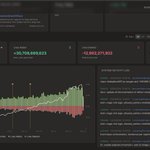
some optimizations in designing chat for finance:
- direct tone & cutting fluff
- answer at the top
- scannable citations and bullets
- tabular numerical formatting
- finance-specific units & terminology
- company logos and tickers
AshkOff retweeted

The usefulness of Amazon’s 6-page memo has been nuked by AI-generated text (employees sit in meetings suspecting text is AI and tune out).
Suspicious memos tagged as AI;DR (AI, didn’t read).


AshkOff retweeted

You can pick up a lot of good intuitions about the nature of neural nets from watching this video carefully a few times

AshkOff retweeted

this article is just so well written, it's altering my brain chemistry


interpretability might be the most important scientific problem in the world right now, as I don't think we can solve alignment if we don't know what we're building. I think I have good news about it. I co-authored early work in mechanistic interpretability at OpenAI and came away pessimistic, because neural networks appeared to fold into arbitrary tangled knots. years later, I started openai's first large-scale automated interpretability project, finding about 2% of neurons legible with the primitive tools we had
with modern agentic tools and a much closer look, the picture looks totally different. the vast majority in models up to trillions of parameters are legible, and their circuits beautiful. many famous examples of tangled neurons turned out to be misunderstood. The roadblocks I expected mostly aren't there. I now think ambitious interpretability will be solved by the time we need it most, and possibly quite soon, as automated scientists keep improving. it may be a bitter lesson for interpretability: the simple thing, at absurd scale, works
already-clean.goodfire.com/

AshkOff retweeted

One of the most powerful things that you can do (and most don't) is sit in silence, focus on the breath, and surrender in the gap of silence between the breath. You can submerge into this space and then become the silence between 2 thoughts to enter pure awareness.
The craziest part is that something this simple (yet challenging) will allow you to find the deepest answers inwards about yourself (self) than you ever did looking outwards (ego).
You will be amazed at what is possible with consistency of this.
The modern human doesn't need more, it needs less. We don't need to be more productive, we don't need to automate more of our job with AI, and we don't need more time spent on technology disconnecting us from inner being.
We must not only strip back all the physical materials that linger in our environment that don't serve a purpose besides taking up space, AND we must strip back who we think we are, and our whole identity that's been governed by ego.


A humans biggest resistance to healing and unlocking their full potential is their ego. The ego acts subtly within the subconscious and conscious mind and body to govern your identity, thoughts, desires, emotions, and decisions.
This means it builds a false sense of you. The ego fears the unknown, and will latch onto an identity even if it doesn't resonate with the deeper self. The ego will make you feel pain and suffering more than what's necessary because it's safer than the unknown. Ironically, the fear of unknown shouldn't be fearful because it is not known, it's the ego manifesting what the unknown looks like, built from the past, and thinking ahead in the future, rather than the present moment.
Being in the present moment itself is non-identifable, so humans distract themselves with being "productive," technology, excess thoughts, and avoiding silence and stillness as much as possible. This is the subconscious power of the ego doing this without you even knowing. You denying all of this is also ego-driven.
An excess of ego is connected to the Solar Plexus chakra becoming supercharged with energy rather than the other chakras. This chakra deeply connects to the digestive system, and this may be a large reason why you see many individuals with gut inflammation and infection compromising their health.
This is very common and you can definitely address the physical symptoms (eg., a gut protocol / cleanse) and it's encouraged, but it's one layer that almost acts like a band-aid to the deeper energetic layers that need to be addressed and explored.
Not to say that an ego is bad, it's fundamental to your drive, confidence, and discipline. It's just out of balance in the modern world because the mind-body is governed mostly by external rather than internal.
This is an invitation to sit more in silence, and be comfortable with the non-identifiable present moment. This deeply encourages healing and unlocking the deepest layers of your health, wellbeing, and wisdom.


AshkOff retweeted

We are releasing Ultramarine 1 Flash, a frontier-class model built for knowledge work. It is open-source and achieves similar performance to Fable 5, while being 60x cheaper.
It was post-trained by a team of 5 for ~$300k all-in. Available on API now, with weights releasing in 2 weeks.
AshkOff retweeted

Some mistakes you might be making:
Your effort level is too high
Your skills are too long
You're not aligning before you start work
You're aligning too often, and too hard
Your automated checks are too lax
Your custom tooling is too token-inefficient
You aren't doing enough automated review
You aren't reviewing previous coding sessions (with an agent)
You're doing too much human review
You aren't vibe coding enough prototypes
Your agent can't verify its own work
You're babysitting the agent too much
You've overloaded your global steering files
Your codebase is hard to navigate
You aren't building a shared language
Your codebase architecture allows bad tests to be written
You aren't thinking strategically enough
You aren't thinking enough

AshkOff retweeted

I’m building a place to learn motion, design engineering, and the thinking behind software that feels handcrafted, as AI changes how we build,
Still very early: looking for 10 people to join the first group and share honest feedback
Submit your application ⤵
untitled.lorenzodossi.com
AshkOff retweeted

Going to share a secret
If you need a loan, the first place to go shopping is not the internet. Or Chase, Wells, BoA, et al
1. Go to iBankNet ibanknet.com/bankmap/index.s…
2. Select the state you want to buy the asset in - real estate, business, or where you live personally.
This will display the list of banks (or credit unions) in descending order of AUM
3. Start calling banks from this list.
Some local banks are shockingly large - ex there's one in...WV? you've probably never heard of with 27B AUM.
Your local banks have plenty of money to lend, and your loan matters WAY more to them than, say, JPMC (who banks 1 in 3 Americans) where you're a drop in the bucket.
Which usually means a real person will work with you on terms.
This works whether you need a mortgage, a DSCR loan, a construction or bridge loan, or money to buy a business.

AshkOff retweeted

This is the Frame .io for the agentic video era
Introducing Flask: give feedback and collaborate on video with together with Claude, Codex, HyperFrames, Remotion or any agentic workflow
Try it free at flask.do or copy the prompt ↓
AshkOff retweeted

Astro on @Cloudflare btw. The average vibe coder would've picked Next.js because it's all they know, slapped it on Vercel's free plan, burnt the whole quota in a week skipping web fundamentals, and asked @rauchg for a free upgrade 🥀 I'll be waiting for my next $0 invoice


AshkOff retweeted

Introducing TrellisWM:
The Fractal Window Manager for MacOS
Its how the desktop should have always been.
Download at
TrellisWM.app
