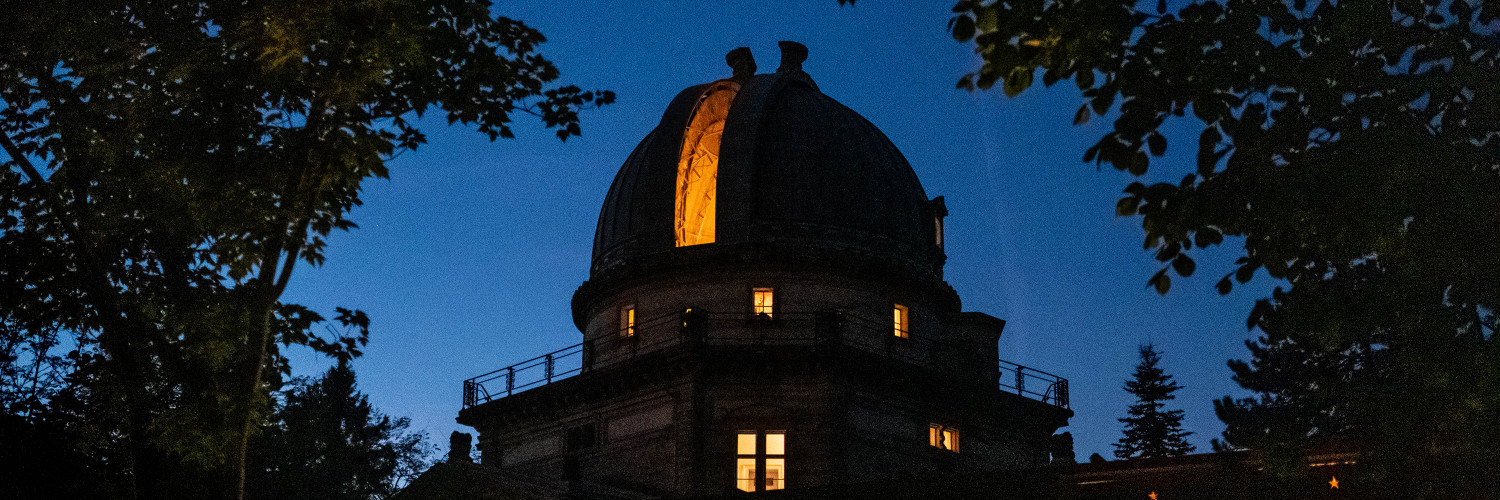

L’ObAS est un Observatoire des Sciences de l’Univers, une école interne de l’Université de Strasbourg (Unistra), et une Unité Mixte de Recherche Unistra-CNRS.
- Tweets210
- Following26
- Followers403
- Likes97





ALT Perseus Cluster of galaxies seen by Euclid. Credits: ESA/Euclid/Euclid Consortium/NASA, image processing by J.-C. Cuillandre (CEA Paris-Saclay), G. Anselmi; CC BY-SA 3.0 IGO


ALT A side-by-side composition that reads 'Euclid early commissioning test images'. We see a field of many stars and galaxies, in black and white on the left and in orange hues on the right. The image on the left was taken by the VISible instrument (VIS). The image on the right was taken by the Near-Infrared Spectrometer and Photometer (NISP). They are on the same scale, with the full versions of these images each being seven by seven arcminutes. Because the images are largely unprocessed, some unwanted artefacts remain – for example the cosmic rays that appear as white lines shooting straight across, seen especially in the VIS image.

ALT Image taken with the VISible instrument (VIS) and composed of 36 squares on the left, arranged in 6 by 6 squares, and one bigger square on the right. The image on the left shows the full VIS field of view, with the zoom-in on the right (showing one detector split into four quadrants) demonstrating the extraordinary level of detail that VIS is already achieving. We see spiral and elliptical galaxies, nearby and distant stars, star clusters, and much more. But the area of sky that this zoom-in covers is actually only about a quarter of the width and height of the full Moon.

ALT Image taken with the Near-Infrared Spectrometer and Photometer (NISP) and composed of 16 squares on the left, arranged in 4 by 4 squares, and one bigger square on the right. The image on the left shows the full NISP field of view, with the zoom-in on the right (4% of NISP’s full field of view) demonstrating the extraordinary level of detail that NISP is already achieving. We see spiral and elliptical galaxies, nearby and distant stars, star clusters, and much more. But the area of sky that it covers is actually only about a quarter of the width and height of the full Moon.