
PhD, Illumina AI lab; interested in Deep Learning and genome regulation; also drawing, martial arts, guitar, and death metal! (he/him)
Joined January 2018
- Tweets799
- Following404
- Followers276
- Likes4.1K




Pinned Tweet
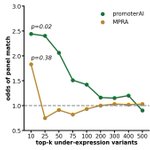
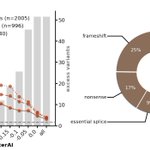
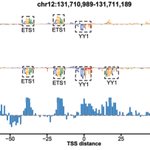
Excited to share my first contribution here at Illumina! We developed PromoterAI, a deep neural network that accurately identifies non-coding promoter variants that disrupt gene expression.🧵 (1/)


Gherman Novakovsky (слава Україні! 🇺🇦) retweeted

Cell-state conditioned sequence model of chromatin & expression trained jointly across diverse cell contexts by @zhou_jingtian & colleagues. Nice addition to the growing collection of joint cis-trans models of gene regulation. Still lots to do make the trans component causal.

Our cells carry the same DNA, but how this DNA is interpreted differs wildly from cell to cell. In a new preprint, Science Fellow @zhou_jingtian and team introduce Bolero, a model conditioned on cell state that predicts chromatin accessibility and expression from DNA alone.

Gherman Novakovsky (слава Україні! 🇺🇦) retweeted
This work is not getting enough attention. These are pretty massive leaps in modeling splicing. Very excited about this. Need to do a deep read but the performance on diverse splicing related tasks looks really good.

#SpliceAI2 splice variant effect benchmarks. Considerably improved performance in 9 evaluations spanning cryptic splicing, sQTLs, MPRAs, population genetics, plasma proteins, and rare disease. 🧬✂️🧵

Take a deeper dive into SpliceAI2 performance!
#SpliceAI2 splice variant effect benchmarks. Considerably improved performance in 9 evaluations spanning cryptic splicing, sQTLs, MPRAs, population genetics, plasma proteins, and rare disease. 🧬✂️🧵
Gherman Novakovsky (слава Україні! 🇺🇦) retweeted

Have you ever looked at a gene in IGV or a genome browser and wondered “What are all those (ATAC-seq/H3K27ac/CTCF ChIP-seq/…) peaks doing?” 🤔 I’m thrilled to share that we developed a new technology called Swap-seq to answer that exact question.
biorxiv.org/content/10.64898…

Gherman Novakovsky (слава Україні! 🇺🇦) retweeted

Just put the finishing touches on this beast. 17yrs to get here and the largest, most information dense dataset I had the privilege to generate and analyze. Look for it on bioRxiv next week!

Gherman Novakovsky (слава Україні! 🇺🇦) retweeted

This week we're releasing a preprint exploring state space models for long-sequence genomic prediction, alongside Cerberus, a set of open PyTorch models built on this work. biorxiv.org/content/10.64898…
Gherman Novakovsky (слава Україні! 🇺🇦) retweeted
Excited to announce SpliceAI2:
illumina.com/science/genomic…
Open model weights:
huggingface.co/illumina-ai/S…
Source code:
github.com/illumina/spliceAI…

Gherman Novakovsky (слава Україні! 🇺🇦) retweeted

Illumina's genomic AI models now enable researchers to identify 2x as many variants with predicted biological impact.
Identifying these variants and understanding their downstream effects can unlock new biological insights to advance rare disease and drug discovery research. The newest generation of our leading-edge genomic AI models are designed to help researchers assess the functional impact of splice, promoter, and missense variants.
With SpliceAI2, out today, we aim to help researchers advance rare disease research.
In the words of the vice president of BioInsight AI Lab, Kyle Farh: “Illumina is advancing AI to systematically shrink the portion of the genome that remains uninterpretable.”
🔗 Learn more: assets.illumina.com/content/…
For Research Use Only. Not for use in diagnostic procedures.

Gherman Novakovsky (слава Україні! 🇺🇦) retweeted

Super excited to share SpliceAI2! ✂️🧬
It predicts splice-site and splice-junction usage, reconstructs complete transcripts, and models tissue- and disease-specific splicing.
Proud to have contributed, and huge credit to the incredible team behind it!
Check out the tweetorial!⬇️
Gherman Novakovsky (слава Україні! 🇺🇦) retweeted

Incredibly, incredibly excited to introduce SpliceAI2, the next generation of splicing prediction! 🧬🚀🧵
Gherman Novakovsky (слава Україні! 🇺🇦) retweeted

Saturation mutagenesis of long-context seq2fun models requires millions of evaluations per gene. We introduce Multi-ISM to make this mapping routine:
biorxiv.org/content/10.64898…

Gherman Novakovsky (слава Україні! 🇺🇦) retweeted

scBaseCount: An AI agent-curated, standardized, auto-updated single-cell data repository cell.com/cell/fulltext/S0092…

Gherman Novakovsky (слава Україні! 🇺🇦) retweeted

🧬🧪🔬Why are enhancers transcribed? How does it impact gene regulation? I’m excited to share our new paper in @ScienceMagazine showing that ncRNAs control the timing of gene activation in embryos. w/Mike Levine #ScienceResearch #RNA
A few highlights 🧵👇
science.org/doi/10.1126/scie…

Gherman Novakovsky (слава Україні! 🇺🇦) retweeted

Excited to announce a new preprint that investigates the ability of sequence-to-function models (S2F; e.g., AlphaGenome) to identify causal expression modifying variants. (1\n)
biorxiv.org/content/10.64898…

Gherman Novakovsky (слава Україні! 🇺🇦) retweeted

I can not emphasize enough how much love and care has gone into this resource. Each of the 3865 models has been individually optimized and thoroughly vetted. It’s a truly foundational resource, and holds many many stories that are begging to be told.


Gherman Novakovsky (слава Україні! 🇺🇦) retweeted

New preprint from Shendure Lab on Locus-Scale aka Long-@$$ MPRAs led by the amazing Abby McGee &
@CGBiar! Most MPRAs test ~300 bp fragments next to a promoter. But real enhancers are bigger, act combinatorially and from a distance. 1/n biorxiv.org/content/10.64898…

Gherman Novakovsky (слава Україні! 🇺🇦) retweeted

We did a thing! A great collaboration from my @genentech days
biorxiv.org/content/10.64898…