



Why one copper mineral at Creston has us excited:
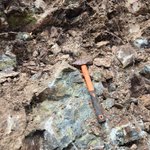
Chalcocite and native copper - two of the copper minerals we’re seeing at Creston - are often taken as a sign of supergene copper:

1
32
Finding it, together with native copper - spread across several different host rocks points to a strongly copper-charged, sulphur-poor system that packaged its copper into the highest-grade minerals.
1
19
It sucks to be old!
Not me — porphyry copper. The Burin was written off for its age: how could surface copper survive 500M+ yrs of erosion?
Creston did — upright, intact, at surface. An interpreted alkalic porphyry copper system hiding in plain sight. $NRN 1/2

1
55
2/2 We followed it with a second outcropping porphyry 700 m away — even more visible copper, incl. hypogene (primary) chalcocite + native copper. A few km from a deep-water port, overlooked for its age.
It sucks to be old. $NRN
(interpreted; assays pending)
28

We’re getting our eyes tuned to it, and combined with our soil geochemistry, we think there’s more of it to find at surface. So, without a single drill hole, we now have multiple porphyry-copper occurrences at surface, over an IP target that strengthens with depth.
1
21
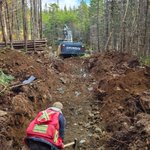
Northern Shield reports additional copper mineralization uncovered during trenching at the Creston Target on its flagship Root & Cellar property in Newfoundland.

1
44
Trenching follows the discovery of a copper-bearing monzodiorite porphyry dike while ground-truthing induced polarization (IP) target IP-1.
1
32
This marks the first identification of porphyry-hosted copper mineralization on the property and, to the Company’s knowledge, on the Burin Peninsula.
Read Full Press Release: northern-shield.com/pressrel…
22