

🧪 Research Lab at @Northeastern 🧑🏾🔬 We do research on Human Centered AI +Public Interest Tech+ Labor 🏛️ Director: @saiphcita
Boston
Joined July 2019
- Tweets11.2K
- Following3.5K
- Followers3.1K
- Likes7.5K






Pinned Tweet
Nuestra directora, la Dra. Saiph Savage fue invitada a presentar nuestra investigación con la alcaldesa de Boston, Michelle Wu.
Presentó nuestra investigación sobre Inteligencia Artificial para la tecnología gubernamental. 🤖🏛️
Para saber más ➡️gpai.ai/projects/gpai-…

Northeastern Civic A.I. Lab retweeted

We are hiring! I am looking to hire a PhD student to work on topics around AI evaluation from an HCI and technical standpoint. If you are interested, please apply through the Mila portal and put my name down as a potential advisor:

Mila's annual supervision request process is now open to receive MSc and PhD applications for Fall 2027 admission! For more information, visit mila.quebec/en/prospective-s…

Northeastern Civic A.I. Lab retweeted

We’re excited to announce the inaugural Human–AI Interaction Conference (HAIC 2027), taking place June 27–30, 2027, in Washington, DC (CFP coming soon at haic.cc). HAIC focuses on translational impact, turning human–AI research into meaningful real-world impact.

Northeastern Civic A.I. Lab retweeted

Virginia Tech Computer Science is hiring tenure-track faculty at our main campus in Blacksburg, and HCI is a focus area. I'm on the search committee and at #CSCW2026 this week. Happy to answer questions. website.cs.vt.edu/About/facu…

Northeastern Civic A.I. Lab retweeted
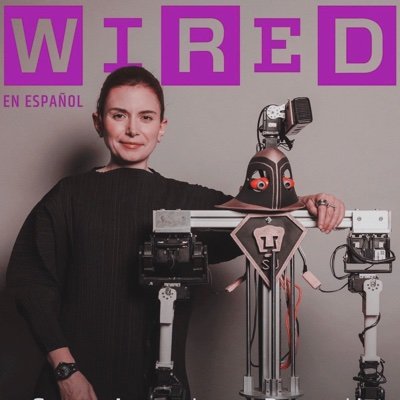
¿Cómo transformará la inteligencia artificial a nuestras universidades y al futuro del trabajo?
Estuve en TV UNAM conversando sobre:
✅formas de enseñar con IA
✅impacto en las aulas
✅ lo que significa para la próxima generación de profesionales
🔴 youtube.com/watch?v=hMfm_Mup…

ALT flyer of the tv show
Northeastern Civic A.I. Lab retweeted
Everyone needs to read this. Reality is worse than anything we can say about these people in a few words, media appearances, op-eds, or other conversations. Read the whole thing.
✴️ Reminder: These are @BernieSanders' main advisers on "AI" policy.
ams3.digitaloceanspaces.com/…

Northeastern Civic A.I. Lab retweeted
The main program of the Collective Intelligence conference kicks off in DC, and I couldn't be more excited!🚀
Expect a packed day of insights across:
🤖 human-AI collaboration
🤗 group decision-making
💼 organizational design
💡featuring keynotes
#CI2026 #hcomp26 #ci26 #hcomp26

Northeastern Civic A.I. Lab retweeted

Hoy quiero compartir un logro que me llena de orgullo, felicidad y una enorme satisfacción personal y profesional: he sido nombrada Miembro de Número de la @amiac_oficial Academia Mexicana de Informática AC✨
Detrás de este reconocimiento hay muchos años de trabajo constante, aprendizaje, retos y, sobre todo, una enorme pasión por cada proyecto, cada meta y cada camino que he decidido recorrer.
Pero ningún logro se construye solo. En el trayecto he tenido la fortuna de coincidir con grandes colegas y amigos que me han ayudado a crecer, que comparten generosamente su conocimiento y que me inspiran todos los días a seguir aprendiendo y dando lo mejor de mí.
Y, especialmente, quiero agradecer a mi familia, que es mi inspiración y mi motor: a mi mamá, por estar siempre; a mi papá, que hoy me acompaña desde el cielo y cuya presencia sigue formando parte de cada uno de mis pasos; a mi esposo @osjobu y a mi hijo Leo, por caminar conmigo, por su amor, por su fuerza en los momentos difíciles y porque siempre están cerca para celebrar conmigo cada logro. ❤️
Recibo este nombramiento con mucha gratitud, pero también con un profundo sentido de responsabilidad y con la firme convicción de seguir avanzando, aprendiendo, compartiendo y construyendo a paso firme.
Muy orgullosa y feliz de formar parte como miembro número de la Academia Mexicana de Informática. 🎓💻✨


Northeastern Civic A.I. Lab retweeted

Our paper, CIPHERGRID, was accepted at #NeurIPS2026!
We test whether models can take familiar abilities—visual reasoning, rule inference, and planning—and combine them in a setting where both the representation and rules have to be figured out from scratch.
This will be my second time attending #NeurIPS, after giving a tutorial on Positional Encoding last year.
If you are attending and interested in discussing architecture, abstract reasoning evaluation, and human-AI interaction, let’s connect!
It was an absolute pleasure to work with @VMFragoso and @saiphcita

Northeastern Civic A.I. Lab retweeted
Thanks! That’s actually one of the central questions CIPHERGRID is designed around. The component tasks are supposed to be familiar; the challenge is composing them in an unfamiliar way through a latent symbolic system that has to be inferred, preserved through planning, and re-encoded.
Memorization is something we specifically design against: our problem formulation, LESA, formalizes that goal, and we separately evaluate rule inference empirically and against human performance rather than assuming successful puzzle completion demonstrates inference.
Northeastern Civic A.I. Lab retweeted
Our paper CIPHERGRID was accepted to NEURIPS!
Can frontier models solve puzzles when rules & language are latent?
We test whether Large Reasoning Models can infer an unknown symbolic system from multimodal data & plan sequentially
Kudos Chris Curtis +@VMFragoso !
#NeurIPS2026

ALT screenshot of the abstract
Northeastern Civic A.I. Lab retweeted
Honored to receive a City of Boston Recognition for my research on AI for workforce re-entry!👷🏛️
It’s been a privilege collaborating with the Federal Governments of the USA & Mexico to design tech for the forgotten workforce
Special thanks to Consul Carlos Iriarte Mercado!🇲🇽🇺🇸

ALT photo of my award
Northeastern Civic A.I. Lab retweeted

NeurIPS 2026 reviews are coming out today. Good luck to all authors!
Northeastern Civic A.I. Lab retweeted

We are seeing a new trend in submissions to @arxiv (and presumably to conferences and journals): Authors submitting papers whose contents they likely do not understand. 1/
Northeastern Civic A.I. Lab retweeted

A lot of people are missing Terence Tao’s point and thinking “mathematicians are upset that AI is better than them.” That’s not what he’s saying, and some people are forgetting that Tao is one of the most AI-pilled mathematicians out there.
His point is that when people work on discovering something, along the way they invent new concepts. Those concepts later become useful far beyond the original goal, and enables further inventions. Finding a solution does matter, but the intermediate idea is often what makes the field richer, because other people can share it and build the next thing from it.
In tech, we can use the analogy of collaborative software. We started with algorithms for merging changes in a Word document, and evolved that to concepts about versions, diffs, and merges, and later to real-time collaboration tools like Git, Google Docs, and Figma. Humans built upon these concepts and developed more powerful solutions.
Terence’s worry is that a machine automating a solution robs the field of the value of developing the intermediate discoveries in the pursuit of larger discoveries.
When automating a solution, the intermediate discoveries and invention of concepts can be buried or completely hidden in the black box. We don’t learn from them to build the next thing; it’s like we never made the invention of collaborative document editing and thus could not have the conceptual understanding to invent the next version – and since it’s hidden, we also don’t socialize them to allow other people to invent, too, a core tenet of collective discovery.
So then, in both code and math, this leads to the atrophy of development of concepts in the field.
In other words: pure ‘solution extraction’ that hides the process of discovery can leave the field with a checked-off theorem but little new insight or new questions to pursue. And it might prevent us from understanding a field deeper.
I am seeing, first-hand, that atrophying of skills in software development. We push buttons and get solutions. There is much less incentive to develop new concepts and human skill. The bet most software companies are making is that LLMs are so effective in writing code that you’re still shipping overwhelmingly more value even with human skill atrophy, and it’s the right bet IMO.
However, much of the software industry is built upon building things, not necessarily novel invention and research. In such an environment, you can say that you accept some atrophying of conceptual invention and human skill for more output.
On the other hand, sectors like math and pure sciences that are focused on invention and insight might be the hardest hit by this.
Practical/applied sciences might fall somewhere in the middle. An Alzheimer’s cure, room-temperature semiconductor, or highly effective carbon capture solution are far too valuable to sandbag and say only humans can do that to develop concepts in the ‘proper’ way. The outcome matters too much to treat the preservation of concept invention as the highest goal. Even there, though, hidden intermediates can slow the next breakthrough if nobody can see how the first one actually worked.
So the question is not “is AI allowed to solve hard problems?” It is “in this field (math, science, tech, etc.), is the answer itself the main point, or are the concepts and abstractions we use to get there also the thing we need to maintain?”
In pure math, there’s an argument that the intermediates are often more useful than the solution, and atrophy in concept development is highly detrimental to the field. Solving Navier–Stokes, contrary to what some people claim, has little practical application, and pure math might be one of those fields where just finding a solution isn’t the entire point, and can actually be contrary to the field, which is what Tao is worried about.


Northeastern Civic A.I. Lab retweeted

⚠️ La Prueba PISA 2025 también midió algo importante, cómo los estudiantes usan la Inteligencia Artificial para el aprendizaje:
🔹 Los estudiantes que utilizan IA para tareas escolares específicas, como resumir textos, tienden a tener un menor desempeño en ciencias que aquellos que no la utilizan.
🔹 En los países de la OCDE, los estudiantes que utilizaban chatbots de IA una o dos veces por semana como apoyo para su aprendizaje obtenían resultados similares a los de aquellos que no los utilizaban.
🔹 Los estudiantes que usaban IA con mayor frecuencia y que habían recibido capacitación para evaluar la credibilidad de la información generada por la IA tendían a obtener resultados ligeramente mejores que quienes la utilizaban con menor frecuencia.

Northeastern Civic A.I. Lab retweeted
The ACM Collective Intelligence program is LIVE! 🧠✨
From novel human-AI teaming frameworks to decentralized crowdsourcing and multi-agent coordination, check out the full schedule & register today:
🌟hcomp.acm.org/2026/program.h…
Kudos @kurtluther + @windx0303!
#CI2026 #HCOMP26

ALT flyer of collective intelliegnce conference
Northeastern Civic A.I. Lab retweeted

Hello Thursday! Shout-out to #CI2026 General Chair, Kurt (@kurtluther), for putting together an amazing joint conference program—now on the SIGCHI program app!
🔥Regular reg ends TOMORROW (Friday): hcomp.acm.org/2026/registrat…
💡#HCOMP2026+#CI2026 Program:
programs.sigchi.org/ci/2026/…

Northeastern Civic A.I. Lab retweeted

Qué herramienta tan impresionante. Creo que es lo mejor que he visto en años con respecto a material didáctico. classic-patents.com/


What if every time you looked at an equation, it could be intuitively color-coded and linked to clear explanations of what each part meant and the role it played within the physical process represented by the equation? Well, at least you can now on classic-patents.com!
Northeastern Civic A.I. Lab retweeted

Op-ed: Massachusetts’ AI balancing act sentinelandenterprise.com/20…

Northeastern Civic A.I. Lab retweeted

Massachusetts lawmakers are putting the finishing touches on a major economic development bill called “Mass Wins”. The bill sets aside substantial funding to support the growth of the Commonwealth’s artificial intelligence industry, which G… lowellsun.com/2026/07/30/op-…
