

PhD candidate of visual art & literature @ohiou, Lecturer @FUK. Fulbrighter 2014/15 (Hausa FLTA). Literature|Films - Kannywood|Politics|Islam| #ManUnited
Columbus, OH
Joined February 2010
- Tweets25.9K
- Following2.4K
- Followers3.1K
- Likes4.4K


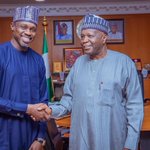




Kashim Shettima cannot deliver the North-East to Tinubu because he has nothing to show beyond empty promises. Seeking a second term on the strength of promises rather than tangible achievements simply does not hold water. I fully understand Kwankwaso’s characterization of the vice president as a “spare tyre,” an argument many Shettima sympathizers continue to invoke in his defense. However, that argument cannot convince me to cast another vote for an administration that has spent nearly its entire first term with little to show for it.
1
42
I think Governor Uba Sani is in desperate need of some serious prayers. I only hope that the people of Kaduna State will put their voter cards to good use in the 2027 elections and deliver the kind of political exorcism he so desperately needs!
57
THE ASSASSINATION OF ISLAMIC SCHOLARS IN NIGERIA: MERE COINCIDENCE OR A DISTURBING PATTERN?
Consider the following troubling chronology:
April 13, 2007: Sheikh Ja’afar Mahmud Adam was assassinated in Kano, just days before Nigeria’s 2007 general elections.
July 18, 2007: Sheikh Umar Hamza Dan-Maishiyya was assassinated in Sokoto, a few months after the 2007 general elections.
February 1, 2014: Sheikh Muhammad Auwal Albani Zaria was assassinated in Kaduna, approximately one year before the 2015 general elections.
October 26, 2026: Sheikh Yahaya Masussuka was reportedly assassinated by gunmen in Dutsin-Ma, Katsina State, months before Nigeria’s 2027 general elections.
Are these tragic incidents merely coincidental, or do they point to a disturbing pattern that warrants serious, independent investigation?
Who is responsible for targeting these Islamic scholars? What motives lie behind their killings? And why do some of these assassinations appear to occur around Nigeria’s electoral cycles?
These are questions that deserve answers, not speculation, political manipulation, or convenient silence. The timing alone does not establish a connection, but the recurring loss of prominent religious voices should concern every responsible citizen.
Beyond these troubling incidents, however, we must confront an equally uncomfortable reality: the increasingly unregulated nature of religious leadership and public preaching in Nigeria.
Perhaps the time has come for us to return to the drawing board and critically reassess how religious activities are organized, supervised, and conducted across the country.
Religious freedom is a fundamental right, but it must coexist with accountability, public safety, and social responsibility. The freedom to preach should never become a license to incite hatred, promote intolerance, manipulate vulnerable followers, or endanger peaceful coexistence.
Today, almost anyone can proclaim himself a Sheikh, pastor, prophet, or spiritual authority, establish a religious congregation, and command an audience without necessarily demonstrating the knowledge, ethical responsibility, or leadership competence such influence demands.
In a society as religiously sensitive and socially fragile as ours, this should worry us all.
We must begin asking difficult but necessary questions: Who should be entrusted with religious leadership? What ethical standards should guide public preaching? How can religious institutions promote accountability without undermining constitutionally protected religious freedoms?
I recognize that some will consider stronger oversight of religious activities unnecessary, excessive, or even an infringement on individual liberty. These concerns are legitimate and deserve consideration.
Nevertheless, we cannot continue to ignore the dangers of religious extremism, inflammatory preaching, the proliferation of unaccountable religious authorities, and the exploitation of faith for personal or political influence.
Nigeria does not need less religious freedom; it needs more responsible religious leadership, stronger institutional accountability, and consistent enforcement of laws against incitement and violence.
Our religious institutions must become instruments of peace, enlightenment, tolerance, and national cohesion rather than platforms for division, hostility, and dangerous competition.
The earlier we confront these challenges collectively, the better our chances of protecting both religious freedom and the sanctity of human life.
The assassination of even one religious scholar should trouble the conscience of the nation, regardless of the victim’s denomination, ideology, or political affiliation.
We must demand justice for the victims, accountability from the authorities, and meaningful reforms that prevent further tragedies.
The question remains: Are we witnessing unfortunate coincidences, or is there something more sinister that Nigeria has yet to uncover?
So, we may never see Tinubu sitting next to Trump, at least not as Nigeria’s president, as the Presidency confirms his absence from the ongoing UNGA in New York. Shame!
1/
In recent months, it has become increasingly difficult to scroll through social media without seeing either Dauda Kahutu Rarara or one or more Kannywood stars dominating the headlines. Sometimes it is because of their artistic achievements, other times because of political controversies.
1
157
2/
As Nigeria moves closer to the next general elections, the lines between entertainment and politics appear to be blurring. Celebrities are no longer just performers—they have become influential political actors whose words, endorsements, and associations now shape public conversations far beyond the film industry.
1
23
Judging by the reactions from many European players, pundits, and fans, it seems Argentina remains one of the least-loved teams in world football 😃. But for me, the issue is much simpler: Thomas Tuchel got it completely wrong with England.
No excuses, no long analysis. England had the quality, the depth, and the opportunity, yet Tuchel’s decisions ultimately cost them. Argentina did what successful teams do–they took advantage of the mistakes in front of them. England’s defeat wasn’t about Argentina being universally disliked; it was about a manager who failed to get the best out of a talented squad when it mattered most.
#WorldCup2026
82
I am still struggling to wrap my head around the reports that over ₦200 million, along with vehicles and plots of land, were allegedly given to the Triple R Movement by the Gombe State Government.
Since hearing the news, I have been calling friends and contacts in Kannywood to verify the information. With every call, I silently prayed: “God, please let this be false. Please let it be another baseless rumor. Please let it be a blatant lie.” Unfortunately, none of those prayers seem to have been answered.
What is even more troubling is that the amount reportedly involved was not ₦200 million but ₦250 million, with allegations that the founder of the movement personally diverted ₦50 million. Beyond the cash allocation, there are also claims that the movement received three Coaster buses and four plots of land in the New GRA area of Gombe, where each plot is said to be worth approximately ₦65 million.
I am still not entirely convinced by every aspect of the story, but there appear to be enough credible elements to warrant serious concern. One factor that makes me increasingly inclined to believe the reports is the absence of any official denial from the Gombe State Government or its representatives.
This is a matter of significant public interest, and the people of Gombe deserve a clear explanation. Was this taxpayers’ money? Was it party funding from the APC? Or was it a private donation from individuals? The public has a right to know.
If these allegations are inaccurate, the government should promptly set the record straight. If they are true, then the people deserve a full account of how and why such resources were allocated. Transparency and accountability are fundamental principles of good governance.
As a taxpayer, I contribute to the state’s revenue and therefore have every right to know the truth. The government owes the public a clear and honest explanation.
The 2026 World Cup is getting more entertaining. I watched two games today. Now watching Ghana v Panama. #Worldcup2026
1
206
Wissa’s header, and the jump reminds me of a player from the other side! It’s Portugal 1-1 Congo DR. #Worldcup26
1
139
Not many people are willing to say it bluntly, but the primary election held in Gombe yesterday was, at best, an embarrassment. Forget the candidates for a moment and focus on the process itself, the conduct, the coordination, the overall spectacle. There is clearly a serious problem within the system.
If the so-called political elites in power would pause for a moment to watch the ugly film they have produced and sincerely reflect on the public reaction and growing frustration, they would realize that the collapse of their political establishment is drawing dangerously close. It may not happen immediately in the next general election, but the warning signs are already glaring and impossible to ignore.
The agitation for an Obi/Kwankwaso ticket in 2027 is, frankly, a strategic miscalculation if the objective is to unseat the incumbent. Electoral politics in Nigeria is not driven by sentiment alone—it is a game of structure, reach, and coalition-building across entrenched regional power blocs. On that score, an Atiku/Obi ticket is far more formidable than the comparatively fragile Obi/Kwankwaso proposition.
Kwankwaso’s influence, while undeniable, is largely concentrated within Kano and parts of the Northwest. That is not sufficient to counterbalance the national spread required to win a presidential election. In contrast, Atiku remains a truly national political figure with decades of experience, deep-rooted networks, and cross-regional appeal that extends beyond any single stronghold.
Moreover, political realism demands an honest assessment of voter behavior. Obi’s base, driven by reformist enthusiasm, would likely consolidate behind an Atiku/Obi ticket as a viable path to power. However, it is far less certain—indeed, highly improbable—that Atiku’s established political base would pivot en masse to support an Obi/Kwankwaso arrangement. That asymmetry alone weakens the latter ticket significantly.
If the goal is victory rather than symbolic alignment, then the conversation must shift from emotional preference to strategic viability. In that regard, Atiku/Obi stands out as the more coherent, competitive, and ultimately winnable coalition.
1
51