
Neuroscientist at @OxExpPsy and psychology tutor @wadhamoxford.
Joined January 2018
- Tweets37
- Following89
- Followers223
- Likes52


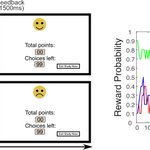
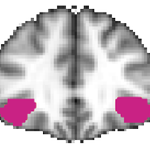
1/We are excited to share our recent @PLOSBiology paper: Local and global reward learning in the lateral frontal cortex show differential development during human adolescence tinyurl.com/yfzknt9u. Team effort by @mkwittmann @mscheuplein @SophieGGibbons +big thanks to @acmedsci

8/ … Phew, that tour de force does not even cover our big-data HCP neuroanatomy analysis or human neuropsychology results. For these and a fuller description of the above check out the paper.
7/Strikingly, the negative GRS effect contrasted with both previous studies and our own analysis of GRS effects in a large sample of non-human primates (same paradigm, same analysis), pointing towards a potentially meaningful species difference.

6/Interestingly, the influence of the global reward state (GRS) was negative and became more negative with age, meaning young adults, more than adolescents, were less likely to persist with an option if there were other valuable alternatives.

5/We showed that the influence of both local and global reward learning was greater in adults compared with adolescents. As people get older, they more strongly associate local rewards with actions.

4/To look into this this we used the same learning task originally developed in non-human primates to dissociate learning from immediate reward (local) and the overall reward state (global) and tested a large online sample of adolescents and young adults.

3/We know from monkey work that lateral prefrontal cortex is important for learning the consequences of our choices. Interestingly, those brain regions are some of the last to mature, suggesting that the supported learning mechanisms may continue to change during adolescence.

2/People often assume that teenagers struggle to learn from the consequences of their actions. But how exactly do adolescents differ from adults when they learn about what actions are good and what actions are bad? And how is that rooted in brain development?
MaryAnn Noonan retweeted

A bunch of @StokesNeuro's trainees (from many points in time) put together a list of '10 simple rules for a supportive lab environment', inspired by the example he set. This has been a wonderful moment of reflection for me personally, as I start my own lab direct.mit.edu/jocn/article/…

MaryAnn Noonan retweeted

Our article "Ten simple rules to study distractor suppression“ is out in Progress in Neurobiology: tinyurl.com/2s48pb2n. Team: @Malte_Woestmann,@violastoermer,@jonasobleser,@dougaddleman,Søren Andersen,@nickgaspelin,@JoyJGeng,@stevenjluck,@NoonanMP,@HeleenASlagter,@TheeuwesJan
MaryAnn Noonan retweeted

What a line up for day 1 of #CPPC! First day of in-person conference talks including - @lukejchang, @OlgaDalMonte1, @xiaosigu and @mkwittmann on social cognition & prefrontal cortex summarised by @thepsychologist

TWO NEW STUDIES from my lab asking how decision-making strategies are linked to mental health in young people (11-17 yrs). Follow the links for more information devneurolab.com/foraging-mon… AND devneurolab.com/foraging-fis…
MaryAnn Noonan retweeted

Home working, shielding and anxiety around health are new to many of us, but not to those with compromised immune systems. With up to 20% prevalence, you DO know someone immuno-compromised. Distancing? It's a habit. Hand sanitzer? They've carried it for years. 1/4
It has been a busy start to the year! First, @SophieGGibbons and I have a preprint out suggesting that OFC subregions mature at different rates across adolescence biorxiv.org/content/10.1101/…
Second, with @mkwittmann @mscheuplein @SophieGGibbons we show changes in credit assignment across adolescence biorxiv.org/content/10.1101/… as predicted by regional delays in grey matter maturation.
MaryAnn Noonan retweeted

What happens in the brain when we make decisions? Wadham Lecturer MaryAnn @NoonanMP describes her studies exploring the mysteries of the mind wadham.ox.ac.uk/news/2021/ja…

Work-Life balance: On my days with the kids, I find myself in one of two states during the peaceful post-lunch nap hour: 1. Frantically checking emails/making figures/writing papers or 2. Asleep on Small's floor. I'd call that balanced!
MaryAnn Noonan retweeted
Is this a perfect storm? Or is it a reckoning that has been staring us in the face for decades?
ft.com/content/7eff769a-74dd…