

Dad, Skull Base and Cerebrovascular Neurosurgeon, Entrepreneur, Researcher, and Philanthropist. Founder and President of @MyRightToHear and @MSLogger_Inc.
Louisiana, USA
Joined June 2018
- Tweets84
- Following150
- Followers528
- Likes144




Nimer Abushehab, MD retweeted

Behind every cochlear implant is a team of dedicated doctors who turn possibility into a new beginning. 🦻❤️
From the recent cochlear implant surgeries in Gaza, we honor the medical teams whose skill, commitment, and humanity are helping children move closer to a world of sound.
خلف كل عملية زراعة قوقعة، فريق من الأطباء يضع خبرته وإنسانيته في خدمة الأمل. 🦻❤️
من عمليات زراعة القوقعة الأخيرة في غزة، نوجّه التحية للفرق الطبية التي ساهمت بجهودها وخبرتها في منح الأطفال فرصة جديدة نحو عالمٍ مليء بالأصوات.
#MyRightToHear #MRTH #Gaza #CochlearImplant #HearingHope #MedicalHeroes #HumanitarianWork #من_حقي_أسمع #غزة #زراعة_القوقعة #أمل #أطباء


Nimer Abushehab, MD retweeted

#Grief in #Neurosurgery. A critical topic not discussed or taught much. I co-edited an entire issue on it: thejns.org/focus/view/journa… AMAZING collection of papers all should read. Read my own thoughts in this Editorial: thejns.org/focus/view/journa….
@AANSNeuro @TheJNS @CNS_Update


Make sure you join this highly-anticipated meeting!!

JOIN US FOR #IMSiRSHouston2026 Congress! Register before August 7! @KhanNickalus @DrBaskaya @BernardBendokMD @wenyalindabi @drjfm_stanford @AlbertHKimMDPhD @BorgheiRazaviMD @CfeKirsch @MohamedALabibMD @MMotiwalaMD @vnnguyen @PrevedelloDanny @EvaWuMD @gelarehzadeh @GAZenonosMD
Nimer Abushehab, MD retweeted
ماذا لو كان الصوت أجمل هدية يمكن أن تتلقاها طفلة؟ 💙
وفاء يحيى محمد، طفلة من غزة تبلغ نحو أربع سنوات، تعاني من فقدان سمع شديد منذ أن كان عمرها عامًا وثلاثة أشهر.
وفي مصر، خضعت وفاء لعملية زراعة القوقعة السمعية، وتكلّلت العملية بالنجاح.
اليوم، تبدأ وفاء رحلتها نحو سماع صوت عائلتها، والتواصل معهم، واكتشاف عالمٍ ظل صامتًا أمامها طويلاً.
تحققت هذه الخطوة من خلال جمعية من حقي أسمع، وبدعم من الإغاثة الإسلامية الأمريكية.
شاهدوا رحلة وفاء وشاركوها... فربما تصل قصتها إلى طفل آخر ينتظر فرصته في السمع.
لأن لكل طفل... الحق في أن يسمع. 💙
#من_حقي_أسمع #الإغاثة_الإسلامية_الأمريكية #وفاء #أطفال_غزة #غزة #زراعة_القوقعة #فقدان_السمع #الحق_في_السمع #الأمل #قصص_إنسانية
What if sound were the most precious gift a child could receive? 💙
Wafaa Yahia Mohamed is a four years old girl from Gaza who has lived with severe hearing loss since she was just 15 months old.
In Egypt, Wafaa underwent successful cochlear implant surgery.
Today, she begins her journey toward hearing her family’s voices, connecting with them, and discovering a world that had remained silent for far too long.
This step was made possible through My Right To Hear, with the support of Islamic Relief USA.
Watch and share Wafaa’s journey, her story may reach another child still waiting for the chance to hear.
Because every child deserves the right to hear. 💙
#MyRightToHear #IslamicReliefUSA #Wafaa #ChildrenOfGaza #Gaza #CochlearImplant #HearingLoss #EveryChildDeservesToHear #HopeThroughHearing #HumanitarianStories
A supraorbital craniotomy performed through a small eyebrow incision provides excellent access to the anterior skull base for the treatment of selected brain tumors and cerebral aneurysms. Because the incision is concealed within the eyebrow, it typically heals with minimal to no visible scar while avoiding the need for a larger craniotomy.
In this case, a patient presented with an approximately 4 cm planum sphenoidale meningioma. The tumor was completely resected through a 2.5 cm supraorbital craniotomy. The patient recovered remarkably well, remained neurologically intact, and was discharged home in less than 48 hours after surgery.
#Neurosurgery #BrainTumor #Meningioma #MinimallyInvasiveSurgery #Microsurgery #SkullBaseSurgery #SupraorbitalCraniotomy #NeurosurgicalInnovation #PatientCare #Brain #Surgery #Medicine #Neurosurgeon

"In neurosurgery, calm is not the absence of danger, but the ability to think clearly in the presence of it."
This is especially true when clipping a ruptured aneurysm, where you must always be prepared for the possibility of intraoperative rupture. The key is to remain calm. Panic is often more dangerous to the patient than the bleeding itself.
In this case, a young patient presented with a large ruptured aneurysm arising from a distal PICA branch. We performed a far-lateral approach for microsurgical clipping. The parent vessel and distal PICA were initially hidden behind the aneurysm. By carefully translating the angiographic anatomy to the operative field, we were able to quickly identify the relevant structures and safely determine the next steps when the aneurysm ruptured in surgery.
The aneurysm was successfully clipped and subsequently resected to relieve brainstem compression and ensure patency of the main PICA trunk. The patient remained neurologically intact after surgery.
#Neurosurgery #Aneurysm #BrainAneurysm #PICA #Microsurgery #CerebrovascularSurgery #SkullBaseSurgery #FarLateralApproach #Neurovascular #SurgicalEducation #PatientCare #Surgery #Brain #SubarachnoidHemorrhage #SAH
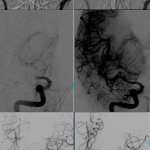
Large arteriovenous malformation (AVM), Spetzler-Martin Grade III, in a young man presenting with seizures and headaches. No history of rupture.
Angiography before surgery (Left) demonstrated a high-flow AVM with significant vascular steal, diverting flow from the anterior cerebral artery (ACA) territory. Treatment consisted of preoperative partial embolization followed by microsurgical resection.
Angiography after surgery (Right) confirmed complete obliteration of the AVM with restoration of normal cerebral circulation and no residual nidus. The patient remained intact and was discharged home few days later.
#AVM #Neurosurgery #ArteriovenousMalformation #Microsurgery #Embolization #Brain #Surgery #Surgeon #Neurosurgeron #Endovascular #Neurointervention #DSA #NeurosurgicalEducation

Nimer Abushehab, MD retweeted
Early Bird registration fees expire June 19! More than 325 Faculty/500 attendees. Amazing line up. Still time to submit Abstracts. #meningioma #Rhoton #neuroanatomy #spine #skullbase #cranial #neurosurgery @AANSNeuro @CNS_Update @WFNS_YNF @KhanNickalus @mtlawton @DrBaskaya

Thrombectomy for acute ischemic stroke is one of the most rewarding interventions in medicine. It involves the removal of a blood clot occluding a brain vessel, restoring blood flow and preventing a potentially devastating stroke. Many patients are able to regain much, or even all, of their neurological function afterward.
The procedure is extremely time-sensitive. It is estimated that nearly 2 million brain cells (neurons) die every minute during an acute large vessel stroke, which is why rapid diagnosis and treatment are critical.
These angiographic images demonstrate restoration of blood flow after thrombectomy in different cerebral vessels, including the basilar artery, middle cerebral artery (MCA), and anterior cerebral artery (ACA).
#Thrombectomy #Stroke #StrokeTreatment #NeuroIntervention #Brain #Surgery #Neurosurgery #Neurology #Radiology #Health #Medicine

One of the most fascinating anatomy exposures in neurosurgery is seen during the Far Lateral approach, which provides access to the anterolateral aspect of the spinomedullary junction. In this view, you can appreciate the lower cranial nerves (IX–XII), each responsible for critical functions such as swallowing, speech, taste, and tongue movement. The vertebral artery and the course of the posterior inferior cerebellar artery (PICA) are also beautifully demonstrated. Each one of those structures has to be handled delicately to avoid devastating injury.
This case involved clipping of a wide-neck ruptured PICA takeoff aneurysm that was not a suitable candidate for endovascular treatment.
#Neurosurgery #SkullBase #FarLateral #CranialNerves #Neuroanatomy #Anatomy #SurgicalAnatomy #Brain #Surgery #Neuroscience #Neurosurgeon


In patients with Moyamoya disease, twig-like MCA, and other causes of severe MCA stenosis, evaluation of vasomotor reactivity (VMR) is essential. VMR assesses the ability of cerebral blood vessels to increase blood flow in response to increased demand or vasodilatory stress. One way I use to assess this is with CT perfusion imaging before and after administration of Acetazolamide (Diamox), as demonstrated in this case.
On the right, after Diamox administration, brain perfusion becomes critically diminished (seen in red). This occurs because the diseased vessels are often already maximally dilated at baseline. After Diamox, the normal vessels dilate further and “steal” blood flow away from the compromised territory, a phenomenon known as cerebrovascular steal.
This indicates severely impaired cerebrovascular reserve, placing the patient at increased risk for cerebral ischemia and stroke, and suggests that revascularization treatment with bypass surgery is indicated to reduce future stroke risk.
#Moyamoya #Neurosurgery #Brain #Surgery #Bypass #Stroke #CVA #Neurology #Neuroscience #Health #Neurosurgeon #Medicine

A challenging case of a ruptured anterior vermian arteriovenous malformation (AVM) in a 10-week pregnant teenager. The AVM ruptured twice, resulting in significant ataxia and hydrocephalus. The patient also faced major social barriers, with no paperwork, insurance, or medical coverage available.
Treatment involved staged management with preoperative embolization followed by microsurgical resection. To preserve as much of the vermis as possible, the operation was performed through multiple skull base corridors. I began with a telovelar approach to address the feeders from the PICA territory, followed by a supracerebellar infratentorial approach to disconnect the SCA feeders. A limited transvermian approach through the superior vermis was then used to complete the resection of the AVM.
Postoperatively, the patient developed cerebellar mutism, which lasted approximately 2 weeks before gradual recovery of speech. She is currently undergoing rehabilitation for both her ataxia and speech deficits, with a viable ongoing pregnancy.
Complex cerebrovascular surgery requires a strong understanding of skull base approaches and surgical corridors. Radiosurgery is often ideal for deep AVMs; however, the history of multiple consecutive ruptures, pregnancy, and lack of medical coverage excluded that option.
#AVM #ArteriovenousMalformation #Neurosurgery #Cerebrovascular #BrainSurgery #SkullBaseSurgery #Microsurgery #Neurovascular #PICA #SCA #CerebellarAVM #Neurosurgeon #Brain

Trigeminal neuralgia, historically known as the "suicide disease", is considered one of the most painful forms of facial pain. It most commonly occurs when a nearby artery — usually the superior cerebellar artery (SCA) — compresses the trigeminal nerve, the nerve responsible for facial sensation. Over time, the constant pulsation against the nerve leads to nerve injury and severe recurrent facial pain.
Microvascular decompression (MVD) is the most definitive treatment for trigeminal neuralgia. It involves separating the artery from the nerve and placing a small piece of Teflon between them to act as a cushion. This operation remains one of the most rewarding procedures in skull base surgery. Around 90–95% of patients experience immediate pain relief after surgery, and most are discharged home within 1–2 days.
#TrigeminalNeuralgia #SkullBaseSurgery #FacialPain #MicrovascularDecompression #Neurology #Neurosurgery #Brain @#Surgery #Surgeon #Neurosurgeon #SkullBase


A brain aneurysm is a weakened bulge in a brain artery that can rupture and cause life-threatening bleeding. As a dual-trained neurosurgeon, I carefully determine whether a patient is best treated with endovascular techniques or microsurgical clipping.
Aneurysm clipping remains a fundamental skill in neurosurgery. For selected aneurysms, microsurgical clipping provides a durable, permanent treatment with a very low risk of recurrence.
This patient presented with a ruptured anterior communicating artery (ACom) aneurysm. Adequate exposure is critical in these cases, and here the entire ACom complex was well exposed before clip placement, allowing for safe aneurysm obliteration. The small perforators were also dissected away and preserved.
#Neurosurgery #BrainAneurysm #Microsurgery #Neurosurgeon #VascularNeurosurgery #Neuroscience #Aneurysm #Brain #Health


Extradural clinoidectomy is a key skull base technique that involves removal of the anterior clinoid process before opening the dura.
This approach is important in the treatment of select anterior skull base pathologies, like meningiomas. By working extradural first, the tumor can be devascularized early, making resection safer and more controlled. It also allows for early decompression of the optic nerve and provides improved visualization of critical neurovascular structures once the dura is opened.
#SkullBaseSurgery #Neurosurgery #Meningiomas #OpticNerve #NeurosurgicalApproach #SurgicalAnatomy #NeuroOncology #SkullBase


Two different patients. Two very different operative environments.
These intraoperative images of the brain during aneurysm clipping show the difference between operating on an unruptured versus ruptured aneurysm.
Ruptured brain aneurysms are fatal in about 50% of cases. Smoking can increase aneurysm rupture risk by up to 3–6x, and hypertension is one of the strongest modifiable risk factors.
If you have two or more first-degree relatives with brain aneurysms, the risk of harboring an aneurysm may reach 8–12%, and screening is necessary. Early detection can save lives.
@BAFOUND
#BrainAneurysm #Neurosurgery #AneurysmAwareness #SurgicalTechniques #BrainHealth #Brain #Aneurysm #Bleeding #BrainBleed #Neurology

Skull base surgery demands a deep understanding of lateral skull base anatomy.
In this case, a large tentorial meningioma was approached via a retrolabyrinthine approach, with meticulous temporal bone drilling personally performed to access both the infra- and supratentorial compartments.
This approach provides safe exposure, facilitates tentorial division, and enables complete tumor resection while preserving hearing. This is one of the many skills I owe to Dr. @jacquesmorcosmd!
The patient initially presented with seizures and remained neurologically intact and seizure-free following surgery.
#Meningioma #Neurosurgery #SkullBaseSurgery #Neuroanatomy #Brain #SkullBase #Surgery #Surgeon

Left-sided Moyamoya disease.
One of the main brain arteries (MCA) is missing on the left side → not enough blood flow → multiple strokes.
We created a new route for blood supply to the brain by connecting a scalp artery (STA) to a brain artery in a bypass surgery.
Low blood flow doesn’t just cause strokes, it can affect memory, focus, and thinking.
Restoring blood flow can change everything.
#MoyamoyaDisease #BrainHealth #BypassSurgery #StrokeAwareness #BrainSurgery #Neurosurgery #Stroke #Brain
