

Payloader, Space Ship Herder, Unfueled Horizontal Rocket Pilot, Rocket Puzzle Aficionado, State Estimator, Space Farmer My opinions represent...me... ✝️
Santa Maria, CA
Joined August 2019
- Tweets3.4K
- Following465
- Followers540
- Likes9.5K







Jonathan Nikkel retweeted

So the post below went a bit viral, and I was tagged on it several times. I'm not posting to disagree, as I write and talk a lot about freeing NASA from external impositions, eliminating needless bureaucracy, empowering our talented workforce, and focusing resources on the objectives NASA was created to achieve. No need to rehash all of that here and make this post excessively long.
And of course, SpaceX is an extraordinary company that has enabled NASA to accomplish far more at lower cost, from transporting astronauts to the ISS, to launching Europa Clipper, to the first Moon Base mission set to launch in December. Its ambition to make humanity a spacefaring civilization is exciting and important beyond words.
I will just leave you with this: NASA is the world's greatest space agency. We put 12 American heroes on the Moon and brought them home safely, built the Space Shuttle, landed rovers on Mars, launched great observatories like Hubble, James Webb, and now Roman, sent a spacecraft to kiss the Sun's corona, and sent Voyager nearly a light-day from Earth, and she is still going.
There is a reason the NASA "meatball" is one of the most recognizable logos on the planet. What our people accomplish inspires generations. Even with the occasional institutional inertia, NASA remains the space agency others aspire to be. We didn't earn that reputation through continuous perfection. We earned it by accomplishing what others thought impossible.


A retired NASA engineer who had worked on the Space Shuttle program for 25 years was hired by SpaceX at age 62. He described the first week as the most disorienting experience of his professional life.
At NASA, a design change required 3 meetings, 2 committees, a review board, and 6 to 18 months of documentation. At SpaceX, his new supervisor said "if it works, build it. If it doesn't, change it by Friday."
He sat at his desk after the first day and called his wife. He told her he felt like a man who had been swimming with ankle weights for 25 years and someone just cut them off. He could move. He could decide. He could build something in the morning and test it in the afternoon. The constraint that he had accepted as the nature of aerospace engineering turned out to be the nature of bureaucracy.
Within 6 months he had contributed to more design iterations than he had completed in his last 5 years at NASA. Not because he was working harder. Because the time between having an idea and testing the idea collapsed from months to hours. The same brain. The same knowledge. A different operating system.
He described a specific moment where he proposed a modification to a Raptor engine component. At NASA, the proposal would have entered a queue. At SpaceX, the modification was machined by the end of the day and tested by the following morning. He watched his idea become a physical object in 18 hours. At NASA, 18 hours would not have been enough to schedule the first meeting to discuss whether to schedule a meeting.
He told an interviewer: "I didn't get smarter when I went to SpaceX. I got faster. The intelligence was always there. The system was in the way."
The difference between SpaceX and NASA is not talent. NASA has extraordinary talent. The difference is the time between a thought and a test. SpaceX compresses it. NASA elongates it. The same engineer produces 10x more at SpaceX than at NASA because the bottleneck was never the engineer. It was the meetings about the meetings about the work.
Jonathan Nikkel retweeted

Things overheard today at SpaceX:
Small teams with big ambitions have always been the ones that change the world.
The people who say "that's impossible" are usually just describing their own limits.

Jonathan Nikkel retweeted

Friends, the new atheist movement appealed to the innate rebellious instinct of millions of young people. But the message that they come from nowhere and are going nowhere left their lives void of purpose and meaning.
I believe that the resurgence of religion we’re seeing now is a direct reaction to this spiritually and psychologically hopeless view.
We’re hungry for God, who gives our lives meaning and sends us on mission!
Jonathan Nikkel retweeted

@SpaceX is an extraordinary company because of the remarkable people behind it and the audacious and existential goals we’re after. What we’ve accomplished is incredible, but what lies ahead is even more ambitious. None of it would be possible without this team’s talent, passion, and relentless determination. The best is yet to come.

“The impossible is only impossible until it’s possible.”
Across @SpaceX, breakthrough innovation is driving toward one shared mission: making life multiplanetary. Hear from the leaders helping bring that vision closer to reality.

Wild to think that humanity has been mining asteroids throughout most of history.

This isn't crazy at all, it's just outside of most people's experience.
You just have to supply the relevant information, so people can understand.
Here, I'll do it myself.
(You should pay me more for this.)
Picture a jar. Not a special jar that I have to explain to you. Just an ordinary jar.
Put some gold in it. Just a little bit, ground to the consistency of fine sand.
Now some iron.
And some uranium. Don't worry, it's not very radioactive in this state. You can touch it with your hands. Just pour it in.
Now some tungsten. Surprisingly heavy, huh?
Some platinum.
Then just keep adding other heavy elements. Sticking to the useful ones. Should be pretty easy. They're all useful for something.
Jar about half full? Now pour in some really fine sand. Put a lid on it.
Now shake the jar for 4 billion years. Don't worry, it's just an imaginary jar, and an imaginary 4 billion years, you're not going to get bored or anything.
Now reach your fingers into the jar, and fish out a nugget of gold, or tungsten, or iron.
Oh, wait. You can't. It's all at the bottom. Under a thick layer of sand.
Can you picture it? Are you picturing it clearly? Close your eyes if it helps. Wait, no, open them again so you can read this.
That jar is Earth.
All the heavy stuff has sunk to the core. Where you can't get it.
Now smash the jar on the floor, and pick up the precious metals and the useful ones.... easy, right?
The smashed jar is asteroids.
Right now, your brain is saying "Oh, I see, he's talking about asteroid mining. He's saying we're going to go out and mine asteroids."
No.
I'm saying we already are.
When the Earth was molten, all the heavy stuff sunk to the core. We covered this. So how are we mining heavy stuff on Earth right now?
The answer is that we are mining asteroids.
We are mining asteroids that hit the Earth after it stopped being molten. So the stuff in them stayed on the surface. Pretty much every mine on Earth is an ancient asteroid strike.
Now think of all the asteroids in the solar system. Divide them into two categories.
The first category is the ones that have already hit Earth, sometime in the past.
The second category is the ones that haven't.
I'll save you the trouble of asking an AI. The first category is about .001%. The second is about 99.999%.
Everything you have, everything you own, everything you ever made, everything that your entire civilization is made out of, unless it's made of wood or entirely out of light elements.... it all comes from that .001%.
The 99.999% is out there in the rest of the solar system.
Now do you understand?
You, and I, and Elon Musk, and your sweet old granny, all of us, we grew up under conditions of grinding material poverty. We just don't see it that way because we have nothing else to compare it to.
We're used to it.
Are you starting to get the idea? Good, but we're not done yet. Now we're gonna talk about energy.
Here on Earth, we pull hydrocarbons out of the ground and burn them for energy. We could build fission reactors, but dumbass hippies made some movies, and now the retarded theater kids who run our government won't let us do that. They want us to go back to windmills, because they are retarded.
Windmills suck. Hell, even hydrocarbons suck. Fission is okayish, but the real energy source, the only one that matters in the long run, is hydrogen fusion.
On Earth, we can't really build fusion reactors that actually produce energy, despite the best efforts of engineers. That's not because the engineers are dumbasses like the theater kids. No, engineers are smart. They still can't do it because it's really really hard, unlike running a government.
Perhaps someday they'll succeed, but in the meantime, we're stuck burning hydrocarbons, until we hang all the theater kids and build fission plants instead.
But in space, there's a giant free fusion reactor waiting for us. In fact, we've been using it for millions of years. We call it the "sun".
In space, energy is free.
Oh, you have to invest in some solar panels, and they're only useful close to a star, but that's just nitpicky little details. Basic idea is that there's no power bill.
Build solar panels once, run 'em almost forever. On Earth, solar panels suck, and they're only useful for grid independence.
But in space, with nothing between you and the star but, well, space, then solar panels are awesome. And all the material and energy you need to build them is right there for the taking.
So, cheap material, free energy.
What else does a civilization need?
Computation? Well, guess what you can build a lot of with cheap material and free energy.
What this really all boils down to is that the only thing Earth has going for it is that it's a really nice place to build your house.
It's a crappy place to build a mine or factory.
The total value of everything off Earth — and I'm just talking about the solar system, not the rest of the universe — exceeds the total value of everything on the Earth by eleventy-billion percent.
In the future, most of us will continue to live on Earth, unless we really screw it up by not hanging all the theater kids. But all the mining, all the manufacturing, all the making the stuff, and all the making the stuff that makes the stuff, will happen in space.
And there will be a lot more of it.
All we have to do is get the tools we need from down here where we built them, to up there where we need them. So that we can build more tools out there, more and more and more of them, forever.
There's only one snag.
It's really hard to get things off Earth. We haven't really done much of it until very very recently.
SpaceX is the "very, very recently". SpaceX now owns about 80% of humanity's lift-to-space capacity, and no one else is even close.
That's 80% of the pipeline to infinite wealth. And first dibs on all the real estate out there, too.
In the old West, the railroads were money trees, because they didn't just own the transport, they owned the destination.
And there's about to be a frontier again, except this one's bigger, and it comes with a built-in second industrial revolution.
Make sense now?

Jonathan Nikkel retweeted

This isn't crazy at all, it's just outside of most people's experience.
You just have to supply the relevant information, so people can understand.
Here, I'll do it myself.
(You should pay me more for this.)
Picture a jar. Not a special jar that I have to explain to you. Just an ordinary jar.
Put some gold in it. Just a little bit, ground to the consistency of fine sand.
Now some iron.
And some uranium. Don't worry, it's not very radioactive in this state. You can touch it with your hands. Just pour it in.
Now some tungsten. Surprisingly heavy, huh?
Some platinum.
Then just keep adding other heavy elements. Sticking to the useful ones. Should be pretty easy. They're all useful for something.
Jar about half full? Now pour in some really fine sand. Put a lid on it.
Now shake the jar for 4 billion years. Don't worry, it's just an imaginary jar, and an imaginary 4 billion years, you're not going to get bored or anything.
Now reach your fingers into the jar, and fish out a nugget of gold, or tungsten, or iron.
Oh, wait. You can't. It's all at the bottom. Under a thick layer of sand.
Can you picture it? Are you picturing it clearly? Close your eyes if it helps. Wait, no, open them again so you can read this.
That jar is Earth.
All the heavy stuff has sunk to the core. Where you can't get it.
Now smash the jar on the floor, and pick up the precious metals and the useful ones.... easy, right?
The smashed jar is asteroids.
Right now, your brain is saying "Oh, I see, he's talking about asteroid mining. He's saying we're going to go out and mine asteroids."
No.
I'm saying we already are.
When the Earth was molten, all the heavy stuff sunk to the core. We covered this. So how are we mining heavy stuff on Earth right now?
The answer is that we are mining asteroids.
We are mining asteroids that hit the Earth after it stopped being molten. So the stuff in them stayed on the surface. Pretty much every mine on Earth is an ancient asteroid strike.
Now think of all the asteroids in the solar system. Divide them into two categories.
The first category is the ones that have already hit Earth, sometime in the past.
The second category is the ones that haven't.
I'll save you the trouble of asking an AI. The first category is about .001%. The second is about 99.999%.
Everything you have, everything you own, everything you ever made, everything that your entire civilization is made out of, unless it's made of wood or entirely out of light elements.... it all comes from that .001%.
The 99.999% is out there in the rest of the solar system.
Now do you understand?
You, and I, and Elon Musk, and your sweet old granny, all of us, we grew up under conditions of grinding material poverty. We just don't see it that way because we have nothing else to compare it to.
We're used to it.
Are you starting to get the idea? Good, but we're not done yet. Now we're gonna talk about energy.
Here on Earth, we pull hydrocarbons out of the ground and burn them for energy. We could build fission reactors, but dumbass hippies made some movies, and now the retarded theater kids who run our government won't let us do that. They want us to go back to windmills, because they are retarded.
Windmills suck. Hell, even hydrocarbons suck. Fission is okayish, but the real energy source, the only one that matters in the long run, is hydrogen fusion.
On Earth, we can't really build fusion reactors that actually produce energy, despite the best efforts of engineers. That's not because the engineers are dumbasses like the theater kids. No, engineers are smart. They still can't do it because it's really really hard, unlike running a government.
Perhaps someday they'll succeed, but in the meantime, we're stuck burning hydrocarbons, until we hang all the theater kids and build fission plants instead.
But in space, there's a giant free fusion reactor waiting for us. In fact, we've been using it for millions of years. We call it the "sun".
In space, energy is free.
Oh, you have to invest in some solar panels, and they're only useful close to a star, but that's just nitpicky little details. Basic idea is that there's no power bill.
Build solar panels once, run 'em almost forever. On Earth, solar panels suck, and they're only useful for grid independence.
But in space, with nothing between you and the star but, well, space, then solar panels are awesome. And all the material and energy you need to build them is right there for the taking.
So, cheap material, free energy.
What else does a civilization need?
Computation? Well, guess what you can build a lot of with cheap material and free energy.
What this really all boils down to is that the only thing Earth has going for it is that it's a really nice place to build your house.
It's a crappy place to build a mine or factory.
The total value of everything off Earth — and I'm just talking about the solar system, not the rest of the universe — exceeds the total value of everything on the Earth by eleventy-billion percent.
In the future, most of us will continue to live on Earth, unless we really screw it up by not hanging all the theater kids. But all the mining, all the manufacturing, all the making the stuff, and all the making the stuff that makes the stuff, will happen in space.
And there will be a lot more of it.
All we have to do is get the tools we need from down here where we built them, to up there where we need them. So that we can build more tools out there, more and more and more of them, forever.
There's only one snag.
It's really hard to get things off Earth. We haven't really done much of it until very very recently.
SpaceX is the "very, very recently". SpaceX now owns about 80% of humanity's lift-to-space capacity, and no one else is even close.
That's 80% of the pipeline to infinite wealth. And first dibs on all the real estate out there, too.
In the old West, the railroads were money trees, because they didn't just own the transport, they owned the destination.
And there's about to be a frontier again, except this one's bigger, and it comes with a built-in second industrial revolution.
Make sense now?

Very well said. A few challenges remain, but it feels like we are close to conquering LEO space safety. Share your predicted ephemeris, and put in the work to make sure that your prediction uncertainty is realistic! Very few valid excuses to have bad prediction quality in the agentic coding era.

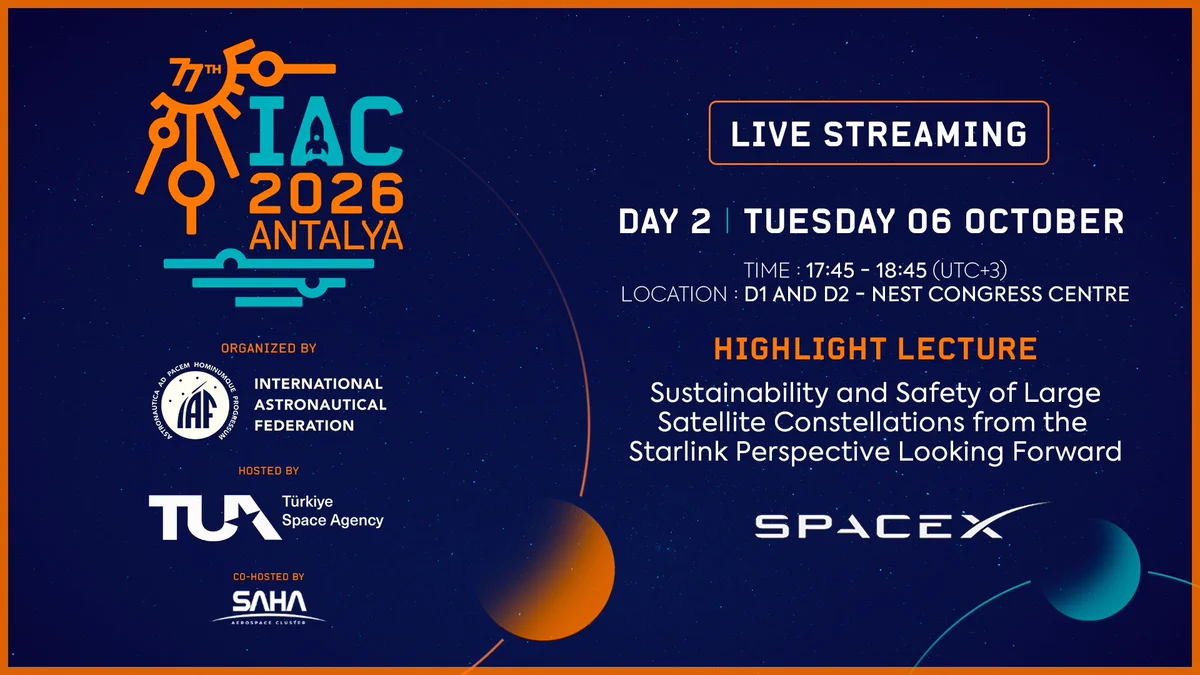
IAC 2026 - Highlight Lecture - Sustainability and Safety of Large Satellite Constellations from the Starlink Perspective Looking Forward @SpaceX #IAC2026 xitter.cf/i/broadcasts/1qKVmyaPj…
Jonathan Nikkel retweeted

Starlink publishes high-accuracy ephemeris for the constellation publicly every hour, including upcoming maneuvers. This system is available for all operators to not only see but to share their own satellite ephemeris data for free → space-safety.com
Jonathan Nikkel retweeted
Constant communication is what makes autonomy like this safe. Early contact lets us take maneuvering responsibility, publish ephemeris faster than ground radar can catalog the object, and deorbit and keep commanding through demise if needed
We treat early communications as a requirement, not a nice-to-have


Democrats like this lying buffoon ruined Rocky Mountain National Park with lottery schemes, ruined Indian Peaks Wilderness area with keepouts, and they generally try to ruin everything they touch with excessive control.
Don’t vote for them.




Jonathan Nikkel retweeted

I have a dream. I dream of a day when men in the West will find their spines and testicles, and rise up against parasitized suicidal empathy. I dream of a day when the populace will rise up against parasitic taxation whereby a large chunk of an individual's hard-earned money is stolen. I dream of a day when universities recommit to intellectual enrichment void of ideological activism. I dream of a day when people recognize that all religions are not equally congruent with our liberties and freedoms. I dream of a day when our grandchildren will live in freer societies than those of our grandparents. I dream of a day when people who fail to recognize the two phenotypes (male and female) are laughed out of public discourse. I dream of a day when every single person who adheres to a religious ideology that wishes to exterminate us is removed from our midst. Freedom and truth are the ideals from which all else that is good flows. I have a dream.
Jonathan Nikkel retweeted

Cycle 7: Vestiges is live.
Take control with reworked flight. Develop your Character and Shell through Skills. Uncover the universe as you travel. Dock directly with infrastructure. Encounter Feral Drones pursuing resources and activity of their own.
A new Cycle begins now.
Enter the Frontier.
Patch Notes: bit.ly/4hm7DyI
