

CPO @ Funding Societies (SEA's largest SME digital lender) | ex-Lendingkart & PayU | Love being at the intersection of Fin. Services + Tech + Consumer Behavior
Singapore, Bangalore
Joined September 2008
- Tweets2.7K
- Following295
- Followers669
- Likes1.5K
Nihit Nirmal retweeted

"There is No Direct link between Air Pollution and Lung Disease or deaths due to air pollution."
— Kirti Vardhan, Environment Minister
Nihit Nirmal retweeted

Looking for a team of 10-12 cracked researchers & engineers to build a new AI Lab in India.
Funding and compute secured.
DMs open.
Everybody and their mothers (sorry, Aunty ) has figured out how to use AI.
So this is for the few who are still figuring it out, making reliable systems that handle production-level chaos.
I'll keep this narrow. One thing I've learnt, from my own work and from helping a few people: the place almost everyone gets stuck is making their skills and prompts actually work.
They patch it the moment it breaks; it holds for a run or two, then breaks again. Or they clone someone's repo and wonder why it doesn't fit their problem. Neither holds. What you need isn't a better prompt, it's a setup. Though "setup" makes it sound bigger than it is. It's really just a quick fix.
The part that helps most, and almost anyone can do it: keeping a golden set, a negative set, and a traces file for the skills you actually use. It's unglamorous, but it goes a long way toward any agent you want to scale. I wrote up how I do that, plus versions and the feedback loop that ties them together.
Two reasons I'm putting this up, both a little self-interested:
1. Learning in public is just more fun.
2. I want to find a small set of people, not a cohort, not a paid community, just a few, probably product/engineering folks building their own agents and skills, who'd rather bicker about LLMs with other humans than with the LLM.
If that's you, my DMs are open.

1
84

I keep coming back to Karpathy's line while building agents for my own knowledge workflows:
"you can outsource your thinking/execution, but you cannot outsource your understanding."
Most "AI for knowledge work" today is tools. They speed up tasks.
So the design question isn't "what can the agent do?"
It's "what should the human still do?"
Here's the primitive I keep coming back to.
Say I'm tracking a stance:
AI-native knowledge-work products won't win by producing better summaries. They'll win by helping humans maintain and update a point of view.
Now an article lands about an AI research tool used by investment teams.
The agent shouldn't just summarize it. It should ask: does this article strengthen the stance, challenge it, or expose a gap?
Strengthen: the product is making the same bet, workflow centered on tracking a thesis over time, not on reading faster.
Challenge: adoption looks strongest for first-pass research, not decision support. Teams still export output into docs and slides before the actual judgment call. Maybe the stance is wrong about how users behave.
Gap: no evidence anyone changed a decision because of the tool. No example of a thesis being revised after contradictory evidence. The stance hinges on decision-shift being the value; the article doesn't show it.
That's the useful agent output.
Not "here's the summary."
But "here's what this new piece of evidence does to a stance you already care about."
Now the human has a real job: hold the stance, weaken it, rewrite it, or go look for the missing evidence.
That's the human-in-the-loop inversion I'm working with. The agent pulls the human out of reading, sorting, tagging, comparing, remembering.
It keeps the human exactly where judgment lives:
1. What do I believe now?
2. What changed?
3. What evidence would make me update?
I've been running this on my own knowledge workflows. Might open source it one day, but not my priority right now. If you're designing your own tools to expand your thinking and not summarise, would love to chat.
38
Nihit Nirmal retweeted

If you really think you can do something special...
Then live like it.
Move in the world like you're on a mission.
Start doing things that support who you really are, instead of settling for the smaller life.
Nihit Nirmal retweeted

I’m in love with this sentence:
“Consistency looks like nothing is happening, until everything changes.”
The new BS in town is: “taste is the new moat.” Then people who say that go on to build a podcast summarizer.
The point of an information stream isn’t to get a cleaner summary. It’s to sharpen your point of view. And that point of view should feed a real decision.
But when you ask an LLM for help, you often get the opposite:
more surface area, less conviction. Especially when the task is “summarize this article” or “give me the takeaways.”
I’ve been thinking about how to turn what I’m reading and writing into better decisions, so I built a small tool for myself.
At any point, I have 3-4 active decisions.
For each one, I keep a working folder with my current stance and key questions I am grappling with.
The pipeline is, ingest what I’m reading, map each chunk against an active stance, retrieve related notes from my own writing, and synthesize where the real leverage point is.
So when a new article comes in, rather than asking "what is this about?”
It asks:
Does this strengthen my view, challenge it, or expose a gap in it?
Then it checks my own notes for where I’ve already been circling the same idea, but hadn’t connected it clearly.
The job isn't summarizing the content. It's testing my thinking against it.
I’ll share a walkthrough next week: how the mapping works, how it connects to prior notes, and what happens when the model gets it wrong.
The fundamentals of learning haven’t changed. We still need to read, process, and develop our own thinking.
What has changed is the amount of noise.
46
As we started building with LLMs at Yuuki, like any other product person, I brought in the workflow that worked for the last 15 years.
Spec it, build it, test it, ship it. The assumption was the same: you know what good looks like before you start testing.
So we built evals to do exactly that. Score the output, check the quality, move on.
However as LLM outputs are non-deterministic, 10 point evals created problems.
My nine turned out to be my co-founder's six. 😆
The LLM judge scored a seven that matched neither of us.
Two months of scoring and we couldn't tell if the product was improving or our standards were drifting.
You can't test for correctness when correctness isn't fixed. A coaching response that's empathetic but doesn't push the user to act, is that good? Depends on who you ask, depends on when you ask them.
Hamel Husain's work on LLM evaluation pointed us to the fix.
Binary. Yes or no.
Is this response empathetic? Yes or no. No more debates about sixes and sevens.
The feedback loop when building with LLMs is extremely tight. Every binary judgment came with a line of commentary. "Gave advice before asking a single question", that critique becomes a constraint. The next version follows it. Gets reviewed again, refined further. The evals aren't just a testing phase. They're the loop through which the product gets defined.
And now because everyone, product, engineering, domain experts, is judging the same outputs, the evals force alignment on what good actually means. That alignment didn't exist before. The process created it. More on this in the next post.
For now, wrote a detailed post on how we designed our evals, link in comments.

1
1
45
Funny episode of the day: I was chatting with Claude, which has a nice sense of humor. I was supposed to say “super helpful", and Claude's response was so on point, that I ended up replying to a non-required response.

1
41
Agentic Engineering: Technically Correct, Contextually Naive
Everywhere I look, teams are celebrating AI coding agents. Million lines generated. PRs flying. Shipping velocity through the roof. Having lived through this, let me share what it actually looks like on the other side.
After 24 months of building Yuuki and Rapida, there is a teeny tiny reality that changes how agentic engineering works. Agents are like engineers: they write a lot of code. But they are unlike engineers because they don't carry context. They start fresh every time. The code is technically correct but contextually naive.
For the first feature, that's manageable. By the tenth deploy, you're shipping code that ignores everything production taught you from the first nine. That's not speed. That's compounding tech debt at machine pace.
One of our agents at Rapida generated a webhook handler that passed every test. In production, the telephony provider retried on slow responses and the handler wasn't idempotent, which led to duplicate calls. An engineer who'd been bitten by that provider before would have built idempotency in from the start. The agent didn't have that scar tissue.
Because of our traces, we caught it within minutes and fixed it the same day. Then we encoded the lesson — idempotency constraints baked into the webhook contract. Now agents generating webhook handlers must follow that contract. The system carries the context so the agent doesn't have to.
That's the pattern: not more reviews before shipping, but a feedback loop where production teaches the system, and the system constrains the next generation.
The teams shipping reliably at AI speed aren't generating the most code.
They're the ones whose system learns from every deploy.
blog.rapida.ai/what-happens-…
48
I shut down my startup last month. Returned capital instead of dragging it out.
I'm supposed to write the gratitude post now. The journey was the destination, I'd do it all again.I'm not going to write that post.
Here's what actually happened. 🧵
1
1
63
When I started Yuuki, I needed someone else to code and someone else to sell.
Two years later, I do both.
I used to think sales was performative. Turns out the good version is the opposite, sitting with buyers long enough to hear what they're not saying.
1
46
Claude Code after /clear, doesn't remember the session.
Fair. Makes sense.
But it also didn't reload CLAUDE.md? Just exists in the moment now. Zen, but probably a bug.

35
Nihit Nirmal retweeted

Happy New Year!
To kick off 2026, I built this tool that recommends all evidence-backed health screenings you need to do in your life, and lets you add google calendar reminders for when you're in 40s, 50s, 60s & beyond
longshot.invertedpassion.com…
Share it w/ friends and family 🙏

Pretty stoked about x402, where crypto meets AI agents.

Why x402 Still Has a Long Way to Go
Everybody talking about robotics and x402 and of course it's trending, but let's have a look at what’s actually working.
The last piece on x402 got a lot of attention because it captured the sense of something new, a protocol that could power the next evolution of the internet.
But with that hype also came a reality check. Because if we’re honest, most crypto AI agents today aren’t doing much that people would actually pay for.
The Problem With “Paying Per Nothing”
Let’s start with the obvious: paying per request only makes sense if what you’re paying for is useful.
Right now, most crypto agents aren’t solving real problems. They don’t make anyone more productive, don’t save costs, and often don’t even work reliably.
They’re toys.
You can’t build an economy agentic or otherwise on top of products that don’t generate real utility.
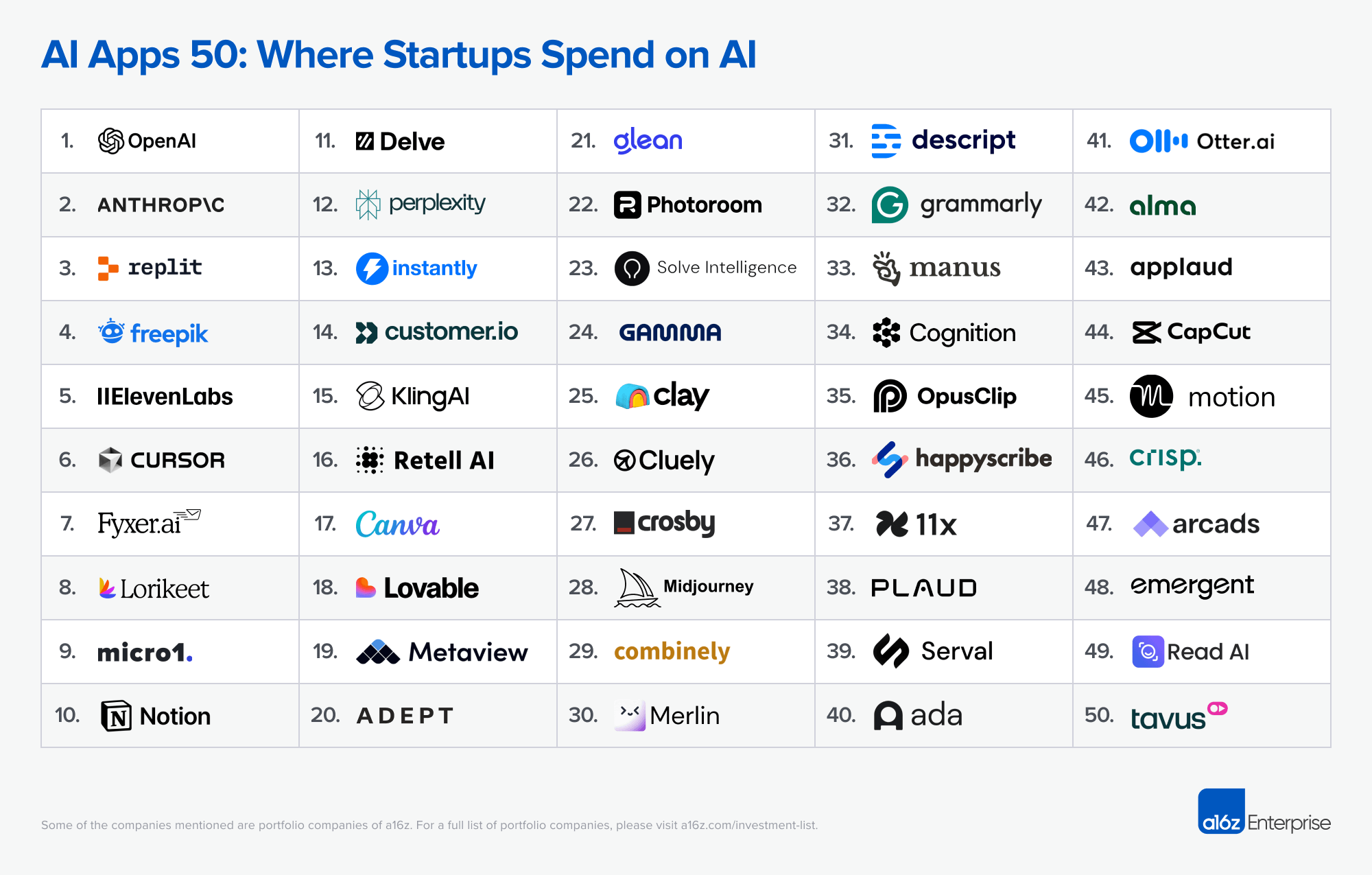
a16z recently analyzed data from ~200,000 startups. They found that the AI tools people actually pay for fall into two categories:
> Horizontal tools like meeting apps (Otter), creative platforms (Canva, ElevenLabs), or code copilots (Replit, Cursor).
> Vertical tools built around real workflows: customer support, sales, recruiting, compliance.
They work because they replace or augment human effort, they make money or save money.
Crypto AI isn’t there yet. Outside of infrastructure (compute, inference, payments), most products are making mid six figures a year. The only ones hitting eight figures are launchpads and that’s not because of utility, it’s because of speculation.
The Core Questions Nobody Has Answered
If we follow the logic of the “agentic economy,” where AI agents autonomously transact using x402, we still run into the hard stuff:
> How do we trust them?
> What’s the scope of work?
> What happens when they mess up?
> Who gives them reputation, credit, or refunds?
> How do we stop them from being exploited?
We can’t just hand wallets to autonomous bots and call that progress. Without trust, accountability, and feedback loops, x402 just becomes a faster way to waste money.
The Foundation is Real
That said, the idea of the pay-per-use internet is too big to ignore. The rails work. The architecture works. The integrations are growing. In the last 90 days, x402 processed roughly 2.7M transactions with a volume of $3.09M. We can see that a real network forming.
Projects like @PayAINetwork, @AurraCloud and @daydreamsagents have shown what’s possible when agents can pay directly for access, research, or compute.
And new tools like Mallory by @corbits_dev are finally starting to make it tangible, a consumer AI app that can call real APIs like Nansen’s gold-tier data for a fraction of a cent per request.
That’s the direction that feels right: practical, visible, and consumer-facing.
V2: A Step Toward the Real Thing
x402 V2, now being scoped by Coinbase, Cloudflare, and community contributors is meant to fix a lot of what’s holding it back.
It introduces cleaner architecture, better web compatibility, easier SDKs, and a smoother client–server flow where users won’t have to “pay ten times for ten requests.” It also brings support for more payment types, from stablecoins to fiat bridges, and a structure for optional add-ons like “sign-in with payment proof.”
It’s not sexy, but it’s exactly what’s needed: boring infrastructure that works.
Because until developers can integrate x402 like Stripe, the protocol will stay niche exciting on CT, invisible to the rest of the world.
What Needs to Happen Next
The next stage will be all about use cases that feel like magic to end users.
When you open an app and get an answer from an agent that feels alive, useful, and worth paying for that’s when x402 crosses the chasm.
We need products that:
> Make people money or save them time.
> Use x402 to unlock something new, not just reprice what already exists.
> Build trust and accountability into every transaction.
If you want a simple mental model:
> 10x projects are great marketers.
> 100x projects build tools crypto natives actually pay for.
> 1000x projects build things people outside crypto will use without even realizing it’s crypto.
The Takeaway
x402 is still in a very early phase. The rails are brilliant, the vision is clear, but the use cases are thin and the economics unproven. That’s fine, everything important starts like this.
And for everyone saying x402 tokens don’t make sense: you’re mid-curving it.
Every new meta starts the same way: most projects will fade, but a few will build real products and design clear value flow to their token.
Find those early and you’re owning pieces of what will become the foundation of the agentic economy.

4
3
49