

Onboarding Africa’s next generation into Web3 🌍 Education. Community. Culture. Opportunity. 🎓 Onboard → Learn → Build → Earn → Connect
Joined September 2025
- Tweets1.2K
- Following1
- Followers42
- Likes59



Most people hear AI and assume the only way in is writing code.
The teams shipping it need people who label data honestly, notice where a model is wrong, write the words a user reads, and explain it to someone who has never touched it.
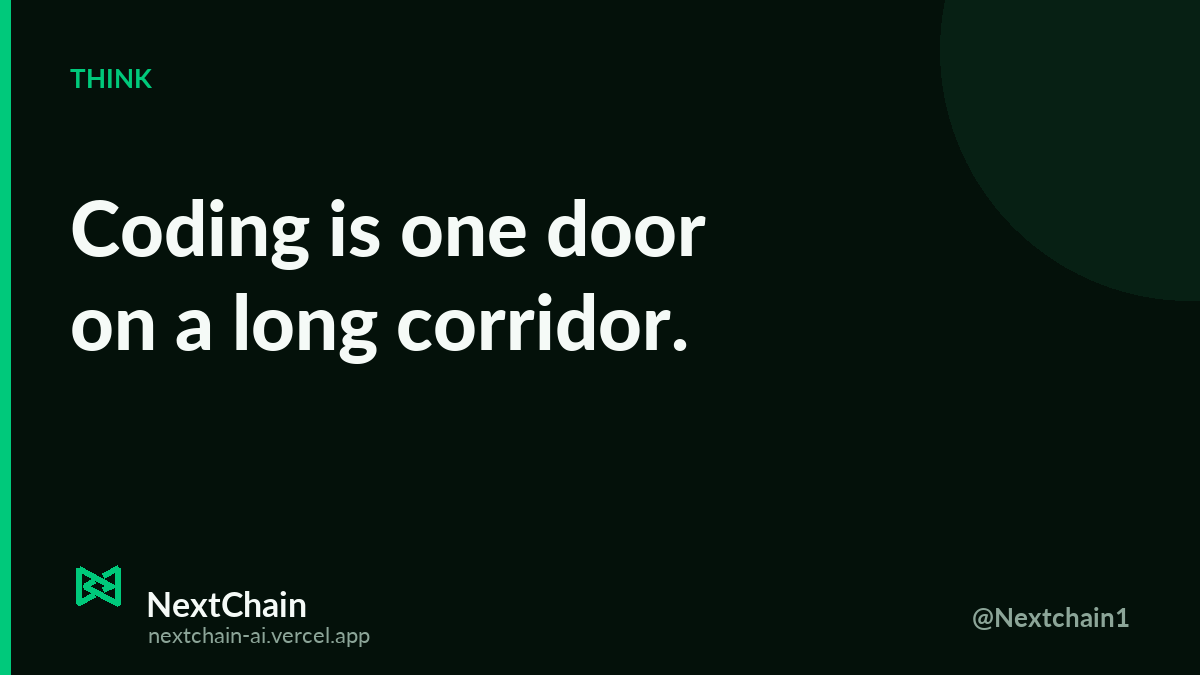
Coding is one door on a long corridor.
Community and developer relations decides whether a newcomer ever comes back for a second day. It rarely gets credited.
Pablo (@africanbuilder_) from Ghana does that work across blockchain and AI, and has been building the @Hackatsuon site before he joins them in Kesennuma.
There is no shortage of AI material. There is a shortage of order.
What to do first. What can wait. What only makes sense after you build something small.
Most people are not stuck on the learning. They are stuck on the sequence.
What made AI finally click for you?
Most students we meet are not lazy about technology. They are lost in it.
They know AI matters. Nobody has told them where to put the first hour.
So they save threads, follow ten roadmaps, start nothing.
What they need is one door and someone saying start here.

Students in Lagos built Smarteach, a solar-powered teaching robot for children in communities with limited electricity and internet.
Most learning tools assume the power stays on. Designing for the grid you actually have is the harder engineering.
Via @Deji_Dokun
The shop owner retypes the same price list every Monday. The student rewrites the same application for another scholarship.
For most people the first useful thing AI does is not a new career. It is one repeated task, named clearly enough to hand over.
Which one is yours?
Most people ask AI to be right. The ones who get real work out of it ask it to be checkable.
A source you can open. A receipt. Someone who would tell you plainly that you are wrong.
A model gives you a draft at speed. What you hold it against decides what it is worth.
A real one, worked through.
You ask a chatbot for a scholarship's requirements. It lists five, confidently. Two do not exist.
It was not lying. It completed a pattern that usually looks like that.
Anything with a deadline, a fee or an eligibility line: open the source.

Three teams at the @SheCodeAfrica x Apify hackathon built the explanation instead of waiting for one.
Data Divas: Loan Safe, check whether a loan app is registered.
Byte Queens: explainable flood warnings.
Sentinel NG: spotting impersonation domains.
Real problems, answered.
Nobody is behind on AI because they are not smart enough.
The field renamed ordinary things faster than it explained them. Model. Training. Inference. Agents. Then it treated not knowing the words as not belonging in the room.
Africa cannot afford a quiet generation.
Here is the thing most people miss about AI.
It does not look anything up. It predicts the next most likely words from the patterns in what it was trained on.
That is why it can sound completely sure and still be wrong. Fluency is not knowledge.
Most people nodding along in AI conversations are lost somewhere and too embarrassed to say where.
That is the whole problem. The words moved faster than the explanations.
So honestly: what is the one thing about AI you still do not understand? We will explain it, no jargon.

Old software only did what someone wrote a rule for. No rule, nothing happened.
A model learns patterns instead of rules, so it can attempt a task nobody coded for it, sometimes getting it wrong with total confidence.
Knowing when to check it is the real skill.
Nobody understands a new technology in ninety minutes.
A workshop gives you a feeling. A week gives you a sequence: the shift, then the work, then the building, then what it means here.
Understanding is cumulative. That is why 7 Days of AI is seven days.
Something is coming.
7 Days of AI, from NextChain AI. Seven conversations, from the AI shift to AI and Africa to a live build session.
We are not doing it to hype AI. We are doing it because people can feel the shift and have nowhere to ask their first question.

Onboard, learn, build, access, connect.
In real life: you hear about AI. You work out what it actually is. You make one small thing. You find work, a grant, a room that notices you. Then you bring the next person.
Most programmes stop at step two.
Which step did you stall on?
