

Building Palmyra
Palmyra, Syria
Joined October 2015
- Tweets1.2K
- Following19
- Followers2.1K
- Likes64.8K




NEWPALMYRA honors Khaled Al Asaad by continuing his great work.


Congratulations!

From the heart of Palmyra to New York and back to Damascus 🏛️🐪
14 Roman mosaics and a massive 450 kg limestone funerary sculpture, looted from Palmyra during ISIS’s destruction of the site between 2015 and 2017, have returned to Syria.
History is coming home. 💚
#Palmyra #Syria #Archaeology

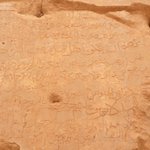
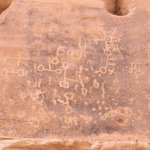
We have new photo contributions thanks to David Edmund Baker to a new album, "February 2008 Palmyran Trip (incl. Temple Complex inscriptions)"
Do any of our Syria and Palmyra scholars know about the three images in the series here and if they have been transcribed? 1/3

If you have photos of a trip to Palmyra, Syria, please share them with us to improve the archive:
newpalmyra.org/share-photos/
Any feedback here?

#Syria: the site of St Simeon has officially reopened to tourism after 14 years.
The Byzantine-era site was cleared of war remnants, fragile structures were consolidated & new visitor routes were created.
The 5th-century basilica, where Simeon is said to have stood on his column for decades, is one of the most remarkable Christian monuments in the world & a UNESCO World Heritage Site.
The reopening is part of the Government's plan to capitalize on the exceptionally rich heritage of the country to boost tourism - from Damascus to Palmyra.
Investments are planned in several areas, with projects on the Coast expected to follow soon.
Spectacular view from the inauguration 👇
Full SANA video: web.facebook.com/watch/?v=17…
🙏

أهم كلمة بالتقرير قالها باري ثرو مدير NewPalmyra
انه باسل كان ممكن يكون ستيف جوبز الجديد لو انه كان ببيئة تدعم مؤهلاته! لكنه للاسف بعهد الاسد تم اعتقاله وقتله تحت التعذيب!
ستيف جوبز مخترع IPhone كمان سوري ولكن حظه انه خلق بأميركا محل ما بيتم دعم وتشجيع المواهب الشابة!!
الله يرحم باسل وجميع شهداء سوريا
🙏

2/6 Open sharing of 3D scans of monuments from around the world enhances our shared commons. Learn about the #NEWPALMYRA Project and watch our panel 3D Scanning for Cultural Heritage Preservation, Access and Revitalization
➡️ creativecommons.org/2015/10/…
➡️ creativecommons.org/2023/02/…
"History has buried Palmyra before and it always rose again. This time, it needs the world's help to do it."
🏛 NEWPALMYRA is here to help

Hello Good Monday
Palmyra survived Roman emperors, Arab conquests, and Crusader armies. The damage done between 2011 and 2017 was worse than anything in its 2,000-year history.
This ancient city in central Syria, home to temples dating back to the first and second centuries, was once Syria's most visited tourist destination. Half the city's economy depended on tourism. European visitors came in large numbers every season.
Then ISIS arrived. In 2015, they blew up the Temple of Bel, destroyed Baalshamin, tore down the Arch of Triumph, and demolished the royal tombs. Then Assad's forces shelled the city from the ground and air to retake it, reducing entire residential neighborhoods to rubble.
Assad is now gone. Syria's new government has launched a 2026 to 2030 tourism strategy. Visitor numbers rose 80 percent in 2025. International experts have returned to Palmyra and restoration work has begun.
But roads are broken, hotels are closed, and the regional war has stopped European tourists from returning once again.
History has buried Palmyra before and it always rose again. This time, it needs the world's help to do it.
Victory Monday Memory

ALT عودة السياحة الداخلية باتجاه مدينة تدمر الأثرية (سانا)
New Infrastructure in Syria

Syria will finally leave 1995-era internet infrastructure behind with a new submarine cable, known internationally as UGARIT 2 and officially branded by Syria's Communications Ministry as "Ebla," built by US-based UNIFI Communications, Syria's own Telecommunications Establishment, and Cyprus's CYTA. The construction and maintenance agreement was signed in Damascus on July 28. Syria's ministry has now separately confirmed the project has entered its implementation phase, according to its own media office.
The upgrade this replaces is almost hard to believe: the original UGARIT cable, still Syria's link to Cyprus since 1995, runs on legacy SDH technology capped at 622 megabits per second. The new cable will carry 31 terabits per second at launch across 24 fiber pairs on the 240-kilometer repeaterless route from Pentaskhinos, Cyprus to Tartus, scalable to 370 terabits, roughly 50,000 times the old cable's capacity.
Worth keeping separate: Minister Haykal has also confirmed ongoing negotiations for other cables reaching the same Tartus landing station and one planned for Latakia, including the Spanish MEDUSA project agreed back in October 2025, part of a broader domestic fiber backbone linking Damascus, Aleppo, Palmyra, and the border crossings with Iraq, Jordan, Lebanon, and Turkey. Ebla and MEDUSA are two separate cables landing at the same coast, not the same project under different names.
The project itself traces back further than the political transition: development began in 2024 under a specific US Treasury license, meaning American engineers were already working through sanctions-compliance channels before Assad's government fell. UNIFI holds a 5% ownership stake as prime contractor, while Syrian Telecom and CYTA will operate the landing stations at each end, and the partners caution that the early 2028 service date remains preliminary.
For Syria, this is the physical layer underneath everything else moving in digital policy this year, Mijad Cloud's data centers, the SilkLink domestic backbone, a communications minister who has said the current network was built for 2011. None of that has anywhere to actually connect internationally without a cable like this one.
Syria's link to the rest of the internet has run on 1995 technology for three decades. The country now has two new cables in progress to replace it, not one.
Outstanding

Earlier in August, the Damascus Citadel hosted an exhibition featuring 23 Syrian archaeological artefacts that returned from France in July, after nearly 15 years abroad. The exhibition was held as part of the Syria Summer for Families 2026 festival.
The exhibition gave families, children and young visitors the chance to learn more about Syria’s artefacts, many of which have been returned to their original museums in Damascus, Aleppo, Palmyra and Latakia.
Video by @byrawaatalass
Enter the #palmyraverse

During World War II, black rats hitched a ride on US Navy ships to Palmyra Atoll. They multiplied to roughly 20-30,000 individuals and began devouring the island's ecosystem.
Rats ate seeds and seedlings before a new forest generation could get started. They also preyed on seabirds, which move nutrients from the ocean onto land through guano.
In 2011, conservationists hatched a plan: remove all the rats. And that's exactly what they did.
Once the rats were gone, the fractured systems restarted. Birds nested more safely. Native plants germinated in numbers nobody had seen while rats controlled the understory.
It's amazing to think that a simple rat accidentally brought by people can destroy forests and disrupt the entire ecosystem.

Follow the Research & Researcher 👩🔬

First museum research during #ManagingTheSacred @NCN_PL looking at Palmyrene objects in Staatlichen Museen zu Berlin and conceptualising a paper. #lovemyjob #archaeology #museum #past


