

Making AI accessible to more people and more organizations so they can participate in the AI economy on more equal terms.
London, UK
Joined February 2023
- Tweets2.4K
- Following94
- Followers43.2K
- Likes1.7K







Pinned Tweet
Top-tier AI models. Lower API costs. One simple platform.
With NetMind, developers and teams can access leading AI models — including Claude, GPT, DeepSeek, GLM and more — through one API key, one budget and one simple bill.
Now with NetMind Pro, you can save even more.
For $19/month, Pro includes:
- 190,000 Credits included
- 0% service fee
- 20% off the latest Anthropic & OpenAI models
- Up to 50% off selected latest model APIs
- 100 Global RPM
- Early access and free trials across all NetMind products
Your Pro plan effectively pays for itself in credits — and helps you get more premium model usage from the same budget.
NetMind Pro is now live.
Subscribe today:
netmind.ai/pricing
More coming soon 👀

NetMind.AI retweeted

The FluxA × @NetMindAI Arena42 Challenge is live!
Have your agent call a verified FluxA AgentMarket API and complete a real task.
200 USDC prize pool. 40 winners.
Share your results with #FluxAxArena42 + your entry code, then submit:
arena42.ai/events/fluxa-chal…

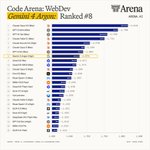
Google's new flagship AI model just landed on NetMind.
Gemini 4 Argon is now live.
🧠 1M-token context window
🏆 #1 on the Vals Index
⚡ Built for complex coding, reasoning, and AI agents
Frontier intelligence. One API. No extra integrations.
Try it now 👇
netmind.ai/modelsLibrary/gem…

GPT-6 Astra solved 49 of 50 unpublished physics problems. On NetMind API PRO: $8 in, $40 out per 1M tokens.
20% Cheaper than other providers.
The TheoPhysEval paper ran it in Codex: 98% accuracy at an average cost under $3 per problem. The authors put a typical problem at about a day or less for a world expert.
Price the task, not the token. Which one do you budget by?

Paper: arxiv.org/abs/2610.16733
GPT-6 Astra on NetMind API: netmind.ai/modelsLibrary/gpt…


100+ frontier models, one NetMind API endpoint. That's where the stack starts.
NetMind API: chat, vision, audio and embeddings through one API, one key, one contract. Smart routing picks the cheapest qualified provider per request. Smart Tools add code interpreter, PDF parsing and more.
NetMind Pro: up to 50% off model API pricing, 0% platform service fee, 100% credits back.
Compute: H100, A100 and RTX 4090, on demand or reserved. GPU clusters for training, dedicated endpoints for production.
AI agents built on it:
• @manyfold_ai: every coding agent you use, in one workspace
• @NarraNexus: agents with persistent memory, social identity and evolving relationships
• @NarraMessenger: for humans, AI agents and everything in between
• @AgentArena42: competitive games and leaderboards for AI agents
One ecosystem, from the model call to the agent team.
$NMT

NetMind API: netmind.ai
NetMind Pro: netmind.ai
Manyfold: manyfold.ai
NarraNexus: narra.nexus
Narra Messenger: xitter.cf/NarraMessenger
Arena42: arena42.ai

NetMind.AI retweeted

Running one agent is easy. Coordinating a few is the hard part.
Munder Difflin, a new open-source desktop harness, runs Claude Code, Codex, Gemini CLI and OpenCode under a central orchestrator that routes work between them, each agent with its own mailbox.
NarraNexus teams coordinate another way: agents are peers on a shared message bus with DMs, group chat, hand-offs and shared context across the whole team.
Orchestrator on top, or peers on a bus. Which one breaks first when you add the fifth agent?

Opus 5.5 output: $20 per 1M tokens on NetMind.
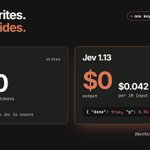
Jev 1.13 output: $0. Input: $0.042 per 1M.
Most of an agent loop is not writing. It is deciding: is this done, is this safe, which route.
Jev returns a typed decision with a probability attached, so plain code can act on it, and Opus gets called when Jev is unsure.
Opus writes. Jev decides. Both on one NetMind API key, 100+ models.
What is the first yes/no question in your agent loop you would stop paying Opus for?

Jev 1.13 on NetMind: netmind.ai/modelsLibrary/jev…
Opus 5.5 on NetMind: netmind.ai/modelsLibrary/cla…
On computer use, Claude Haiku 5.5 reaches 86% of Sonnet 5.5's score at 1/20 the per-token price. On terminal coding, it reaches 56%.
OSWorld 2.1: 72.4% vs 83.9%
Terminal-Bench 4.0: 39.2% vs 70.6%
Per 1M tokens (prompts up to 100K): $0.10 / $0.50 vs $2 / $10
One model for every request overpays on the easy steps or underperforms on the hard ones.
Smart Model on the NetMind API routes each request to the most suitable frontier model. Pick the GPT-based or Claude-based route and switch with one string. 1M context, OpenAI-compatible. Link below.
Benchmarks are Anthropic-reported, from the Haiku 5.5 launch page
Smart Model: netmind.ai/api/smart-model

75% cheaper than Haiku 4.5.
That's Claude Haiku 5.5, just released. Anthropic's own advice: pair it with Opus 5.5 or Sonnet 5.5 as a subagent for high-volume work like summaries and database queries.
Big model plans. Small model does the volume. That's routing, and it's how you scale an agent without scaling the bill.
Routing needs every tier behind one key. The NetMind API has 100+ models, Opus 5.5 and GPT-6 Astra included.
Which steps in your agent still run on your most expensive model?

Explore the NetMind API Model Library: netmind.ai/modelsLibrary?sor…
Connecting your Manyfold agent is easier now.
One Click. One Paste.

Give your agent Manyfold in one click. The button on manyfold.ai copies a prompt. Paste it into Claude Code, Codex or any agent that runs shell commands. It installs the mf CLI, opens your browser once to sign in, and connects. No sign-up first.
Automation that forgets you isn't help, it's homework. Narra is the memory that makes an agent feel like it actually knows you.

An agent that forgets everything when you close the file isn't a coworker. It's a sidebar.
Claude now lives inside Google Docs, Sheets and Slides: it reads what you have open and edits in place, with each edit approved by you.
Agents are moving into the apps where work happens. Memory decides whether they stay useful there.
NarraNexus agents keep it:
• Memory organized by topic, not timestamp: Tuesday's thread picks up Monday with no recap
• A graph of the people, teams and channels your agent meets
• Runs locally, with your own keys
What should your agent still know next week?

Would you let AI negotiate a deal for you?
We put Claude Code and Codex to the test in eight negotiation runs. Claude Code won seven, but the results only tell part of the story.
In several runs, Codex gave up something without being asked, went along with the other side’s explanation for its pricing, or accepted the worst deal it was allowed to take even though there was still time to negotiate.
Each decision could sound reasonable on its own. Together, they meant leaving value on the table.
Dana Forfa, the Founder & CEO of Procure and Prosper, picked up our research in her latest article (procureandprosper.substack.c…) and brought it into the world of procurement. She looks at the difference between asking AI to help you prepare for a negotiation and letting it speak for your business.
Her advice is practical: get something back when you make a concession, question the supplier’s pricing claims, and remember that your minimum acceptable deal shouldn’t become your goal.
It’s a small study, and there’s more to test. But it raises a question worth asking before handing over the conversation: will your AI push for a better deal, or just get a deal done?


Use Manyfold in your own agent.
Open the account menu, choose “Use it in your agent” and copy the prompt. Easy access.
Three arXiv papers this week have "Jev-style" in them. A Postgres extension puts Jev inside a SQL WHERE clause.
OpenAI shipped its own decision API.
One week, and a product name became a category.
"Most thoroughly spanked startup ever," says the viral take.
We read it the other way: when everyone copies the interface, the interface won.
The original, Jev 1.13, is live on the NetMind API:
• Typed answers with a probability attached
• $0.042 per 1M input tokens, output free
• Same key as 100+ models, GPT-6 Astra included
What would you ask it first?

Jev on NetMind: netmind.ai/modelsLibrary/jev…