

Neonode provides advanced optical sensing solutions for contactless touch, touch, gesture control, and in-cabin monitoring.
HQ, Stockholm, Sweden
Joined November 2011
- Tweets581
- Following50
- Followers3K
- Likes49




How do you build robust automotive vision AI that runs efficiently on limited hardware? It takes more than a good neural network. It requires the right model architecture, synthetic data, rigorous real-world validation, and a development process that allows engineers to test, learn and improve quickly. Neonode engineers, Anders Sahlström and Johan Villysson, explain how these elements work together to deliver real-time computer vision under demanding automotive constraints; hubs.ly/Q04Bwv8v0

Accurately assessing a driver’s state requires more than monitoring where they are looking. Hand movements, posture and interactions add important context, revealing signs of distraction, cognitive load and what a driver intends to do next. Combined with eye tracking, these behavioral cues can help vehicles anticipate driver actions, adapt interfaces and respond more appropriately to what is happening inside the cabin. Neonode’s MultiSensing® platform brings these signals together, moving driver monitoring beyond observation and towards more intelligent, intuitive interaction between people and vehicles: hubs.ly/Q04zqYfM0

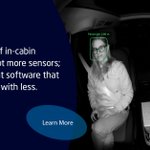
As vehicles move toward centralized, software-defined architectures, the industry is relying more on AI to deliver safety and comfort features instead of adding extra sensors or hardware. Neonode’s MultiSensing® software uses modular neural networks and monocular depth estimation to extract rich 3D insights from a single video stream, enabling features such as driver attention monitoring, occupant positioning, seatbelt checks and more from one standard in-cabin camera, even long after production. The future of in-cabin sensing isn’t more sensors; it’s intelligent software that sees further with less. Learn more: hubs.ly/Q04yqbSR0

Next week we are heading to InCabin Europe 2026 in Barcelona. If you are attending this event, don’t miss the speech from Agnes Jernström, Senior Software Engineer at Neonode, who will discuss how vehicles can better understand driver intentions through hand-tracking. Agnes will explain how this additional context can help distinguish between different types of distraction, support more appropriate vehicle responses and enable new in-cabin experiences as assisted driving and AI-powered interfaces continue to evolve. We hope to see you in Barcelona.

Euro NCAP’s 2028 protocols will put truck drivers more firmly in focus, raising expectations for the role of driver monitoring in commercial vehicles. Meeting these expectations requires a DMS that goes beyond basic distraction and fatigue detection to provide a deeper and more reliable understanding of driver state. For truck manufacturers, selecting a DMS that can meet these evolving requirements will be central to achieving strong safety performance. Learn more: hubs.ly/Q04wv3Yw0

Digital mirrors are becoming more common, especially in commercial vehicles. They offer a wider field of view, improved fuel efficiency and fewer blind spots, but they can also feel unfamiliar compared to traditional mirrors which can increase the cognitive load for drivers. Neonode’s Digital Mirror Augmentation uses real-time information about the driver’s position to dynamically adjust the displayed image, replicating the behavior of reflective mirrors. The result is a more intuitive digital mirror experience that improves situational awareness while retaining the benefits of camera-based mirror systems. Learn more: hubs.ly/Q04vkGMr0
A truck is not simply a larger passenger car, and its driver monitoring system shouldn’t act as such. Different cabin geometries, camera positions, driving behaviors and long hours behind the wheel create challenges that passenger-car DMS was not designed to solve. In our latest article, we look at what makes driver monitoring for commercial vehicles different, why context matters when interpreting driver behavior, and how flexible DMS technology can help manufacturers support a wide range of vehicle configurations without compromising performance or driver trust. Read the article: hubs.ly/Q04tYW0t0

What can a driver’s hands tell us about driver distraction, intent and readiness? Quite a lot. In a new interview from InCabin, Agnes Jernström, Senior Software Engineer at Neonode, explores how hand-tracking can add another layer of intelligence to in-cabin monitoring, from detecting distraction and understanding driver state to enabling smarter, more intuitive HMI experiences. A big thank you to InCabin for the interview. Read it in full to learn how Neonode’s MultiSensing® platform is helping vehicles better understand the people inside them: hubs.ly/Q04tktx_0

Join us at IAA Transportation 2026 in Hannover, Germany, from September 15–20 to explore the future of commercial vehicle technology. Visit Hall 11, Booth A25 to step inside our live demo vehicle and experience how Neonode’s MultiSensing® software delivers real-time driver monitoring and in-cabin sensing from a single camera. We will also be showcasing our signature digital mirror augmentation, which eliminates critical blind spots, simplifies trailer reversing and prevents screen-induced motion sickness by dynamically adjusting the screen view to match the driver's exact line of sight. We hope to see you there. hubs.ly/Q04rMQH20

As vehicles become increasingly automated, one of the biggest safety challenges is ensuring drivers are ready to take back control when it matters most. True driver readiness requires more than monitoring the drivers gaze. It demands a comprehensive understanding of driver behavior, attention and intent. In our latest white paper, we explore how multi-signal analysis can improve takeover safety and enhance the performance of Level 2 and Level 3 automated driving system. Download the white papers to learn more: hubs.ly/Q04mMsFv0

Meet us tomorrow at the Women in Automotive Technology (WAT) networking breakfast at InCabin USA. We are looking forward to the opportunity to connect with talented professionals from across the automotive industry and discuss the global technologies, perspectives and innovations shaping the future of mobility. If you are attending InCabin USA and work in engineering, we would love to meet you at Huntington Place, Riverfront Salon West.

This week we are attending InCabin USA in Detroit, together with other automotive leaders, to discuss the future of in-cabin sensing, driver monitoring and vehicle safety. If you are attending, don't miss Agnes Jernström's presentation tomorrow at 16:15 where she will explore the growing importance of driver readiness in semi-autonomous driving systems and how advanced sensing technologies can help OEMs meet evolving safety and regulatory requirements.

As vehicles become more automated, one critical question remains: is the driver actually ready to take over when it matters most? While current driver monitoring systems focus on signals like eye gaze and steering input, true safety requires a deeper understanding of driver readiness. Our latest white paper explores why readiness is becoming a defining factor for Level 2 and Level 3 automation, the limitations of traditional monitoring approaches, emerging regulatory and safety requirements, and how a more holistic understanding of driver behavior can help bridge the gap between human and machine. Download the white paper to explore the future of driver readiness and safer automation: hubs.ly/Q04jrDYC0

Yesterday, we had the pleasure of participating in the high-level automotive delegation in Italy, led by HRH Prince Daniel. The visit provided a premier platform to engage with Italy’s leading automotive OEMs and innovation leaders on the future of mobility, safety and intelligent technology. Sweden continues to drive progress through collaboration and forward-thinking engineering, and this initiative proved highly valuable for strengthening relationships and exploring future partnerships across the European automotive ecosystem. Thank you to the organizers, @BusinessSweden, for this valuable opportunity. #Automotive #Innovation #Mobility #BusinessSweden #Italy #FutureOfMobility


Neonode is heading to Singapore to attend NRF: Retail's Big Show Asia Pacific, taking place June 2–4, 2026, at the Marina Bay Sands Expo & Convention Centre. Meet us at booth 1420 to see how our proprietary MultiSensing® software can transform the self-checkout experience by adding an intelligence layer that can see and interpret shopper demographics and behavior in real-time, including age, gender, intentional theft or innocent missed scans. NRF APAC serves as the ultimate gathering for industry leaders and innovators to collaborate and shape the future of commerce. We hope to see you there. hubs.ly/Q04gYn2z0

Neonode reports quarter ended March 31, 2026 financial results.
Read the full report: hubs.ly/Q04gpml_0

Neonode is heading to InCabin USA, where we will be showcasing how our camera-based sensing technology enables real-time driver readiness insights for safer and more intelligent driver automation. Visit us to experience our live demo vehicle, and be sure to hear Agnes Jernström speak on stage about the future of human-machine interaction and in-cabin intelligence. We hope to see you there. Learn more: hubs.ly/Q04fN7Q50

As vehicles become more automated, safety is not just about monitoring the driver; it’s about truly understanding their readiness to take over control from autonomous functions. Our latest article explores why driver monitoring is not the same as understanding, and how the shift from detection to interpretation is critical for designing systems that can anticipate human behavior and enable safer, more intuitive handovers. Read the full article: hubs.ly/Q04ffhYT0

The Insurance Institute for Highway Safety (IIHS) has made one thing clear with its recommended safeguards for partial automation: most vehicles on American roads are not doing enough to ensure drivers stay engaged. This is more than just a safety gap; it is a growing risk for automakers as ratings increasingly shape consumer trust and purchasing decisions. However, this challenge also presents an opportunity. By integrating the right technology, manufacturers can become first-movers in achieving top-tier safety ratings and establishing themselves as industry leaders. Learn more: hubs.ly/Q04bB3Kw0

As vehicles become increasingly intelligent, understanding the human behind the wheel is becoming critical. In this interview, Veronika Wahlberg, Sales Director Europe at Neonode, draws on her background in human behavior research and automotive product development to share how advanced sensing technologies can better interpret driver intent, improve safety and enable more seamless interaction between humans and machines. Read the full interview here: hubs.ly/Q049_0Fx0
