

Now posting to Bluesky (https://xitter.cf/t.co/1DXjcEwrDW) - leading the global movement to transform agriculture, perennially.
Salina, Kansas
Joined August 2015
- Tweets4.2K
- Following2K
- Followers6.3K
- Likes7.8K






The Land Institute retweeted

He set out to overturn 10,000 years of farming. Fifty years later, perennial grains like Kernza are taking root on 4,000+ acres in 15 states. buff.ly/APnBz08 #PerennialGrain #Kernza

The Land Institute retweeted

A group of chefs in Wichita spent their Earth Day trying their hand at a new ingredient. Now, there may be a future on their menus for a perennial grain designed for sustainability called Kernza. kmuw.org/the-range/2026-05-0…

The Land Institute retweeted

📢 Introducing a Keynote Speaker of #ICAS2026! 📢
We are thrilled to welcome Dr. Timothy Crews as a keynote speaker of #ICAS2026!
For more information about ICAS 2026:
sciforum.net/event/ICAS2026

The Land Institute retweeted

📢Check out this article titled, "Development and adoption of Kernza—A perennial grain crop for sustainable agriculture."
doi.org/10.1002/ppp3.70164

The Land Institute retweeted

Development and adoption of Kernza—A perennial grain crop for sustainable agriculture
nph.onlinelibrary.wiley.com/…
The Land Institute retweeted

From water quality to beer, how a new grain could impact Iowa desmoinesregister.com/story/…

“When I started working here in 2001, these ideas were regarded as radical, even laughable. That is no longer true. Within a human generation, we could feed millions & repair soils that took millennia to form." Read more from @mountainogre in The Guardian: bit.ly/3KNJHqy


"Soil is more important than oil!" My latest in Guardian: the perennial grain revolution
Kernza's 3m roots BUILD soil vs DESTROYING it. Wheat yields could be matched in 15 years.
Most hopeful story I've ever reported 🌾🌳🎄
@thelandinstitute tinyurl.com/34m2cnwf
Grateful for perennial partnerships like the work with
@MTSU to study the potential of Kernza® perennial grain, perennial sorghum, and silflower perennial oilseed for Tennessee agriculture: bit.ly/3XH11R1 @CbasMtsu

Topsoil is disappearing at a rapid rate across the U.S., and farmers are feeling the impact.
To help protect our farmland, @MTSU School of Agriculture professor Song Cui is partnering with The Land Institute to test perennial crops, plants that don’t need to be replanted every year and help reduce erosion.
From perennial grain to sorghum and silflower, this research is paving the way for a more sustainable future for Tennessee agriculture. Read the full article at bit.ly/3XH11R1 @MTSUAg @NatureAsMeasure

The Land Institute retweeted

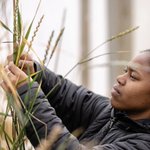
Our researchers have gone all in on perennial grain Kernza, the kind of deep-rooted plant that many believe will prove essential for both feeding humanity and meeting the challenges of our changing climate. bit.ly/4ivkygV

ALT Person holding a stalk of wheat in their hands.
The Land Institute retweeted

Join the IPBGG Journal Club on Sep 30, 4-5 PM, as Khyathi Madduru leads a discussion on “The Perennial Grain Revolution”. We’ll explore: What is the prospect of a perennial grain revolution of agriculture? Athens | Griffin | Tifton | Zoom 243 549 4922. No prereading required!

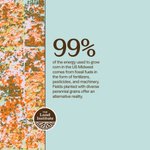
Over 99% of the energy farmers use to grow corn in the US Midwest comes from fossil fuels in the form of fertilizers, pesticides, & machinery. Read how fields planted with diverse perennial grains offer an alternative future with reduced farming emissions: bit.ly/4pqQANT


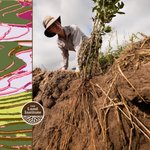
What if farming could rebuild and improve soil health rather than degrade it? Perennial grain crops grown in diverse mixtures can ensure that soil stores carbon while supporting abundant food and economic growth for farmers and communities.
🌱Learn more: bit.ly/3Zs2z35


By collaborating with nature instead of working against it, we can develop perennial grains like Kernza® and Baki™ bean to regenerate soils, improve water retention & enhance life above & below ground, balancing food needs with long-term planetary health. bit.ly/3EIKEgy


As erratic weather patterns challenge food production and community livelihoods, perennial grains can offer resilience for farmers as climate instability threatens yields and resource availability. Learn how Kernza® provides adaptation for dryland farming: bit.ly/4pDwW1t


Progress with Kernza® perennial grain and perennial rice shows that perennial grains can be bred, grown, & eaten to sequester carbon, support biodiversity, & protect clean water. Learn more about our 5 decades of progress and our vision for 2075: bit.ly/4oTNoKx


The Land Institute retweeted
It’s harvest season in Kansas. While much of the state’s 300 million bushels of wheat are already in, another grain — Kernza — is quietly being harvested in select areas where it’s taken root.
kmuw.org/podcast/flyover-foo…

As we approach our 50th anniversary in 2026, we are taking stock of what has grown from decades of research, collaboration, and commitment into a perennial future. Read the 2025 President's Letter to learn more and join this movement today: bit.ly/4oTNoKx


The Land Institute retweeted

As brewers and distillers are showing interest in utilizing Kernza grain for beer, ARS researchers and industry stakeholders are working to analyze the brewing and distilling properties of the perennial grain. Beer enthusiasts may soon raise a glass to an entirely new wheatgrass bred for grain production -- while serving up the future in agriculture! loom.ly/UOP-qCE

The Land Institute retweeted

The public is invited to the Hastings Kernza® Field Day on Aug. 14 to explore Kernza, a perennial grain that offers a combination of environmental and agricultural benefits. Registration is required for this free, in-person field day. #MNAg
🔗 mda.state.mn.us/perennials-w…

ALT Close-up of a single golden stalk of Kernza grain bending against a bright blue sky with scattered clouds.
The Land Institute retweeted

New small batch beer ALERT!! Trappist Table Beer drops today, amazing and rare beer we made with Kernza. #beer #kernza #brewery #craftbeer #drinklocal