

Native Bound Unbound is creating the archive of the Indigenous enslaved across the Americas, name by name and story by story. Supported by @MellonFdn
Americas
Joined September 2022
- Tweets1.1K
- Following51
- Followers1.8K
- Likes311


Pinned Tweet
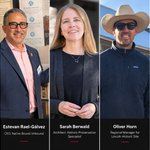
(1/9) Welcome to the official Twitter account for Native Bound Unbound! We are creating a digital archive of the Indigenous enslaved across the Americas, name by name, place by place, event by event and story by story. Supported by @MellonFdn; ED @ERaelGalvez

Join us at University of New Mexico's George Pearl Hall this evening from 4-6pm MDT for a wonderful symposium featuring our executive director, Dr. Estevan Rael-Galvez!

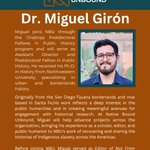
We are delighted to welcome Dr. Miguel Girón as Native Bound Unbound’s first Postdoctoral Fellow! Please join us in welcoming Miguel to the NBU team!


Listen to Bob Haozous and his daughter, Dr. Emily Haozous, as they have a conversation about the life and legacy of their ancestor Juan de Dios and the complexity of identity. Thank you StoryCorps for recording and facilitating this conversation.
nativeboundunbound.org/stori…

On this day 346 years ago, the Pueblo Revolt occurred in New Mexico. One of the causes was the forced labor and tribute under the encomienda system active at the time. The video below is "Surviving Columbus" from NM PBS, and tells the story from the Indigenous perspective.
Today, and every day, NBU is committed to helping preserve and share these histories.
youtu.be/hTvOazbtk1w&t=3085

Listen to NBU team member, Dr. Monica Russel y Rodriguez speak about the complexity of archival documents and her creative experimentation developing a graphical methodological approach to interrogate written history of indigenous people, and testimony using archival records.
In 1529, Ocelo, the cacique of Guazama in the Province of Nicaragua, brought a formal complaint against the encomendero Rodrigo Núñez. He accused Núñez of entering Indigenous homes, often at night, abducting men, women, and children, transporting them to León, and branding them on the face as slaves. The proceedings that followed preserved witness testimony, examinations of branded individuals, a judgment, and even an appeal.
More than five centuries later, this remarkable record offers a rare window into how Indigenous communities confronted colonial violence through the courts and how Indigenous slavery was documented in the early Spanish empire.
Read the document in the Native Bound Unbound Archives: nativeboundunbound.org/archi…úñez#/ec


An Aching Consciousness
A Sacred Trust: Recovering María Gertrudis Torres
Read the full article at nativeboundunbound.org/stori…
“The story of Indigenous slavery is one of astonishing complexity, held in memory as much as in material culture, both tangible and intangible. Beyond the epic and the tragic, there are also the small everyday stories that reveal survival, dignity, strength, beauty, and joy.” - Native Bound Unbound Website.
Today, Native Bound Unbound shares a new story within that continuum.
“A Sacred Trust: Recovering María Gertrudis Torres” follows the faint archival traces of a woman whose life appears briefly in the colonial record yet continues vibrantly through the kinship networks of her descendants. Her presence emerges in baptismal entries, shifting surnames, and the intertwined relationships that shaped New Mexico, but the archive alone cannot fully hold her.
This work reflects our commitment to recovering lives quieted or fragmented by colonial record keeping. Through genealogical rigor and narrative reflection, the essay shows how restoring the story of one woman becomes an act of remembrance for her family and community. In bringing Gertrudis forward, we also honor the broader mosaic of relationships between the Trujillos, Tórrezes, Atencios, and others, whose histories form the braided landscape of New Mexico’s past.
In recovering Gertrudis, this work also uncovers the lives of other Indigenous enslaved people recorded in the same networks, including Josefa Torres, an India de Servicio whose story emerges through the same archival pathways. These connections help us understand how families, identities, and histories were shaped by systems of bondage across generations. As more names surface from these records, each one expands the story, reminding us that Gertrudis and Josefa were part of a larger community of Indigenous people whose lives deserve to be remembered.
We invite you to read these stories and sit with their complexity. Consider how descendant knowledge helps reconnect these histories to the people who continue them today.


Translation of baptismal:
{left margin} Antonio, Indian, Resident
At this Mission of Nuestra Señora de Belén on the thirteenth of June of [the year] one thousand eight hundred and eight: I, the undersigned parish priest, solemnly baptized and placed oil and chrism on Antonio, an Indian of a gentile nation, about six years old, purchased by his godparents, Santiago Torres and Bárbara Ortiz, from this area. I advised them of their obligation and spiritual kinship. I signed it for the record.
Fray Sebastián Álvarez {rubric}
180 years ago today, Commodore Sloat's proclamation was announced in Monterey Bay, California which claimed the state for the USA and profoundly altered the relationship between colonists and California tribes.
Read more in Benjamin Madley's "An American Genocide" and visit our website to find other historical events and related books and media.
nativeboundunbound.org/histo…


In 1776, the Declaration of Independence proclaimed that all men were created equal. Yet across the continent, Indigenous people continued to be captured, trafficked, enslaved, and held in bondage.
As the nation marks 250 years since 1776, Native Bound Unbound is working to recover the lives and histories that the traditional story of American independence has too often left hidden.
Our work brings together archives, genealogy, maps, oral histories, art, architecture, and digital tools to document Indigenous slavery across the Americas and reconnect people and communities with histories too long obscured.
This July 4, help us recover what history has hidden.
Every gift will be matched dollar for dollar up to $25,000 thanks to a generous leadership donor.
Support Hidden: Recovering and Reconnecting:
givebutter.com/hidden-recove…
And read Dr. Estevan Rael-Gálvez’s Reckoning with 1776 in El Palacio:
elpalacio.org/2026/06/reckon…

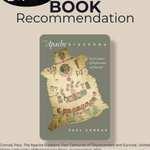
Summer history book recommendation, Apache Diaspora by Paul Conrad.
Paul Conrad dives into language, exonyms, and the use of the word “Apache” in archival documents in the historiography of Apache diaspora across four centuries. Exonyms, like Apache, were operationalized to extract labor, and rationalize enslavement.
For more books visit our bibliography page at Native Bound Unbound (NBU).
Link to NBU bibliography: nativeboundunbound.org/histo…
Conrad, Paul. The Apache Diaspora: Four Centuries of Displacement and Survival. United States: University of Pennsylvania Press, Incorporated, 2021.
Winner of the Gaspar Pérez de Villagrá award, granted by the Historical Society of New Mexico
Winner of the Robert Utley Award, granted by the Western History Association
Winner of the Ray Allen Billington Prize, granted by the Organization of American Historians


Summer history book recommendation, The Other Slavery by Andrés Reséndez.
California under US rule accelerated the enslavement, detainment, and dispossession of American Indians throughout California territory.
For more books visit our bibliography page at Native Bound Unbound.


Reckoning with 1776 - from an article by Dr. Rael-Galvez in El Palacio
"In the late nineteenth and early twentieth centuries, boosters, politicians, and cultural brokers promoted a narrative that recast the region’s past as Spanish rather than Mexican to reconcile New Mexico’s incorporation into the United States. The resulting tri-cultural mythology flattened centuries of relationships, collapsing distinct Indigenous nations and generations of mixed communities into static categories, while imagining a population perpetually tied to Spain. This was overlaid with an American origin story, complete with its own symbols: a flag, founding fathers, and a new national narrative. In the process, historical amnesia set in. Yet those places were not empty of presence of people with long memory and deep histories, including those preserved in archives."
Read more at elpalacio.org/2026/06/reckon… or by following the link in our bio.

Here is a short video summarizing the incredible speech that was given by Camila Carreon, an NBU researcher and intern, who spoke powerfully about what the project means to her at our launch last November.
For the full presentation please visit youtube.com/watch?v=5r-vWjGA… or follow the link in our bio and watch "World Premiere of Native Bound Unbound".
𝐂𝐞𝐥𝐞𝐛𝐫𝐚𝐭𝐢𝐧𝐠 𝐎𝐮𝐫 𝐓𝐞𝐚𝐦 – 𝐉𝐮𝐛𝐢 𝐎𝐥𝐚𝐝𝐢𝐩𝐨
When Jubi Oladipo first reached out to Native Bound Unbound, she did so not only to express her appreciation for the project, but to ask how she might contribute to its work. A student at Harvard College studying History and African American Studies, Jubi is deeply interested in the intersections of African American and Native American histories, particularly how these stories have too often been separated in both scholarship and public understanding.
Her research has already begun to illuminate these connections. In her work on the 1637 voyage of the Desire, Jubi traced one of the earliest documented convergences of Indigenous and African slavery in New England, following the ship’s transport of Pequot captives to the Caribbean and its return with enslaved Africans.
Now, as an intern with Native Bound Unbound, Jubi is building on this work through archival research in Massachusetts, identifying and organizing materials that reveal the presence of Indigenous slavery in the region’s historical record. Her work contributes to a growing effort to better understand these intertwined histories while also helping to shape an emerging collaboration with Harvard focused on expanding the study of Indigenous slavery within its institutional and regional context.

There is something about a broom that feels subtly resonant of slavery. Across time and many landscapes, it appears as a simple household tool, made by gathering grasses or shrubs and binding them into a bundle. Its purpose is work; it sweeps dust, debris, and whatever settles on the floor. Brooms stood in corners, leaned against doorways, or rested beside a hearth, always present, rarely acknowledged, and usually out of sight. In the long history of coerced domestic labor, the broom was one of the tools most often in the hands of those who were enslaved.
Across the Americas, the landscape shaped the broom. In arid regions, people relied on the tough fibers of lechuguilla or sotol since grasses were limited. In wetter lowlands and along the Caribbean coast, palm fronds, cane, and rushes were gathered and tied into sweeping bundles. Whatever the region, someone had to go out and collect the material, strip it, dry it, and bind it into a usable tool. Few of these brooms survive. They wore down quickly, and new ones were made as seasons changed and plants aged. They were everyday objects, used until they fell apart and then remade again.
The broom’s power lies partly in its invisibility. It is a tool of maintenance rather than display. Floors swept by the enslaved, whether made of dirt, clay, tile, or wood, were noticed only when they were not clean. In missions, haciendas, and households, sweeping fell to those whose labor stayed out of view, yet it was their work that kept daily life moving. The Codex Mendoza depicts young girls learning to sweep as part of their training, a reminder that sweeping was a routine practice long before European arrival. In Spanish the tool was called escoba, in Portuguese vassoura, and in Nahuatl the verb tlachpāhua referred to the act of sweeping or cleansing.
Read more at nativeboundunbound.org/stori…


Antoine was just 10 years old when he passed away, a "panis child belonging to Joseph Carignan" in Batiscan, Quebec. Although this is the only record we have at moment about Antoine, Native Bound Unbound is committed to recovering as much information as possible about each individual and connecting these moments to build an arc of their life.
You can visit Antoine's page at nativeboundunbound.org/peopl… to learn more.


givebutter.com/hidden-recove…
President Elizabeth Alexander of the Mellon Foundation recently shared inspiring words about NBU. Our project was catalyzed by foundational support from the Mellon Foundation, but we need help moving forward to continue our work of recovering and sharing these names, stories, archives, and documents for free across the globe. Please click the link above to learn more.

The New Yorker recently published “The Hidden History of Native American Enslavement.”
At Native Bound Unbound, we are working to recover and reconnect the lives behind this history through archival research, transcription, and translation.
Support the work:
givebutter.com/hidden-recove…
#HiddenHistory #IndigenousHistory
