

NorthWest Research Associates (NWRA) is a scientific research organization, owned and operated by its PIs, with expertise in geophysical and space sciences.
- Tweets127
- Following31
- Followers107
- Likes33





ALT Attendees at middle mixer

ALT Sponsorship sign on food table

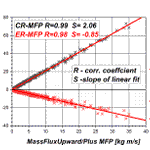
ALT The a posteriori performance of the CNN (a) in big-data regime, (b) in small-data regime and (c) after on-line re-training the CNN initially trained in the small-data regime. The period (τ) and amplitude (σ) of the true QBO are 28 +- 0.7 and 21 +- 0.3 m/s, respectively. The probability density functions (PDFs) of F and u become more similar to the true QBO after online re-training the CNN initially trained in the small-data regime. Copyright (2024) American Geophysical Union.


ALT a photograph of coronal loops


ALT Modeled temperature perturbations for the secondary GWs from the volcanic eruption at Tonga on 15 January 2022. Copyright (2023) American Geophysical Union.


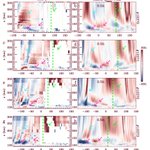
ALT The left column shows the zonal wind measured by the MIGHTI instrument on NASA's ICON satellite during orbits 12370-12373. Medium to large-scale atmospheric gravity waves (GWs) from the Tonga eruption are seen with speeds of 100 to 600 m/s. Since the primary GWs created directly by the eruption have speeds <300 m/s, most of the waves in the first 3 orbits are secondary GWs. Here, secondary GWs are created by the atmosphere in response to the dissipation of the primary GWs. The right column show the zonal winds simulated by the MESORAC-HIAMCM models. Comparing with the observations, reasonably good agreement is seen, thereby showing that MIGHTI observed the secondary GWs from Tonga, a remarkable confirmation of multi-step vertical coupling. Copyright (2023) American Geophysical Union



ALT Diagram showing QBO stratospheric zonal wind and global circulation of the stratosphere. Eastward (E) and westward (W) zonal winds (red and blue, respectively) in the tropical stratosphere (box bounded by dashed red line) when the QBO phase is transitioning from westward to eastward at 30 hPa (zero-wind line, thick grey contour), and the semi-annual oscillation (SAO) in the upper stratosphere is in its westward phase. Rossby waves propagate through the winter extratropical stratosphere (orange arrows), transporting westward momentum equatorwards that can be important for ‘QBO disruption’ events. Black wavy arrows represent upwards-propagating tropical waves that drive the QBO in the canonical model (see Box 1). The QBO is also affected by the overturning circulation of the stratosphere (Brewer–Dobson circulation, thick white arrows) and the QBO mean-meridional circulation maintaining thermal wind balance (grey arrows), which modulates the distribution of ozone.

ALT A flyer for the Boulder Solar Alliance Research Experience for Undergraduates. The text reads: Boulder Solar Alliance REU Program. Quick Facts Paid summer research experience for highly motivated students interested in solar and space physics. A 10 week program where students get to work on a research project with a mentor. The topic areas span the field of solar and space physics; the Sun, the Sun-Earth system, the near-Earth environment, the heliosphere, and more. The BSA REU works in partnership with several institutes around Boulder, including Laboratory for Atmospheric and Space Physics, National Solar Observatory, High Altitude Observatory, NOAA, and more! Applicants do not need prior research or coding experience to apply. Apply Today. The 2023 application is due Feb 1, 2023. For more details & to apply, visit our website: www.lasp.colorado.edu/home/reu