

An independent research network supporting Syria’s Legislative Assembly.
Damascus, Syria
Joined July 2026
- Tweets16
- Following12
- Followers34
- Likes11
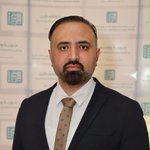




NSLS is excited to welcome @SamirAlabdullah to our Advisory Board.
Dr. Alabdallah is a Syrian academic and policy researcher specializing in modern and contemporary history. He currently leads policy analysis at the Arab Center for Contemporary Syria Studies. Before that, he served as a Syria specialist at the Center for Middle Eastern Studies (ORSAM) and as a lecturer at Necmettin Erbakan University.
He holds PhDs in modern and contemporary history from Ain Shams University and Selcuk University, and his research has been published in Arabic, English, and Turkish.
We are grateful for his guidance as NSLS expands its research, support for the People’s Assembly, and work with Syrian Universities.

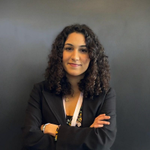
Continuing our introduction of NSLS’s new editorial and research team, we are delighted to welcome Lojean Hersi as Co-Head of Research.
Lojean is a PhD candidate at King’s College London, where her work focuses on transitional justice, identity, and post-authoritarian governance in Syria. Her research examines how legacies of human rights abuses shape everyday life, political attitudes and behaviours, and perceptions of justice, legitimacy, and institutional trust.
Having lived or studied across Syria, Lebanon, Saudi Arabia, and the UK, Lojean brings a cross-contextual perspective to her research and wider engagement with political and social issues in the SWANA region.

NSLS is excited to announce several additions to our editorial and research team. First, we are delighted to welcome Nadia Asaad as Co-Head of Research.
Nadia is a researcher based in Paris whose work focuses on human rights, transitional justice, and political dynamics in the MENA region. Her background spans international relations and international law, and her work examines the identity dimension of climate conflict, post-transition governance, and inter-group dynamics within Syria's opposition to Assad.
She is affiliated with Sciences Po Paris and Le Cercle des Économistes Arabes, with experience at the Arab Reform Initiative and the Center for Applied Nonviolent Actions and Strategies, among others. Her writing has appeared in the ANNALS Belgrade Law Review, the Washington Institute's Fikra Forum, the Journal of Democracy, and elsewhere.

"The success of reconstruction may depend on who can get a loan."
@HaddonBarth writes about the reforms needed to make Syria's banking system more transparent for @CH_MENAP.
nsls.network/publications/sy…
How is power distributed in Syria’s new legislature?
Nadia Asaad maps all 26 permanent committees and their leadership, revealing presidential influence over sovereign files, five women chairs and major gaps in representation.
Read: nsls.network/publications/co…
“The likely result" of the bylaws, Sanjana writes, "may be relatively less unilateral control by the Speaker, but effectively equivalent concentration of practical authority in the Bureau rather than the wider membership.”
In the first of a new NSLS series, Sanjana Kumar examines how the bylaws distribute power between the Speaker, Bureau, and individual MPs.
Read here: nsls.network/publications/po…
We’re excited to welcome Sameer Saboungi to the NSLS Advisory Board, joining Zaid Al-Ali, Ambassador Cameron Hume, and Professor Max Weiss.
Sameer is co-founder, Deputy Director, and General Counsel of the U.S.-Syria Business Council. He previously served as Policy Officer and Director of the Legal Affairs Program at the Syrian American Council, where he worked on accountability, reconstruction, and economic policy.
Sameer’s legal expertise and policy experience make him an invaluable addition to our Advisory Board as NSLS expands its support for Syria’s legislative Assembly.

"As the volume of credit expands, the onus is now on Syrian policymakers to ensure that it reaches beyond the narrow political and commercial networks that have generally dominated Syrian finance."
@HaddonBarth argues in the @MiddleEastInst that reformed public banks could help finance borrowers commercial institutions are likely to overlook.
mei.edu/publication/a-credit…

Can Syria’s parliament establish—and fund—its own staffing system? The answer is more complicated than it appears.
While Parliament can enact a law creating committee staff, legislative researchers, and other support services, it cannot appropriate the funds needed to operate them. Those permanent expenditures must pass through the annual budget process.
Our latest NSLS policy memo examines how these two powers—legislating and appropriating—fit together under Syria's Constitutional Declaration. And it outlines several tools for Parliament to begin building its institutional capacity before the 2027 budget, including temporary appointments, secondments, supplementary funding, and carefully structured external assistance.
nsls.network/publications.ht…

Syria is already withdrawing more freshwater than it can renew. Restoring energy subsidies for agriculture would make that crisis worse.
In a new NSLS commentary, Alex Grenier examines how electricity and diesel subsidies encourage groundwater extraction, and outlines ways Damascus can support farmers without rewarding greater consumption of scarce resources.
“When the price of pumping no longer reflects the water’s real scarcity, there’s no signal left to reward the farmer who conserves.”
Read more here: nsls.network/publications/sy…

كيف يمكن لسوريا الانضمام إلى اتفاقيات دولية متعددة الأطراف جديدة؟ وما الدور الذي يمنحه الإعلان الدستوري للبرلمان الانتقالي في الموافقة عليها؟
تبحث ورقتنا السياساتية الجديدة، المتاحة باللغتين العربية والإنجليزية، في الثغرات القائمة ضمن إطار إبرام المعاهدات في سوريا، بما في ذلك المسائل العالقة المتعلقة بالانضمام، والموافقة البرلمانية، والتحفظات، والانسحاب، والأثر القانوني الداخلي للمعاهدات.
واستناداً إلى أمثلة مقارنة من كينيا وتونس، تقترح الورقة إصدار قانون بشأن المعاهدات والاتفاقيات الدولية. ومن شأن هذا القانون أن يتيح للبرلمان توضيح دوره الدستوري في الشؤون الخارجية، ووضع عملية أكثر شفافية للانضمام إلى الاتفاقيات الدولية.
متاح هنا: nsls.network/ar/publication.…

How can Syria join new multilateral conventions, and what role does its Constitutional Declaration give the transitional Parliament in approving them?
Our new policy paper, available in English and Arabic, examines the gaps in Syria’s treaty-making framework, including unresolved questions around accession, parliamentary approval, reservations, withdrawal, and the domestic effect of treaties.
Drawing on comparative examples from Kenya and Tunisia, it suggests that Syria’s Parliament pass a Law on Treaties and International Agreements. Such a law would allow Parliament to clarify its constitutional role in foreign affairs and establish a more transparent process for joining international agreements.
Available here: nsls.network/publications/cl…

Yesterday, we launched the Network for Syrian Legislative Studies (NSLS).
Syria’s new Legislature will face an extraordinary range of questions across every domain of public policy. To address them, MPs will need access to research, recommendations, and expertise from both inside Syria and abroad.
NSLS was created to help meet that need.
We are building an independent research network to connect Syrian lawmakers with researchers, practitioners, and institutions. Our work will center on publishing policy papers, facilitating expert consultations, and convening focused discussions around specific legislative questions.
The network is supported this summer by a dedicated team of Princeton students and graduates. In the fall, we will launch additional university chapters at Harvard and Georgetown. Alongside this expansion, we are building partnerships with Syrian experts and institutions, who will help define the network’s priorities and guide its work.
Explore the initiative at nsls.network.

أطلقنا أمس شبكة الدراسات التشريعية السورية (NSLS).
سيواجه مجلس الشعب السوري الجديد مجموعةً استثنائية من القضايا والتحديات التي تمتد إلى مختلف مجالات السياسة العامة. وللتعامل مع هذه القضايا، سيحتاج أعضاؤه إلى الوصول إلى الأبحاث والتوصيات والخبرات، سواء من داخل سوريا أو خارجها.
ومن هذا المنطلق، أُنشئت شبكة الدراسات التشريعية السورية (NSLS) للمساهمة في تلبية هذه الحاجة.
نعمل على بناء شبكة بحثية مستقلة تربط المشرّعين السوريين بالباحثين والممارسين والمؤسسات المتخصصة. وستتركز أعمال الشبكة على نشر أوراق السياسات، وتيسير الاستشارات مع الخبراء، وتنظيم نقاشات متخصصة حول قضايا تشريعية محددة.
يحظى المشروع هذا الصيف بدعم فريق متفانٍ من طلاب وخريجي جامعة برينستون. وفي فصل الخريف، سنطلق فروعًا جامعية إضافية في جامعتي هارفارد وجورجتاون. وبالتوازي مع هذا التوسع، نعمل على بناء شراكات مع خبراء ومؤسسات سورية، للمساهمة في تحديد أولويات الشبكة وتوجيه مسار عملها.
ندعوكم للتعرّف على المبادرة عبر الموقع الإلكتروني:
nsls.network
