

NETINT Technologies is a developer of intelligent silicon solutions for Computational Storage and Video Processing
- Tweets2.2K
- Following116
- Followers192
- Likes25







ALT NETINT Inter BEE 2026 graphic featuring Mark Donnigan, CMO and Head of Strategic Marketing, inviting attendees to meet at Hall 8, Booth 8201.”

ALT NETINT Inter BEE 2026 graphic inviting attendees to discuss video bottlenecks including power, density, and cost per stream at Hall 8, Booth 8201.”

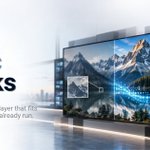
ALT Promotional graphic titled "How LCEVC Works" showing a large 4K TV in a modern, brightly lit room. The screen displays a mountain landscape split down the middle to compare resolutions, featuring magnified callout boxes that highlight the improved pixel clarity on the enhanced right side.

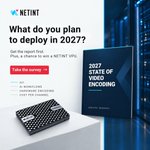
ALT NETINT ad for the 2027 State of Video Encoding Survey. Headline: “What do you plan to deploy in 2027?” Take the survey to get the report first and a chance to win a NETINT VPU. Shows a NETINT Quadra VPU and the report cover next to server racks.

ALT Promotional graphic for NETINT's Video Infra Podcast titled "Cost and quality meet in NETINT's State of Video Encoding," showing a studio setup with a microphone, laptop processing 4K video, and floating UI charts for video quality and cost-performance metrics.

ALT Promotional graphic showing a vibrant coastal city skyline at night beneath a massive, glowing digital globe highlighting network connections across South America. Logos for NETINT and Zapping appear above bold text: "Transforming Live Streaming TV, One Rack at a Time."

ALT Promotional graphic titled "NETINT VPU PRODUCT SELECTION Buyer's Guide." showcasing a server chassis, a silver NETINT Quadra VPU PCIe card, and a small NETINT circuit board on a dark reflective surface.

ALT Watch it if a climbing cloud bill, latency, or European data-sovereignty rules like NIS2 and DORA are forcing you to rethink where your video actually runs.


ALT Fabio Murra, walks through Brazil's DTV Plus launch where mandating LCEVC support turned a decade-old chicken-and-egg problem into a live commercial rollout, enabling 4Kp60 HDR.

ALT Promotional graphic featuring NETINT and Wowza logos with the title "Efficient Encoding in Real Workflows." Includes a "VPU Ecosystem IBC Edition" badge and a central 3D glass cube housing a glowing red play icon, connected to workflow icons for cloud, mobile, audio, gaming, and Wi-Fi.

ALT Voices of Video, watch on demand: Save 50%+ on Encoding, Then Comes the Hard Part - Operationalizing VPUs at Scale. Joe Waltzer, Arcadian, and Mark Donnigan, NETINT.