
Public service center @NCStateSciences -- climate services, research, extension, outreach and education for NC citizens, businesses and local governments
North Carolina
Joined July 2011
- Tweets2K
- Following122
- Followers3K
- Likes246
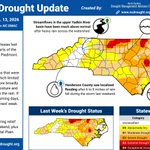
The rain from Isaias has led to an initial round of drought improvements from the southern Mountains through the Triad, with more changes likely next week once the moisture has soaked in and its lasting impacts are more apparent. #ncwx
After the latest damage surveys by @NWSRaleigh, we're now up to 13 confirmed tornadoes in North Carolina on Sunday.
That's the most tornadoes in the state in a single day since Hurricane Isaias — the previous one, on August 3, 2020. #ncwx
The remnants of Hurricane Isaias affected North Carolina last weekend, bringing heavy rain and high winds in the west and severe weather farther east. #ncwx
Our latest blog post has more on this storm and its wide-reaching impacts across the state.
📰: climate.ncsu.edu/blog/2026/1…
Some locally heavy showers in eastern North Carolina last weekend brought a bit of drought improvement, but elsewhere, conditions are largely unchanged after a cooler but drier fall week. #ncwx
Thanks to three weeks of heat early in the month, this September was one of the top five warmest on record in North Carolina. #ncwx
Our latest climate summary has more on the heat, drought, and tropical activity over the past month.
climate.ncsu.edu/blog/2026/1…
Last week's rain helped chip away at drought conditions in the west, while eastern areas saw more degradation as the weekend Nor'easter brought limited rainfall. #ncwx
More heat last week helped drought continue to expand, especially in parts of eastern North Carolina. #ncwx
Note that the rain received since Tuesday will be factored into next week's assessment.
Global vital signs show a strengthening El Niño, and the prognosis for North Carolina looks wet in the months ahead.
Our latest blog post checks up on El Niño and previews its potential local impacts, which may begin this fall. #ncwx
climate.ncsu.edu/blog/2026/0…
As summer weather stretches into September, we've seen more drought degradations this week, including the return of Severe Drought (D2) in Wake County. #ncwx
Another dry week for our northern-tier counties has led to more drought degradation, including the expansion of Severe (D2) and Extreme Drought (D3) in the northern Coastal Plain, and the return of Exceptional Drought (D4) in northern Guilford County. #ncwx
Summer stayed strong in August, with ongoing heat and hit-or-miss showers and storms.
Our latest climate summary has more on last month, plus this summer's stats across the state. #ncwx
climate.ncsu.edu/blog/2026/0…
On this day 15 years ago, Hurricane Irene hit eastern North Carolina and reshaped part of the coastline.
Our latest blog post looks at Irene's impacts, how it still affects travel on the Outer Banks, and how @NCDOT is planning for the future. #ncwx
📰: climate.ncsu.edu/blog/2026/0…
Drought improvements continued this week in the southern Coastal Plain, while areas along the Virginia border remain dry with Extreme Drought (D3) expanding. #ncwx
Five years ago today, heavy rain from Tropical Storm Fred led to historic flooding in Haywood County.
With perspectives from @NWSGSP, @HaywoodCountyES, and @SWC_COG, we’re remembering Fred's impacts and the county's rocky road to recovery. #FredAfterFive
climate.ncsu.edu/blog/2026/0…
After another week of locally heavy rains, areas including Charlotte, Hickory, and Morganton are officially out of drought and back to the Abnormally Dry (D0) level as impacts continue to ease in parts of the state. #ncwx
The past week brought more showers and more improvements on the drought map, with areas of Severe (D2) and Extreme Drought (D3) continuing to shrink, and water supplies showing signs of recovery. #ncwx
July started with a heat dome and ended with a deluge and drought improvements across North Carolina.
Read more about the past month in our July climate summary. #ncwx
climate.ncsu.edu/blog/2026/0…
It's the Extreme (Drought) Makeover we've been waiting for, with big reductions in D2 and D3 after last week's rain, especially in the central Piedmont.
This map reflects long-term rainfall deficits and ongoing dryness in deeper soil moisture, groundwater, and lake levels. #ncwx


