

An international organization, our Vision is wild Atlantic salmon decline reverses and populations recover to healthy and resilient levels across their range
North Atlantic
Joined October 2018
- Tweets1K
- Following376
- Followers1.4K
- Likes1.2K





What's for dinner?...
Plants act as important habitats for many insects and invertebrates.
The removal of vegetation both in and on the banks surrounding salmon rivers can therefore mean a reduction in food supply available to salmon.
This loss of food supply has contributed to a significant decline in wild salmon stocks over the last 150 years, and is one of a number of contributory factors addressed in NASCO's new Habitat Guidelines.
These updated guidelines outline objectives for national, regional and local jurisdictions that have responsibilities for activities which may impact salmon habitats.
You can read the guidelines here:
lnkd.in/gKHbjjWJ
And don't forget to check out our website:
nasco.int
#Salmon #Conservation

It's #WorldWaterMonitoringDay !
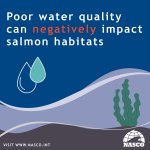
Clean cool water is essential for wild Atlantic salmon to thrive. Deterioration in water quality as a result of long-term environmental change or the addition of chemicals or nutrients through human activity can negatively impact habitats with detrimental consequences for wild Atlantic salmon populations.
Check out NASCO's new Habitat Guidelines, which outline recommendations for national, regional and local jurisdictions that have responsibilities for activities involving salmon habitat:
nasco.int/wp-content/uploads…
#Salmon #Conservation #HealthyEcosystems

Genetics is a fast developing area being used to improve fisheries research & NASCO's PINKTrack project, funded by the EU, uses eDNA to monitor non-native pink salmon populations. Join EIFAAC's webinar on Friday to learn more👇
bit.ly/4Afjp5r

Natural structures provide essential shelter to various life stages of wild Atlantic salmon, from gravel stream beds for eggs and juveniles to trees that shade and therefore cool rivers as adult fish return to spawn. Removing natural structures from salmon habitats has contributed, among other factors, to a significant decline in wild salmon stocks over the last 150 years.
NASCO brought together the knowledge of governments, scientists, NGOs and Indigenous Peoples from seven countries around the North Atlantic to produce new 'Guidelines for the Protection, Restoration and Improvement of Atlantic Salmon Habitat', agreed by NASCO's Council in June 2026 at its Forty-Third Annual Meeting.
The recommendations of these updated guidelines address NASCO's Ten-Year Strategy and associated Action Plan, which outlines objectives for national, regional and local jurisdictions that have responsibilities for activities which may impact salmon habitats.
Read the guidelines here:
nasco.int/wp-content/uploads…
#Salmon #Conservation #Collaboration

Plastic pollution in the environment can have a detrimental impact on the health and survival of our wildlife. Support #ZeroWasteWeek and take action to reduce, reuse and recycle packaging and other items.
Learn more about this annual awareness campaign and what you can do to reduce landfill waste at zerowasteweek.co.uk/
Don't forget to also visit our website to learn about the work NASCO is doing to conserve and restore #Atlantic salmon: nasco.int/

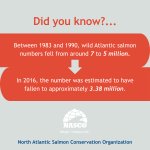
Click the link below to learn more about the decades-long decline of this important species, and the work that is being undertaken to restore and conserve wild Atlantic #salmon populations:
nasco.int/atlantic-salmon/st…
#Atlantic #Conservation

#DidYouKnow that lakes can also form part of salmon's natural habitat?
See our new Habitat Guidelines:nasco.int/wp-content/uploads…

📣 The complete 2026 Annual Meeting Reports of NASCO's Council and Commissions are now available on our website.
To read them, click the link 👉bit.ly/4zXa1U3
#WildAtlanticSalmon #Conservation #Collaboration #NASCO


#DidYouKnow: after hatching, wild Atlantic salmon may spend 1-7 years in a river, then migrate to sea, to return later to breed. With the typical time spent in a river being 2-3 years, good river health is vital for salmon. Even if water quality is poor however, there is hope - the Thames, declared biologically dead in 1957, is now home to 125 species of fish!
Learn more: bit.ly/4wKDldo

North Atlantic Salmon Conservation Organization retweeted

Comparative migration success of Atlantic salmon smolts through three large natural lakes. Journal of Fish Biology, 1–13. doi.org/10.1111/jfb.70607


Today marks International Day of the World’s Indigenous Peoples 2026.
Indigenous Peoples are vital to NASCO's work on finding collaborative solutions for wild Atlantic salmon.
Discover more: nasco.int/
#WildAtlanticSalmon #Collaboration #NASCO #Conservation

A spill of plastic pellets ('nurdles') from a shipping container at the mouth of the River Tyne, a river in which the Atlantic salmon stock is classified as at 'Low Risk' in our Wild Atlantic Salmon Atlas (bit.ly/4yZLey3), is incredibly alarming 👇


Plastic nurdle spill an 'environmental disaster' bbc.in/4fSP1nT
