

This account has been archived.
- Tweets1.7K
- Following152
- Followers10.8K
- Likes233







ALT The Pale Blue Dot is a photograph of Earth taken Feb. 14, 1990, by NASA\u2019s Voyager 1 at a distance of 3.7 billion miles (6 billion kilometers) from the Sun. The image inspired the title of scientist Carl Sagan's book, \"Pale Blue Dot: A Vision of the Human Future in Space,\" in which he wrote: \"Look again at that dot. That's here. That's home. That's us.\" This image, \u201CPale Blue Dot Revisited,\u201D was created in 2020 for the 30th anniversary of the iconic picture. The updated version used modern image-processing software and techniques to revisit the well-known Voyager view, while attempting to respect the original data and intent of those who planned the images.


ALT A panoramic view of a rocky desert landscape under a perfectly clear sky around mid-day. Low hills lie along the horizon. In the foreground, the back end of the Perseverance rover fills the lower right side of the frame. A gray, cylindrical antenna sits atop the left side of the rover. At the center of the rover is a white, metallic cylinder with flat cooling fins radiating from the center. On the right side is a flat, hexagonal antenna pointed at the sky.
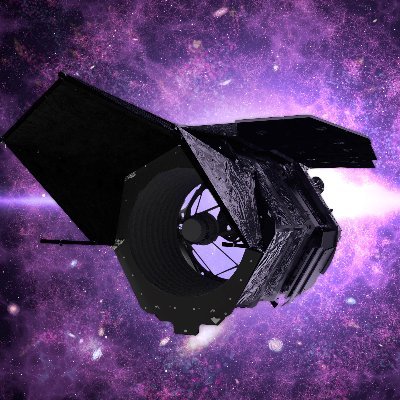

ALT A black and white photo of Dr. Nancy Grace Roman, standing to the left side of a data wall. She is looking up towards the wall and writing on the papers she is holding.

ALT Photo of Dr. Roman standing in front of a large model of the Hubble Space Telescope. She is wearing a long blue dress and is smiling towards the camera. The Hubble model looks like a metal tube.

ALT Photo of Dr. Roman and Dr. Jane Rigby smiling at the camera to the left of the glass separating the cleanroom from the overlook. In the clean room, the mirror of the James Webb Space Telescope faces Dr. Roman and Dr. Rigby. Several hexagonal gold panels make up the larger hexagonal Webb mirror.

ALT Wide shot inside the Goddard testing facility. A crane suspends a large piece of space hardware covered in a clear semi-translucent tent. A banner on metal scaffolding below the hardware reads, NASA Goddard Space Flight Center. On the left wall hangs a large artist’s concept of the Roman telescope. Photo credit: NASA/Sydney Rhode



ALT An artist’s concept of the supermassive black hole PDS 456 depicts high-speed winds being ejected from the vicinity of the black hole, which is represented by a small grey half-circle near the bottom of the image. The black hole is embedded in the center of a swirling, pancake-shaped accretion disk (in brown) surrounded by a bright glow that dims toward the edges of the image. The wind emanates outward above this disk, represented by translucent white streaks and clumpy clouds. The image is watermarked with “Artist’s concept” and “Credit: JAXA.”



ALT Illustration of NASA’s Voyager spacecraft speeding through deep space, with its large white dish antenna facing forward and long boom arms extending outward. The background features a vibrant, streaked purple and blue starfield, evoking a sense of swift motion through the cosmos.


ALT The turquoise “wings” of this nebula stretch outward diagonally from the center of the image. Many stars and galaxies can be seen through the clouds of gas and dust, as well as around the Butterfly Nebula. Credit: NASA, ESA, and J. Kastner (RIT)


ALT Map of wildfire near Castleberry, Alabama with an elongated black and red section in the middle of a green landscape. The red outline is an infrared heat signature showing where the fire is active. Black shows the burned area.


ALT A swirling green aurora whips over Earth, as seen from above from the viewpoint of the International Space Station. Credit: NASA/Don Pettit


ALT Diagram of the inner solar system showing the orbits of different asteroid types: Apollos (blue), Atens (red), and Amors (yellow), with Earth (white) at the center. The Main Belt Asteroids are between Mars (red) and Jupiter (yellow).

ALT Photo of a person using a mosquito habitat sampling tool to collect water from tires, with a pile of used tires in the background.


ALT At the center is a thin vertical cloud known as Lynds 483 that is shaped like an hourglass with irregular edges. At lower center are two discrete bright white, tiny blobs of light that have raced away from the hidden central stars. The top lobe shows a more prominent orange U-shape. Orange bleeds into light purple, and brighter pink at its edges. Some background stars are visible through sections of this lobe. Higher up, there is an orange arc. Some brighter pink material extends to the top edges near the center. In the lower lobe, less orange is visible. More opaque light purple is in its top third, rippling out into semi-transparent blues and pinks. The lower lobe has more texture. V-shapes left and right of the lobes are darkest, and the background stars in these areas appear orange. Elsewhere, the black background of space is clearer, speckled with tiny white stars and faint orange galaxies.
