

Non-profit dedicated to building a global culture of sustainability in science. Helping to shape laboratory/research policy. #SustainableScience #GreenLabs
Global
Joined March 2013
- Tweets3K
- Following1.1K
- Followers3.3K
- Likes2.2K




We are excited to announce that Greiner Bio-One has completed its My Green Lab ACT Ecolabel 2.0 audit for its CELLSTAR® centrifuge tubes and serological pipettes.
The updated 2.0 ACT Ecolabels for these products include data on 70–100% recycled/renewable packaging content across the certified product configurations, product carbon reporting estimated using the ISO 14067 framework, and product chemical content reporting by the manufacturer against the EU REACH SVHC Candidate List and for PFAS. The product chemical information provided by Greiner identified no chemicals of concern above the applicable reporting limits, including no PFAS exceeding 0.01% (100 ppm) by weight being added to the product.
The ACT Ecolabeled centrifuge tubes also feature 100% renewable electricity and 100% renewable energy at the Frickenhausen, Germany manufacturing facility, where at least 90% of waste is diverted from landfill. The products have earned the ACT Gold designation.
Explore more ACT Ecolabel products from Greiner Bio-One in the ACT Ecolabel Database: actdatabase.mygreenlab.org/?…
You can also learn more about the products directly from Greiner Bio-One:
-Centrifuge Tubes: gbo.com/en-de/search?q=ACTCe…
-Serological Pipettes: gbo.com/en-de/search?q=ACTSe…

Better Storage Management = Better Science + Better Sustainability
In this guest article, Kathi Shea of Azenta Life Sciences, Inc. explores how better cold storage management can unlock hidden capacity, reduce energy use and costs, and give scientists back valuable time. Drawing on assessments across 101 life science facilities, she shows that many storage challenges stem not from a lack of space, but from gaps in visibility, governance, and stewardship.
Read it here: mygreenlab.org/the-beaker-bl…

"Labs have always been where scientific breakthroughs begin. Increasingly, they're also becoming where sustainability breakthroughs begin," said My Green Lab's Stephanie Millar.
In our recent blog post, learn more about what organizations need to make environmental performance part of their everyday laboratory operations.
🔗 mygreenlab.org/the-beaker-bl…
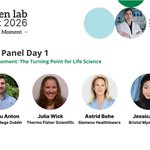
The virtual My Green Lab Global Summit 2026 Day 1 is starting soon! Don't miss our keynote panel on 𝗠𝗲𝗲𝘁𝗶𝗻𝗴 𝘁𝗵𝗲 𝗠𝗼𝗺𝗲𝗻𝘁: 𝗧𝗵𝗲 𝗧𝘂𝗿𝗻𝗶𝗻𝗴 𝗣𝗼𝗶𝗻𝘁 𝗳𝗼𝗿 𝗟𝗶𝗳𝗲 𝗦𝗰𝗶𝗲𝗻𝗰𝗲, starting at 8:15am PDT / 4:15pm UK.
Keynote panel speakers include:
-Dumitru Anton, Trinity College Dublin
-Julia Wick, Thermo Fisher Scientific
-Astrid Bohé, Siemens Healthineers
-Jessica Srun, Bristol Myers Squibb
There is still time to sign up! View the full agenda and register here: mygreenlab.org/get-involved/…

Veolia | Lab water solutions is the first in its category to achieve ACT 2.0.
Independent, third-party verified sustainability credentials are setting a new standard for transparency in lab water purification.
See how Veolia is using the ACT Ecolabel to turn credible environmental data into business value: mygreenlab.org/the-beaker-bl…
This month's #HowToGreenLab is to make sustainability part of the workflow.
A great way to start a sustainable lab journey is to incorporate simple practices that scientists can naturally build into their day-to-day work. Look for small changes that reduce energy, water, or waste without adding unnecessary steps or disrupting research.
A few places to start:
⚡ Shut the sash on fume hoods when they’re not in use.
🧊 Regularly defrost freezers and clear out unneeded samples to improve efficiency.
💡Shut off lights in the lab when the day ends.
💧 Don’t let water taps run unattended.
Small, practical changes are easier to adopt consistently, and consistency is what helps turn everyday actions into lasting impact.

We'd like to give a shout-out to Merkaloop, one of My Green Lab's ACT Ecolabel Channel Partners!
Through this partnership, MerkaLoop is integrating identification of products with the ACT Ecolabel into their catalogue and purchasing platform, giving customers access to trusted, third-party verified sustainability data at the point of purchase.
Learn more from MerkaLoop here: merkaloop.com/act-ecolabel
Find out more about our ACT Ecolabel Channel Partners here: mygreenlab.org/programs/act-…

Where is energy being wasted in your lab and what could you save by addressing it?
Join Pernilla Sörme, Senior Director of Research & Technical Standards at My Green Lab, on October 8 for a webinar on 𝗥𝗲𝗱𝘂𝗰𝗶𝗻𝗴 𝗟𝗮𝗯 𝗘𝗻𝗲𝗿𝗴𝘆 𝗪𝗮𝘀𝘁𝗲: 𝗥𝗲𝗮𝗹 𝗦𝘁𝗲𝗽𝘀, 𝗥𝗲𝗮𝗹 𝗦𝗮𝘃𝗶𝗻𝗴𝘀.
This practical webinar will show you how to identify inefficiencies, quantify potential energy and cost savings, and build an evidence-based case for action.
In this webinar, you will:
-Explore where energy is probably being wasted in your lab
-Quantify the potential cost and energy savings from practical efficiency measures
-Build a clear, evidence-based case for energy-saving changes within your department or institution
RSVP here: events.bitesizebio.com/reduc…

Kick off Day 1 of the My Green Lab Global Summit 2026 on Sept. 29th with our keynote panel, bringing together leaders from across the life sciences ecosystem to discuss the opportunities, partnerships, and decisions shaping the future of sustainable science.
Keynote panel speakers include:
-Dumitru Anton, Trinity College Dublin
-Julia Wick, Thermo Fisher Scientific
-Astrid Bohé, Siemens Healthineers
-Devin Carsdale, Bristol Myers Squibb
Register for the virtual summit now! mygreenlab.org/get-involved/…

We are excited to announce that Memmert has completed My Green Lab ACT Ecolabel certification for its 56 litre, 108 litre, 177 litre, and 243 litre CO₂ incubators. The ACT Ecolabel provides standardized and third-party verified sustainability information at the product level across key sustainability attributes to enable laboratories and procurement teams to make more informed purchasing decisions.
The ACT Ecolabel certification for these products includes verified data on electricity consumed per day in a standardized common use case, ranging from 2.7 kWh/day for the 56 litre and 108 litre models to 3.2 kWh/day for the 177 litre model and 3.3 kWh/day for the 243 litre model. The labels also include verified data on 0.1 L/day water consumption for each model, 10 years of supported product lifetime, 50–60% product end-of-life commonly recyclable materials, 90% recycled/renewable packaging content, and 50% packaging end-of-life commonly recyclable materials.
Explore more ACT-certified products from Memmert in the ACT Ecolabel Database: actdatabase.mygreenlab.org/?….
You can also learn more about the CO₂ incubator products directly from Memmert: memmert.com/

AI is transforming chemistry. But at what environmental cost?
AI is opening new possibilities for faster, greener chemistry, but its growing energy, water, and hardware demands come with real environmental trade-offs.
In our latest article on The Beaker, we explore how researchers can balance AI’s scientific benefits with more sustainable choices, from greener data infrastructure to smaller, task-specific models.
Read the full article to explore what responsible AI could look like in the laboratory: mygreenlab.org/the-beaker-bl…

We’re excited to welcome Dr. Katharine K. Wilkinson as a keynote speaker at the upcoming 2026 My Green Lab Global Summit!
An acclaimed author, climate strategist, and co-founder of The All We Can Save Project, Katharine brings a powerful perspective on leadership, collective action, and the systems change needed to meet this moment.
Join us September 29-30 for the 2026 My Green Lab Global Summit 𝗠𝗲𝗲𝘁𝗶𝗻𝗴 𝘁𝗵𝗲 𝗠𝗼𝗺𝗲𝗻𝘁: 𝗧𝗵𝗲 𝗧𝘂𝗿𝗻𝗶𝗻𝗴 𝗣𝗼𝗶𝗻𝘁 𝗳𝗼𝗿 𝗟𝗶𝗳𝗲 𝗦𝗰𝗶𝗲𝗻𝗰𝗲. RSVP here: mygreenlab.org/get-involved/…
You can also check out Katharine's latest novel, 𝘊𝘭𝘪𝘮𝘢𝘵𝘦 𝘞𝘢𝘺𝘧𝘪𝘯𝘥𝘪𝘯𝘨: 𝘏𝘦𝘢𝘭𝘪𝘯𝘨 𝘖𝘶𝘳𝘴𝘦𝘭𝘷𝘦𝘴 𝘢𝘯𝘥 𝘵𝘩𝘦 𝘗𝘭𝘢𝘯𝘦𝘵 𝘞𝘦 𝘊𝘢𝘭𝘭 𝘏𝘰𝘮𝘦, here: bookshop.org/p/books/climate…

Laboratories are inherently resource intensive. But that doesn’t mean their resource intensity is fixed.
Much of a laboratory’s environmental impact is tied to operational practices and day-to-day decisions that can be improved without compromising scientific outcomes.
The Impact Estimator, a key feature within My Green Lab Certification, helps organizations see not only where resources are being consumed, but where there is potential for meaningful improvement.
As My Green Lab’s Sam Wright explains, one of the most valuable aspects of the Impact Estimator is its ability to make those opportunities visible.
When you can see where resources are being consumed, and quantify the impact of changing those practices, sustainability becomes much more actionable.
Learn more about how the Impact Estimator is helping laboratories turn sustainability efforts into measurable impact: mygreenlab.org/the-beaker-bl…
This month's #HowToGreenLab is to become a sustainability expert.
The most impactful changes start with knowledge.
Becoming a My Green Lab Accredited Professional (AP) equips scientists and lab professionals with the practical tools to reduce waste, conserve energy and water, improve procurement decisions, and engage colleagues in meaningful sustainability initiatives. The self-paced program covers six core areas of lab sustainability and culminates in an industry-recognized credential.
Level up your impact and start today: mygreenlab.org/programs/accr…

Healthcare exists to nurture and protect human health. Even so, histopathology has one of the highest carbon footprints per test, higher than many routine clinical chemistry tests .
Hospitals and laboratories require energy-intensive infrastructure, complex supply chains, chemicals, consumables, long-term cold storage, specialized equipment, and highly regulated waste disposal. As climate change increasingly affects public health and healthcare resilience, the scientific and medical communities are being asked to look inward at the environmental impacts of their own work.
For surgical pathology laboratories, this conversation is complex but workable with a transition to greener pathology workspaces.
Here's how surgical pathology labs can help build more sustainable healthcare: mygreenlab.org/the-beaker-bl…

Each year, the My Green Lab Global Summit brings together the voices shaping sustainable science to collaborate, get inspired, and learn the skills and tools to create a measurable impact.
This year, we invite you to save the date for our virtual summit and connect with a like-minded community committed to change.
🗓️ Date: September 29-30, 2026
💻 Location: Virtual
🌱 Theme: Meeting the Moment
🎫 Register here: mygreenlab.org/get-involved/…

Congratulations to Avantor on completing My Green Lab ACT Ecolabel 1.3 certification for four Avantor SEC Column 3um products!
The ACT Ecolabel provides standardized, third-party verified sustainability data to support transparent product evaluations for laboratory procurement. The ACT Ecolabel database listings for these columns include third-party verified information on the Reading, UK facility, including nearly 70% energy savings due to reduced oven usage, nearly 25% reduction in solvent waste over the past 3 years, ISO 14001 certification, a product rated for its reproducibility, and guidance for end-of-life considerations for the column and packaging. The Environmental Impact Factor score for all four products is 45.7, with validity through June 2027.
Learn more about these ACT-certified products from Avantor by exploring their products in the ACT Ecolabel Database at
actdatabase.mygreenlab.org/?…, and on Avantor’s website at avantorsciences.com/uk/en/pr…

The Irish Health Service Executive (HSE), in partnership with the Royal College of Physicians of Ireland (RCPI), recently launched its new “Greening Your Lab” CPD-accredited training module through the HSE Climate and Sustainability Learning Hub. Designed for clinical laboratory professionals, the course provides practical guidance on reducing waste, conserving resources, and improving sustainability within laboratory operations.
My Green Lab was pleased to support the initiative through the sharing of sustainability resources, helping advance the growing movement toward greener healthcare and laboratory practices. This launch is another encouraging example of healthcare organizations investing in education and empowering lab teams to drive meaningful environmental change.
Explore the learning hub here: healthservice.hse.ie/staff/t…

One challenge in laboratory sustainability is that results can often feel invisible.
The central accomplishment is to avoid emissions of carbon dioxide – a colorless, odorless, nonreactive, and common gas.
"That invisibility is the core problem," said COO Sam Wright. "Because if you can't see it, you can't celebrate it, you can't communicate it, and most importantly, you can't manage it."
That's exactly why we built the Impact Estimator.
Learn more about this key feature within the My Green Lab Certification program designed to help laboratories quantify the environmental and financial impacts of operational sustainability improvements.
🔗: mygreenlab.org/the-beaker-bl…
The conversation around laboratory sustainability has shifted.
Not long ago, organizations were focused on 𝙬𝙝𝙮 lab sustainability matters. Today, they’re focused on 𝙝𝙤𝙬 to effectively execute lab sustainability at scale.
The questions being asked are now operational:
🧪 How do scientists participate without distracting from their crucial research?
📊 How should results be measured and reported?
⚙️ Which laboratory practices can be adjusted to support cost control, efficiency, culture, and long-term business goals?
🌍 How can organizations apply them consistently across global portfolios?
My Green Lab Certification 2.0 was designed for this shift.
One year after its launch, we’ve learned valuable lessons from working with laboratory teams across pharma, biotech, healthcare, and research.
In our latest article, VP of Strategic Growth Stephanie Millar shares five lessons about scaling laboratory sustainability.
🔗 Read the full article: mygreenlab.org/the-beaker-bl…
