
We are a neuroscience laboratory interested in neural mechanisms of social communication.
Princeton, NJ
Joined April 2015
- Tweets135
- Following192
- Followers2.1K
- Likes200

We discover an oscillatory circuit in the fly’s nerve cord that is under inhibition from the brain in the far condition - strong sensory input when males are close to females relieves inhibition and simultaneously drives the oscillatory circuit, generating rich, complex song.


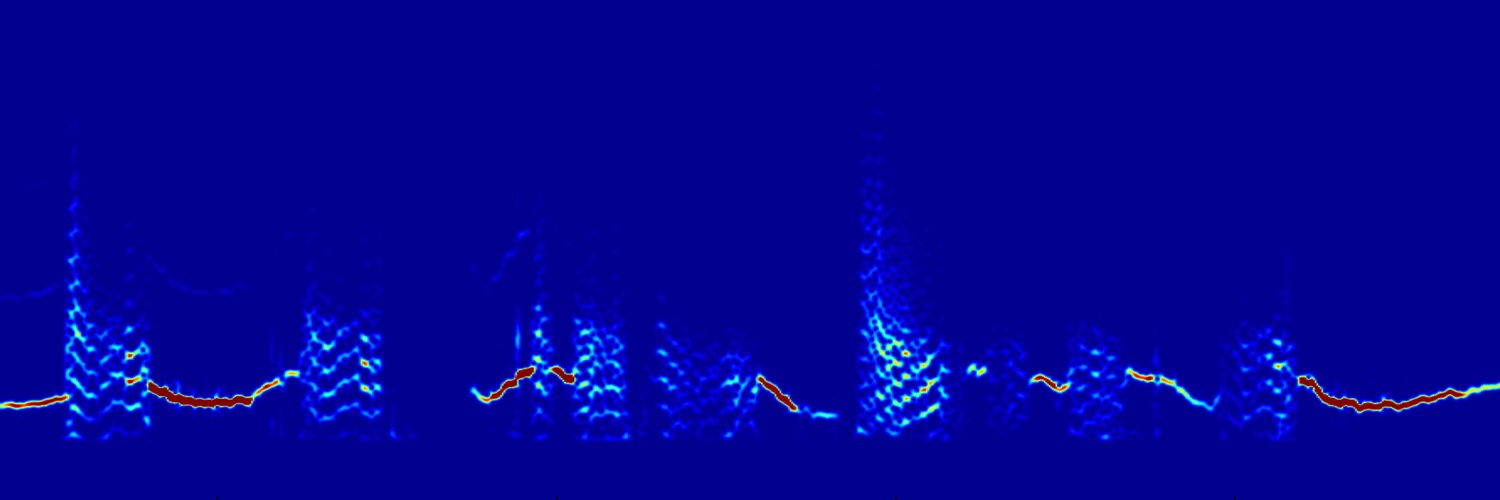
We show that male flies switch between two types of song throughout courtship (complex vs simple), dependent on context - whether they are near vs far from the female. And, we uncover the circuit mechanisms underlying this amazing flexibility.
Proud to announce that the incomparable Talmo is now Dr. Talmo Pereira. Join his new lab @salkinstitute to apply deep learning in a wide variety of biological contexts. Congrats Dr.!


We had already mapped the connectome of early auditory circuits -biorxiv.org/content/10.1101/… – we now extend this to the new intermediate neurons and connect the map to a few known higher-order feature detectors. 4/6

Fly song consists of switches between 2 modes (or syllables). In collab with Dickson lab @HHMIJanelia, we generated genetic lines to label ~50 types of intermediate neurons. We then recorded from these and found they have diverse preferences for song mode. 2/6


FlyWire has already been used by @DudiFly et al. to reconstruct circuits underlying a persistent internal state: biorxiv.org/content/10.1101/…. 3/n

Drosophila neuroscientists, join the new community at FlyWire.ai to trace your brain circuits! Together with @SebastianSeung and the amazing FlyWire research team, we segmented all the cells in a whole-brain EM stack by AI. 1/n

Please contact us if you want to use sleap.ai for your research - we are happy to help you get started! We also welcome feedback as we continue to improve the software! 3/3