






Ms. Imrie retweeted

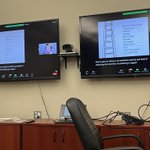
“Who in the room doesn’t matter enough that we should not check for their understanding?” Great talk from @teacherhead at @ResearchEd_CL
Ms. Imrie retweeted

A new little wrinkle I’ve added to our Turn and Talk routine is finishing with a three-second countdown and then calling all students to put their hands up, leading directly into cold calling.
I like how the “all hands up” move effectively re-harnesses student attention after their conversation with a partner. It seems to work better than simply counting down to get their attention back on me and then beginning to cold call.
When all hands go up, students are already prepared to be called on, and, more importantly, they’re thinking about what they’re going to say based on the conversation they just had. It creates a much more seamless transition from partner talk → retrieval/thinking → cold call.
Ms. Imrie retweeted
A few have requested a printable version and here she be…
drive.google.com/file/d/1mhp…

I’m loving my updated “How Learning Happens” knowledge organizer.
Yes, I spend the first couple of days of the school year teaching students the basics of human cognitive architecture. It gives them the lens through which they’ll understand why I teach the way I do and the foundational principles behind our procedures, routines, and instructional practices. Some people will probably be annoyed by that. Let’s all be cool about it, OK?


Ms. Imrie retweeted

AI didn’t replace my teaching - it expanded it.
From multilingual access to creativity and reduced test anxiety, these classroom moments show what purposeful AI use can look like.
#AIinEducation #StudentAgency #EdLeadership #AIandLearning #EdTech
edcan.ca/articles/teaching-w…
Ms. Imrie retweeted

Working memory is limited; that’s the heart of Cognitive Load Theory. Learn why overload slows learning in our guide: innerdrive.co.uk/blog/cognit…

Ms. Imrie retweeted

The I–We–You model works because it matches how the brain actually learns.
I → reduces cognitive load with clear modelling
We → builds strong mental models through guided practice
You → only then do students work independently with confidence
It’s not hand-holding. It’s cognitive science: novices need clarity before autonomy.
When we get the sequence right, students don’t just “get it” - they own it.
Ms. Imrie retweeted
If a new teacher comes within your sphere of influence and they want to know the “secret” to great teaching, show them this clip and give them a copy of Rosenshine’s principles of instruction to read. That’s it. Start there and build your procedures and routines accordingly.

🔥 If someone tells you explicit instruction is “boring,” “mindless lecturing,” or “not engaging,” please share this clip with them.
In just 60 seconds, Anita Archer explains what explicit instruction actually is. It's interactive, intentional, effective, and promotes student success. youtube.com/shorts/g1lOVrxxb…

Ms. Imrie retweeted

🧠 THE SIMPLE MODEL OF THE MIND! This NEW one-page guide breaks down how we learn, drawing on key principles from cognitive science. It provides a clear, research-based framework to guide instruction, manage cognitive load, and build shared professional language.
Inspired by Dan Willingham and @olicav

Ms. Imrie retweeted
A teacher can’t plan instruction that truly supports learning if they don’t understand how learning happens.
I’ve been there. My lessons were packed with fun, engaging poor proxies for learning. Very little learning happened.
Not anymore. What changed? Cognitive science.


Ms. Imrie retweeted

The lesson I mentioned in the podcast is described in detail here:
scientistsinthemaking.com/ef…
Ms. Imrie retweeted

This post is about how I plan lessons from scratch, what we get right and wrong about lesson planning, and the great paradox of lesson planning:
In a perfect world, it wouldn’t even exist!
@GTavernetti @SciInTheMaking @StamStam193 @learnwithmrlee
educationrickshaw.com/2025/0…

Ms. Imrie retweeted

Free Explicit Morphology Instruction resource guide for students in Grades 9-12?! YES PLEASE! 🥳
Check out this Intensive Intervention Practice guide from @NCLIILearning:
nclii.org/wp-content/uploads…

Ms. Imrie retweeted

January 2025’s Five Moore Minutes episode targets four key terms - needs, supports, strategies, and resources!
youtu.be/rOlUnnxCspA?si=Za1b…

Ms. Imrie retweeted
“Oral language proficiency is critical for advancing second language learners’ academic success; vocabulary is a particularly critical aspect of oral proficiency.” @ILAToday
A must read for all L2 and teachers of #MLL learners.
literacyworldwide.org/docs/d…

Ms. Imrie retweeted

Are you in Grade 7 to 12 and are interested in attending the TLAC this May 18 to 23 at Camp White Pine in Haliburton?
If so, complete the Expression of Interest Form by November 10 to be entered into the lottery!
Learn more: tldsb.ca/tlac

ALT Stylized black silhouettes of people participating in various arts. Text reads Trillium Lakelands Arts Camp. Expression of interest is open.
Ms. Imrie retweeted

The updated #UDL Guidelines are here...but what that does that mean for the teachers, coaches, and administrators who are implementing Universal Design for Learning in their classrooms and schools?
We break down the biggest changes here: bit.ly/3AfCQ3C

ALT We are helping our students develop the agency to move forward without us.
Ms. Imrie retweeted

UDL Guidelines 3.0 is now available!
Visit and download here: udlguidelines.cast.org

Ms. Imrie retweeted

During June, TLDSB ed centres & schools are flying the progressive Pride flag to highlight our commitment to ensuring equity, dignity, well-being, diversity, and inclusion of the 2SLGBTQIA+ people in our community! Learn more about our flag protocol at: ow.ly/YH8J50Sc29Z

ALT A purple background with two circles containing photos of two TLDSB education centres flying the Canadian flag and Pride flag. Text says TLDSB education centres fly the progress Pride flag to celebrate Pride Month! TLDSB and TLDSB Equity logos at the bottom.
Ms. Imrie retweeted
TLAC 2024 was a success!
Check out the TLAC Slideshow for an overview of the week: youtu.be/1pSYo1gFvks
