
English teacher, obsessive reader, occasional blogger and tweeter. PG Cert in Teaching Creative Writing at Cambridge University.
East Midlands, England
Joined November 2011
- Tweets2.2K
- Following1.1K
- Followers356
- Likes12.7K



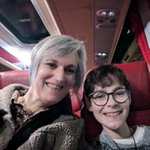




My friend and I absolutely loved your book about Eleanor. We're planning to do the walk at some point ourselves. Yesterday, we walked past Charring Cross Station and couldn't resist a photo. Thank you for your wonderful book.
@history_alice


Lisa Martin retweeted

My thoughts on the @EHRC guidance laid yesterday; this is not about non-existent "rights". It is about the safety of women - mothers, sisters, wives, daughters. We men need to hear their voices. Virginia Woolf : "Though we see the same world, we see it through different eyes".
My intro on @TimesRadio yesterday:
Where I live there are two different routes to and from the tube station. One, let’s call it Acacia Avenue, is quiet and residential. The other, London Road, is a busy major route with lots of traffic. At all times of the day, I automatically head for Acacia Road. It’s just much nicer.
The women in my family, on the other hand, will never willingly make that walk after dark. They live with an anxiety that most men find it hard to imagine, and frankly, rarely think about unprompted.
Last year 739,000 women were sexually assaulted in Britain. Virtually all such assaults - nine out of ten - are perpetrated by men. One in four women have been attacked at some time in their lives. Acacia Avenue is exactly the sort of place in which most women fear that they become vulnerable, and they are right.
As the author Virginia Woolf once wrote " Though we see the same world, we see it through different eyes".
I think this is the right context in which to understand the furore over the guidance being laid today by the government, over the meaning of the words man and woman when it comes to providing services and facilities in workplaces.
Many men think this is about a rather arcane dispute about who gets to use what loo. For their mothers, sisters, wives and daughters, it isn’t.
In a previous life, as Chair of the Equality and Human Rights Commission, I had a hand in writing this country’s equality laws, in particular the 2010 Equality Act. It never occurred to any of us that there could be any confusion or dispute over the meaning of the words man and woman. But it has taken a decade of campaigning, a Supreme Court judgement and now hundreds of pages of guidance to settle the issue.
This is not about so called trans rights, which are completely unaffected by this guidance, since no-one has ever had the right to walk into a changing room reserved for teenage girls.
What it does mean is that women and girls are guaranteed the protection they deserve, and that their safety, which we spent half a decade drafting law to ensure, is protected.
But the whole business illuminates some serious issues in our politics.
First that many of our institutions, in spite of the fact that they always knew what the right thing to do was, decided to ignore the fears of their women customers and employees, under pressure from noisy pressure groups. Instead, the people who were supposed to be the grown ups behaved as though the law said what campaigners wanted it to say, rather than what it actually said. They settled for what they hoped would be a quiet life.
In a democracy, there’s little point in Parliament deciding anything if the law is then made an ass by activists intimidating bosses in companies, schools, universities and the media into doing something different.
Second, at the heart of the campaign to undermine the Equality Act is an idea that we specifically rejected in 2010, so called self-identification. That is to say, that it should be up to the individual to decide whether they have what’s called a protected characteristic - are you male or female, are you black or white. The problem is that self-ID would destroy the operation of any law against discrimination.
Look, it would almost certainly have been to my advantage as a young man to self-identify as a handsome, white public schoolboy. None of those things is true of me. And at various points I am pretty sure it’s been to my disadvantage. It is certainly statistically likely to have been to my disadvantage.
But according to the logic of those who say that self-ID should be the rule and that anyone should be able to decide for themselves whether they are male or female, black or white or Asian, were I to complain about racial discrimination, it would be difficult for anyone prove that I’d been discriminated against because of my race since anybody to whom I’d lost out could just tell the courts that they too were black.
I know that sounds like Alice in Wonderland but you can google the case where a chap, both of whose parents are white, insisted he should get money from the Arts Council because he so identified with the black struggle that he considered himself black, and everyone should accept his point of view. In the United States and Brazil exactly such outlandish claims have been made and people rewarded to the disadvantage of people actually born into minority families.
I have even been told about firms who, when reporting their gender pay gaps have put men who just happen to like wearing dresses at weekends - nothing wrong with that, let me be clear - into the female column and told their women employees that they really haven’t got anything to moan about because statistically they are paid equally, and they should get back in their box.
So today’s guidance isn’t just another tiresome chapter in culture wars. It is , I hope, a halt to the efforts to undermine one of the most important pieces of legislation on the statute book, by people who, for their own reasons, would prefer us to be living in the 1950s world of Mad Men.
Lisa Martin retweeted

Why do leaders of the Greens have such difficulty naming the particular demographic likely to be most ‘shaken’ and ‘affected’ by two men from their community having their throats cut on a London street?

Lisa Martin retweeted

Meet Mackenzie Bly (not his real name; see back cover).
I wanted to write something purely funny, but I fell in love with my lead character along the way.
It's out in August, but the lovely proofs have just arrived.
Retweet before tomorrow (Sun) evening, and I'll pick 2 winners.





Lisa Martin retweeted
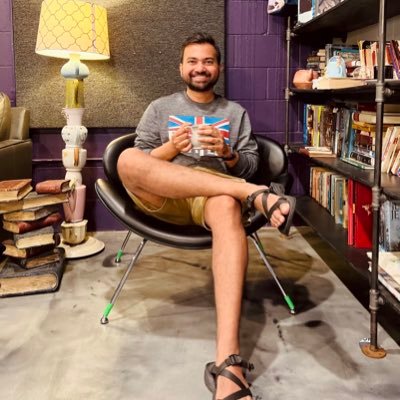
Umberto Eco, who owned 50,000 books, had this to say about home libraries:
“It is foolish to think that you have to read all the books you buy, as it is foolish to criticize those who buy more books than they will ever be able to read. It would be like saying that you should use all the cutlery or glasses or screwdrivers or drill bits you bought before buying new ones.
“There are things in life that we need to always have plenty of supplies, even if we will only use a small portion.
“If, for example, we consider books as medicine, we understand that it is good to have many at home rather than a few: when you want to feel better, then you go to the ‘medicine closet’ and choose a book. Not a random one, but the right book for that moment. That’s why you should always have a nutrition choice!
“Those who buy only one book, read only that one and then get rid of it. They simply apply the consumer mentality to books, that is, they consider them a consumer product, a good. Those who love books know that a book is anything but a commodity.”


Lisa Martin retweeted

“Why are folks getting dumber?” Because they don’t read. “Why aren’t men as romantic & poetic as they used to be?” Because they don’t read. “Why are people so vulnerable to propaganda?” “Why is everyone a conspiracy theorist?” Because they don’t read. Because they don’t read.
Lisa Martin retweeted

Feminists, since forever: "so, there's women's disproportionate share of unpaid labour ..."
Man: "I was thinking more along the lines of 'having fancy nails'"

Lisa Martin retweeted

“Rather hoped I’d get through the whole show. Go back to work at Pratt & Sons; keep wicket for the Croydon gentlemen; marry Doris. Made a note in my diary on the way here. Simply says: ‘Bugger’”
Never fails to bring a tear to my eye.


Lisa Martin retweeted

Strangulation during sex is considered the second most common cause of strokes in women under 40.
Violent pornography has normalised it, and that’s why I laid amendments to ban non-fatal strangulation in porn.
The Government voted against it twice. Now they have accepted it must be banned. It shouldn’t have taken months of delay and political pressure to get here, but I’m relieved the ban is coming.


Lisa Martin retweeted

Woman of the Day Jane Whyte, born in 1844 in Aberdeenshire, a crofter’s wife and mother of nine who was walking her dog along New Aberdour beach when she spotted the SS William Hope drifting helplessly toward jagged rocks after its engine failed and its anchor chain snapped OTD in 1884.
The SS William Hope was an iron steam trawler built in Dundee. It left Fraserburgh for Burghead, carrying only ballast for a routine voyage with a crew of 15, but just off Troup Head (now Scotland's only mainland gannet colony), a sudden hurricane-force gale struck. The trawler headed for shelter in Aberdour Bay when the engine cut out. There was no lifeboat nearby and the crew were stranded in freezing, churning waves in violent winds.
They threw out a lifeline.
Jane dashed into the sea to grab it but it fell short so she waded in even deeper, seized it, wrapped it around her waist and hauled it to shore. Planting her feet "firm as a rock" in the gravel, withstood the pounding surf and held the line as each battered and exhausted sailor clambered hand-over-hand to safety, one by one. It took more than two grueling hours but she never gave up.
She then sheltered the shivering men overnight in her croft, providing warmth, food and solace until they could return to Dundee.
Jane’s heroism earned her the RNLI's silver medal—the institution's highest honour—and a Board of Trade bronze medal plus a £10 reward (roughly £1083 today). She used it to buy her rented croft and fund her children's education.
The SS William Hope was sold for scrap.
This remarkable woman died on 3 August 1918, aged about 74. One of the rescued sailors wrote a poem about her that included these lines”
"Against the terrible death she stood, / A beacon amid the flood."
