

Mormon history & truth claims • BYU sports • politics
Joined August 2013
- Tweets394
- Following77
- Followers77
- Likes16K






Most Correct-ish retweeted

Fair pushback on position, so let me be straight about where I actually land on the Book of Mormon.
The official position of the Church has to stay that it’s historical. I’m not asking anyone in Salt Lake to change that. Community of Christ went down that road and watched their numbers collapse, and if the Church did the same you’d probably lose 50% to 80% of the membership. The story is what built the temples.
But there’s a difference between what the institution teaches and what the institution can tolerate. Right now it’s all or nothing, and all or nothing is a brittle way to believe.
It works fine until a smart, faithful member starts reading the history and the origin story of the book and ends up with doubts he can’t pray away.
Under the current framework he has two options, pretend or leave. Most of them leave.
And these aren’t the lazy or the lukewarm. They’re the deep thinkers, the returned missionaries who read everything, the ones who would have run the ward for the next forty years. We hand them a test the book was never written to pass and then act surprised when they fail it.
So my position isn’t that the Church should teach what I believe. It’s that a member should be able to say “I’m not sure the Nephites were real, but I know God touched Joseph and I know what this book does to my life,” and still be welcome, still hold a recommend, still be LDS. Keep the official teaching. Widen the door.
And yeah, Brigham would probably throw me out. But pretty sure he would throw you out as well.
in christ ♥️
--Kirk

Appreciate this thought exercise:
1. I agree. However, believing it “really happened” doesn’t necessarily mean you believe an actual angel from God named Moroni spoke to Joseph Smith. Is that what you mean by “real?” That the Angel Moroni was actually sent by God the Father and actually spoke to and directed Joseph Smith?
2. If you mean someone can interpret a vision based on their contextual understanding and environment, I agree. If the claim is someone’s mind subconsciously created a vision based on their environment, then I don’t believe it would be a vision in the form of an intentional heavenly manifestation.
3. Yes, this goes back to my point #2. God speaks to us in our understanding and knowledge. However, God didn’t have them dictate an inspired text supporting what they saw as and claim it as historical. Very very different. Apples to oranges. They don’t compare. Where is the fruit to support what they saw was of God? We need to test that fruit not js it take their word for it and compare it to the fruits Joseph Smith produced.
3. Yes. But he didn’t see images and wrote down what he saw. He saw words. Texts. And when wrong, he could not translate further until it was right. This weakens the point of just inspiration by vision. Literal texts that had to be accurate enough to proceed forward. Why? Not jsut to tell a story but to tell a historical narrative that happened.
4. I agree. That’s how the ancients spoke and passed things along. But their lives and experiences were still historical even if their stories weren’t.
5. Maybe, but it doesn’t explain the Angel Moroni. God just sent an angel named Moroni and then placed Him in the Book of Mormon as an ancient prophet just for the heck of it? Why even introduce him as Moroni if there never needed to be a correlation between the two? Doesn’t make sense outside of convenience for a theory.
6. I never claimed he was a fraud., so we agree.
7. “Real God, real vision, real book that came from somewhere beyond Joseph… None of that needs a single Nephite to have walked the earth.” I agree. Yet the Prophets unanimously say it has. For someone that’s wants The Church to go back to its roots, this is a very modern and apologetic take. Brigham Young would want you to remove his image from your profile for this 😂🖤
———————————————————
TL;DR - To me, it’s a convenient apologetic and an easier pill to swallow for those who don’t feel like faith alone is enough. Time is on the side of The Prophets 💪🏾 I believe it.
Instead of the free ice cream BYU typically gives to visiting fans, they should give out free Pop Tarts this weekend. @BYUfootball
A surprising amount of members of the Church of Jesus Christ of Latter-day Saints have never read the first vision account that was written by Joseph Smith in 1832, 6 years before the more official 1838 account:
Therefore, I cried unto the Lord for mercy, for there was none else to whom I could go and obtain mercy. And the Lord heard my cry in the wilderness, and while in the attitude of calling upon the Lord, in the sixteenth year of my age, a pillar of light above the brightness of the sun at noonday came down from above and rested upon me. I was filled with the spirit of God, and the Lord opened the heavens upon me and I saw the Lord.
And he spake unto me, saying, “Joseph, my son, thy sins are forgiven thee. Go thy way, walk in my statutes, and keep my commandments. Behold, I am the Lord of glory. I was crucified for the world, that all those who believe on my name may have eternal life. Behold, the world lieth in sin at this time, and none doeth good, no, not one. They have turned aside from the gospel and keep not my commandments. They draw near to me with their lips while their hearts are far from me. And mine anger is kindling against the inhabitants of the earth, to visit them according to their ungodliness and to bring to pass that which hath been spoken by the mouth of the prophets and apostles. Behold and lo, I come quickly, as it is written of me, in the cloud, clothed in the glory of my Father.”
My soul was filled with love, and for many days I could rejoice with great joy. The Lord was with me, but I could find none that would believe the heavenly vision. Nevertheless, I pondered these things in my heart.
This is one of the songs that has hit a little extra hard this last year for me. While it’s not an exact match, I love the sentiment of being willing and able to hash things out with my believing family members and reconcile the tension that our religious differences have caused.
open.spotify.com/track/6pk6E…


Most Correct-ish retweeted

Your loved one who has stepped away from the faith already has a Savior. He is infinitely loving and mighty to save. They are in very capable, nail-scarred hands. Trying to control their faith usually creates more hurt. Letting the Lord be their Savior frees you to be their mom, their brother, their friend. Jesus Christ is working on them, and He's working on you too. The Lord sees far more than a membership record; He sees their heart. So let go of fixing, and enjoy the wonderful person in front of you.
#GeneralConference

I find it fascinating that many members of the Church try so hard to preserve this idea of Joseph Smith’s polygamy being “for eternity only” and that he didn’t have sex with any of his polygamous wives.
Even if we grant the entire premise of that historically flawed position, the following prophets/presidents of the Church certainly practiced polygamy in all its glory.
Given that Brigham Young, John Taylor, Wilford Woodruff, etc practiced polygamy - why try so hard to keep Joseph’s sexual reputation clean?
The Isaiah chapters are interesting, but at least the Book of Mormon tells you it’s quoting Isaiah.
The harder problem is when unmistakable New Testament/KJV language shows up with no citation at all.
Moroni 7:45–46 ≈ 1 Corinthians 13:4–8
“charity suffereth long, and is kind … beareth all things, believeth all things, hopeth all things, endureth all things … charity never faileth”
Moroni 7:48 ≈ 1 John 3:2–3
“when he shall appear we shall be like him, for we shall see him as he is … purified even as he is pure”
Helaman 10:7 ≈ Matthew 18:18
“whatsoever ye shall seal on earth shall be sealed in heaven; and whatsoever ye shall loose on earth shall be loosed in heaven”
Alma 40:14 ≈ Hebrews 10:27
“an awful, fearful looking for of the fiery indignation of the wrath of God”
These aren’t vague similarities. The wording tracks the KJV far too precisely to just be coincidence.
BYU Professor Royal Skousen’s Critical Text Project identifies 36 extended KJV quotations and 83 paraphrastic biblical quotations in the Book of Mormon.
So the question isn’t whether biblical language is there. It obviously is.
The question is why an allegedly ancient American record repeatedly contains the wording of a much later English New Testament—especially in places where it never tells you it’s quoting anything.
Source: Royal Skousen with Stanford Carmack, The History of the Text of the Book of Mormon, Part Five: The King James Quotations in the Book of Mormon (FARMS/BYU Studies, 2019).
byustudies.byu.edu/article/r…

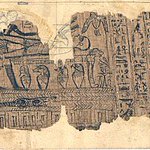
This is Wilford Woodruff’s original 1834 journal entry describing Zelph the white Lamanite.
While traveling with Zion’s Camp, members of the group dug into an ancient mound and uncovered a human skeleton. Woodruff recorded that Joseph Smith identified the man as Zelph, “a white Lamanite,” and said that “the curse was taken from him, or at least in part.”
According to Woodruff, Zelph had been a warrior who was killed in battle by an arrow, and one of his thigh bones had earlier been broken by a stone from a sling. Woodruff also wrote that Zelph served under a great prophet named Onandagus, who was known across a vast region from the eastern sea toward the Rocky Mountains. He concluded: “The above knowledge Joseph received in a vision.”
Source: Wilford Woodruff Journal, June 3, 1834, Wilford Woodruff Papers.

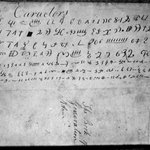
One of the Eight Witnesses, John Whitmer, had a copy of the Reformed Egyptian characters from the Golden Plates on this surviving “Caractors” document.
Whitmer claimed he had personally seen and handled the gold plates.
So take a look at the characters he preserved: do these resemble Egyptian—or any known Semitic writing system—to you?
Source: Appendix 2, Document 1. Characters Copied by John Whitmer, circa 1829–1831, p. 1, The Joseph Smith Papers

With everyone celebrating Moroni Day today I felt a little left out…
So happy Nephi Day for those who know! 👀
Emma said Joseph “could neither write nor dictate a coherent and well-worded letter.”Unfortunately for that narrative, we have the letters.
This follows Kolby Reddish’s work on Mormon Stories / LDS Discussions, where he put Joseph’s earliest letters next to the quote the Church has used for decades.
Joseph Smith III asked whether his father could have dictated the Book of Mormon after first writing it or reading it from a book. Emma answered:
“Joseph Smith could neither write nor dictate a coherent and well-worded letter; let alone dictating a book like the Book of Mormon.”
— “Last Testimony of Sister Emma,” Saints’ Herald, 1 Oct. 1879
That line still shows up in manuals, conference talks, and the Gospel Topics essay. The interview was 35 years after Joseph died and 50 years after the Book of Mormon was dictated.
Joseph, 22 October 1829
Four months after the dictation finished, while the book was at the printer, Joseph wrote Oliver Cowdery. What survives is a copy Frederick G. Williams entered into Letterbook 1 in 1832–33.
Harmony — Oct. 22d — 1829
“Respected sir I would in form you that I arrived at home on sunday morning the 4th after having a prosperous journy, and found all well the people are all friendly to us except a few who are in opposition to evry thing unless it is some thing that is axactly like themselves and two of our most formadable persacutors are now under censure and are cited to a tryal in the church for crimes which if true are worse than all the Gold Book business. we do not rejoice in the affliction of our enimies but we shall be glad to have truth prevail. there begins to be a great call for our books in this country the minds of the people are very much excited when they find that there is a copy right obtained and that there is really books about to be printed … and now dear brother be faithful in the discharge of evry duty looking for the reward of the righteous and now may God of his infinite mercy keep and preserve us spotless untill his coming and receive us all to rest with him in eternal repose through the attonement of Christ our Lord Amen”
Joseph Smith Jr
The spelling is 1829. The letter still does the job: news, enemies, book sales, greetings, a blessing. Several lines could sit in the Book of Mormon without anyone blinking.
August and December 1830
Within a year of publication, Joseph and John Whitmer wrote the Colesville saints two pastoral letters packed with Bible.
The August letter has “fight the good fight of faith,” “consume it upon your lusts,” “ravening wolves,” “thrust in your sickle,” and “the lion shall lie down with the Lamb.”
The December letter quotes 1 Thessalonians 5 almost straight through and, as Reddish counted, loads dozens of phrases from about twenty biblical books into a few paragraphs. Same habit you see in the Book of Mormon.
What we’re left with:
Emma said he couldn’t. The 1829–1830 letters show he could.
The Church still printed these letters in the Joseph Smith Papers and kept using her sentence anyway.
Watch Reddish’s episode. Read the letters.
Joseph Smith Papers: Letter to Oliver Cowdery, 22 Oct. 1829; Letter to Newel Knight and the Church in Colesville, 28 Aug. 1830; Letter to the Church in Colesville, 2 Dec. 1830. Mormon Stories Ep. 2089 with Kolby Reddish. “Last Testimony of Sister Emma,” 1879.


I served an LDS mission for 23.5 months, coming home “early” so I could make it back in time for the school semester to start.
At no point did I feel like I was cheating the Lord, the system, or that I was somehow “less than” for not serving a full 24 months.
However - there were some Pharisaic missionaries and members of the Church who felt like it was their responsibility to let me know what they thought about leaving my mission two weeks early.
I think the members would do well to worry a little more about themselves and a little less about how others choose to serve.
Most Correct-ish retweeted

Listen.
If $9,000 is the thing that is going to let moms stay home and for families to have more children, then make it a $9,000 tax credit.
If you want them to have $9,000, then government shouldn’t take the $9000 from them to start with. Giving back the money they took like it’s a favor when they could just let them keep it. Even worse, government shouldn’t have to take $15,000 from someone else while keeping $6,000 for itself snd then “give” the $9,000 it stole from someone else.
Reduce taxes. Don’t increase spending.
Before the gold plates, Joseph Smith participated in treasure digging.
In 1825, Josiah Stowell hired Joseph to help search for a supposed Spanish silver mine near Harmony, Pennsylvania. Joseph’s role was connected to his claimed ability to locate buried objects using a seer stone.
This isn’t just an anti-Mormon story. Joseph Smith’s own 1838 history acknowledges working for Stowell and says this is where the story that he was a “money-digger” originated.
In 1826, Joseph was brought before a local magistrate in Bainbridge, New York, in connection with his “glass-looking.” Though this was a well known scam at the time, Stowell was so convinced Joseph could see treasure that he testified on the side of Joseph Smith, despite no treasure ever being located.
The faithful interpretation: Joseph genuinely believed he possessed a spiritual gift, common within the folk-religious culture of his time, and his treasure-seeking helped prepare him to receive revelation.
The skeptical interpretation: Joseph was already claiming supernatural powers to locate hidden treasure before claiming to locate and translate gold plates with a seer stone.
The treasure digging isn’t really the disputed part anymore.
The question is what it tells us about the origins of Joseph Smith’s prophetic claims.
The Book of Mormon we read today isn’t quite the text Joseph Smith originally dictated “by the gift and power of God”
BYU professor Royal Skousen documents 3,168 changes for the 1837 edition alone.
Most cleaned up grammar/folksy English:
“as I was a journeying” → “as I was journeying”
“as I was a going thither” → “as I was going thither”
But some had theological implications. In 1 Nephi 11, for example:
“the Lamb of God, yea, even the Eternal Father” → “the Lamb of God, yea, even the Son of the Eternal Father”
And “the mother of God” → “the mother of the Son of God.”
Was the original translation most correct? Or the later version? And why the difference?
byustudies.byu.edu/article/r…
The first documentation of Joseph Smith writing about his “First Vision” is in 1832, 12 years after the event, and he only mentions one Personage: “The Lord”.
It’s not until the 1838 version that the story includes two personages: God and Jesus Christ.