Alejandro Mos Riera is a Spanish polymath. Poet, writer, journalist, editor, painter, photographer, musician, director and filmmaker.
Joined September 2013
- Tweets34.5K
- Following2.7K
- Followers481
- Likes32.6K





Alejandro Mos Riera retweeted

Remembering the magical and poetic compositions of cinematographer Néstor Almendros, who was born on this day in 1930. A master of natural light who worked with some of the most important directors in cinema history, such as Truffaut, Rohmer and Malick.
Alejandro Mos Riera retweeted

"People have a hard time accepting anything that overwhelms them."
Bob Dylan on creativity: themarginalian.org/2026/10/2…


Alejandro Mos Riera retweeted
En estos tiempos de trincheras en los que todo parece reducirse a azul o rojo y escuchar al otro se ha convertido casi en una excentricidad, me gustaría recomendar una serie de libros. Especialmente a quienes están tan convencidos de tener razón que han dejado de sentir curiosidad por las razones de los demás. Al fin y al cabo, entender una postura no obliga a compartirla, pero sí ayuda a convivir.

Alejandro Mos Riera retweeted
Closer to the star than anyone in history: images from the Parker probe ☀️
The spacecraft flew just 6.17 million km from the Sun's surface at a dizzying speed—approximately 687,000 km/h. The WISPR camera captured the detailed structure of the solar corona, powerful solar wind streams, and coronal mass ejections, providing scientists with unique data on the nature of our star. 🛰
Alejandro Mos Riera retweeted
The greatest commencement address of all time – Nobel-winning poet Joseph Brodsky's 6 rules for playing the game of life like a winner themarginalian.org/2013/12/1…

Alejandro Mos Riera retweeted
An amazing shot of Andromeda, taken with an exposure time of over 1,200 minutes 🔭
Alejandro Mos Riera retweeted
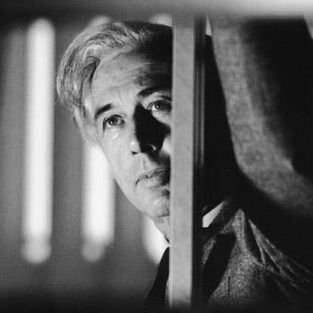
Martin Scorsese is a big fan of Carol Reed's "The Third Man" (1949). When he was 18 & studying at NYU, he wrote a paper on the movie & gave it to his professor. The professor wrote a note on the paper which said: "Remember, it's only a thriller." Scorsese disagreed.
Scorsese later wrote,
"Has "The Third Man" had an influence on my career? When I saw it, I was ripe for it – ready to understand what you can do with the camera. The themes of the picture made me feel comfortable about dealing with similar kinds of characters, characters you'd consider undesirable - the charm of evil. I did a paper on the film when I was 18 at NYU. The professor had different ideas. He wrote a note on the paper: "Remember, it's only a thriller." I disagreed.
We know what happens in 'Psycho' (1960) or 'Vertigo' (1958) or 'The Red Shoes' (1948). So why do we keep watching? If some dismiss a work because it "fits" into a genre, then why does it sustain repeated viewings? It's more than the plot twists and surprises of the story. Certainly, it's the characters, the world they inhabit, the love stories, the trust and betrayals – the human heart. Each presented with intelligence, wit, and a very real joy of film-making, while still feeling fresh."
("Martin Scorsese on 'The Third Man': The best revelation in all cinema", Independent, 2015)
P.S: On this day, 77 years ago, Carol Reed's "The Third Man" (1949) premiered at Hastings, UK.
Alejandro Mos Riera retweeted
"If you look at zero you see nothing; but look through it and you will see the world."
The invention of zero: themarginalian.org/2017/02/0…

Alejandro Mos Riera retweeted
A lei for your losses – Joan Didion on the art of letting go themarginalian.org/2026/09/0…

Alejandro Mos Riera retweeted

Which way is "up" in this hypnotic animated version of M.C. Escher's "Relativity"?
📽: pixel8studio