





Pinned Tweet
Our recent work that has been published in ACS central science. This is a collaboration with the labs of @MeloniLab & @hedi_65 Dr. Torabifard. We explored the landscape of non-extant proteins to generate a novel funcional multidomain ATPase copper transporters.
@ACSPublications
Morcos Lab retweeted

From our FY26 Functional Genomics call: Fluorine compounds resist biological breakdown — Sheel Dodani will use genomics, AI and lab tests to find and validate microbial defluorinase enzymes for biotech.
@MorcosLab @UTD_Biology @UTDResearch
Full portfolio: jointgeno.me/FGFY26

ALT Congratulations to our CSP Functional Genomics Call recipients! Sheel C. Dodani University of Texas, Dallas Machine learning-guided discovery of microbial enzymes for carbon-fluorine bond chemistry.
Generative Landscapes and Dynamics to Design Functional Multidomain Artificial Transmembrane Transporters
doi.org/10.1021/acscentsci.5…

This project is the result of a great effort by three labs @UT_Dallas and showcases a methodology that is general and with potential applications to other proteins. To highlight is the complexity of the system, a multidomain protein with selective transport capabilities ..4/n
This was possible due to the hard work of lead authors Fariha Hossain and Fernando Montalvillo Ortega.
We were also happy that our article has made it to the cover where the 3D rendering of the landscape is made with sequence data generated by LGL :-)
#MyACSCover
@UTD_Biology

Congratulation to Dr. Cheyenne Ziegler for successfully defending her Ph.D. thesis @UTD_Biology. I’m really proud of her accomplishments and excited for her next stage doing ML/Bio drug discovery!


Morcos Lab retweeted

Get a glimpse of what’s ahead at the 10 #ScientificWorkShops: Impossible to Resist 💪🏻🧬 at #ASH24
➡️
ashpublications.org/ashnewsd…
#Hematology #immunonc #geriheme #TcellRX #MEDTwitter #ASHNewsDaily
@ASH_hematology
@GomezDLeonMD
@JuliPerezBot
Morcos Lab retweeted
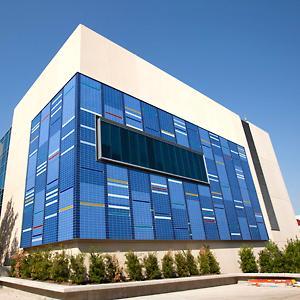
We are hiring! Apply for faculty positions in our vibrant and growing department.
jobs.utdallas.edu/postings/2…
Morcos Lab retweeted
This was a great program! Congratulations to Dr. Maitra, all the student and faculty mentors, and the program participants.
magazine.utdallas.edu/2024/0…

Happy to share the perspective we wrote with @IColuzza and José Onuchic on the connection between traditional and modern machine learning architectures (From Hopfield and Potts Networks to Transformers) and physical modeling to investigate biomolecules.
doi.org/10.1073/pnas.2311807…

We then connect such developments with relevant applications in protein folding, structure prediction, evolution and design. Obviously this list is not comprehensive and focuses on a subset of developments we thought relevant. We also discuss some of our own results on design.
It was great participating in NIC Days: Biomolecular Evolution, Function, and Assembly at the John von Neumann Institute for Computing, part of the Forschungszentrum Jülich one of the largest supercomputing centers in Europe. Thanks to Alex Schug for the invitation! @fz_juelich

Thanks @IColuzza for visiting @UTD_Biology and for giving a seminar on his exciting protein design work.

Thankful for the invitation to give a seminar at the Department of Biochemistry , Biophysics and Molecular Biology at @IowaStateU. Great to meet faculty and students and especially the @potoyangroup. Thanks Davit!

I’m really glad to finally to share our most recent work published in PNAS. We show how our model of sequence evolution with epistatic contributions (SEEC) is able to evolve variants of beta- that preserve functional phenotypes in vivo.
1/N
pnas.org/doi/10.1073/pnas.23…

Interestingly, evolved sequences retain antibiotic resistance even after large number of mutations. Some evolved sequences substantially enhance growth phenotypes in E. coli. Our work shows that we can build accurate models of sequence evolution if we account for epistasis.
3/N
This project was years in the making, congrats to Sophia Alvarez, Charisse Nartey and @JAlbertodelaPaz and the rest of the authors. I’m proud of this project since all the experiments were done “in house”.
@UTDResearch @UTD_Biology @UTDScience @PNASNews
4/N