

Former Chief & Global Coordinator #HIV/AIDS Section @UN in #Vienna. Passionate about #HumanRights #PublicHealth #GenderEquality #HarmReduction. Views personal.
Joined July 2009
- Tweets13.8K
- Following744
- Followers4.5K
- Likes11.5K



Pinned Tweet
Disagree all you want but with civility and rational argument. Insults, slurs, personal attacks, or threats say more about the writer than the issue. Those accounts will be blocked, no questions asked. Dissent is welcome. Hostility isn’t.
Two Bangladeshis executed over alleged ‘Immoral Acts’ - Is human life really worth so little?
Saudi Arabia has executed two Bangladeshi nationals, Nazrul Islam Abdul Bashir and Siti Akhtar. They were accused of committing an 'immoral act' inside a mosque in Mecca.
But what exactly did they do? What evidence was presented against them? Were they given a fair chance to defend themselves? Did they have lawyers? Why wasn’t the Bangladeshi embassy informed before their trial or execution?
Saudi authorities say there was an investigation, that the court found them guilty, and that the sentence was approved by higher authorities. But where is the evidence? Where is the full court ruling? Where are the details of the trial?
Two people have been put to death, yet these basic questions remain unanswered. What kind of justice is this?
The death sentences were reportedly handed down under Ta’zir, a part of Islamic law where punishments are not always fixed in advance. Judges have the discretion to decide the punishment based on the seriousness of the offence and the circumstances - ranging from a warning to imprisonment, flogging, and in some cases, even death.
In other words, the punishment largely depends on the judge’s discretion.
But giving judges that power doesn’t mean they should be free from accountability. In fact, the harsher the punishment, the greater the need for strong evidence and a transparent legal process.
When two people are sentenced to death over a vaguely described 'immoral act', without the full evidence or details of the trial being made public, that kind of judicial discretion risks becoming a tool of arbitrary power and cruelty against the powerless.
Islam itself places great importance on strong evidence before imposing severe punishments. There is also a well-established principle of avoiding certain severe punishments when there is doubt. So why hasn’t the evidence behind such a final and irreversible punishment been made clear to the public?
And here’s another question - are these strict moral standards applied equally to everyone?
For years, there have been reports of Bangladeshi women working as domestic helpers in Saudi Arabia being raped, beaten, denied their wages, having their passports confiscated, and in some cases, dying following abuse.
Remember Abiron Begum?
She was a Bangladeshi domestic worker who was murdered in Saudi Arabia in 2019. It took seven months for her body to be returned to Bangladesh. According to her family, she had suffered horrific abuse. In 2021, a Saudi court sentenced her employer, Ayesha Al Jizani, to death for her murder.
So yes, justice was delivered in at least one case. But does one court ruling mean that all the other allegations of abuse have been properly investigated and addressed?
How many abused women actually manage to reach a courtroom? How many can safely report what has happened to them? How many ever get justice?
And why is it considered an offence against religion when something happens inside a mosque, but not when a Bangladeshi woman is beaten to death, raped, abused, or forced to work around the clock like a slave inside a Saudi home?
Does that not go against the very same religious values?
Two economically vulnerable Bangladeshis have been executed over allegations involving the sanctity of a mosque, through a legal process whose details remain unclear to the public. Yet when it comes to the many allegations of abuse and deaths of Bangladeshi domestic workers inside Saudi homes, serious questions remain about the consistency of investigations, transparency, and accountability.
How long can such a double standard be tolerated?
Does religion only deserve respect within the four walls of a mosque? Does that respect suddenly disappear the moment someone steps outside?
1/2
@OHCHRAsia @volker_turk @UNHumanRights @hrw @amnesty
This is not about blaming ordinary Saudi people or questioning Islam. It is about questioning how state power is used, whether punishments are proportionate, and whether the justice system is transparent and accountable.
Being accused of a crime does not mean someone loses their basic human rights. And those rights should not become any less important simply because someone is a foreigner, poor, or powerless.
The Bangladeshi government also has serious questions to answer.
When migrant workers send money home, they are celebrated as the pride of the nation and the backbone of the economy. Yet two Bangladeshi citizens were tried and executed, and the Bangladeshi government reportedly only found out after everything was over.
Are migrant workers nothing more than machines for sending money home? Who is responsible for protecting their lives, their safety, and their legal rights?
On 18 October, Bangladesh sought an explanation from the Saudi ambassador. But sending a diplomatic letter cannot be the end of the matter.
The Bangladeshi government must demand the complete case files, the exact charges, the evidence presented, details of legal representation, whether there was a proper opportunity to appeal, and a full account of the judicial process. It must also demand an explanation for why Bangladesh was not informed beforehand.
Diplomatic relations with Saudi Arabia are important. But maintaining those relations can never be an excuse for staying silent when the rights of Bangladeshi citizens are at stake.
Whether it is done in the name of law or religion - a death sentence delivered through a process that lacks transparency and public accountability must be questioned.
And to those saying, 'They went to that country, so they have to follow its laws,' the response is simple - of course people must respect the laws of the country they live in. But does that mean a state should be allowed to do whatever it wants in the name of enforcing those laws?
No matter how rich or powerful that country may be?
Bangladeshi workers are needed. Their sweat, their labour, and the money they generate are valued - but do their lives mean nothing?
Is the life of a Bangladeshi worth less than the life of someone from a wealthy country?
And if that is how people are treated, then the questions go beyond that country’s justice system. They also go to how seriously it actually follows the religious values of justice, fairness, and human dignity that it claims to uphold.
#OHCHR #HumanRightsWatch #AmnestyInternational #humanrights #saudiarabia #Bangladesh
‘অনৈতিক কাজের’ নামে দুই বাংলাদেশির মৃত্যুদণ্ড - মানুষের জীবন কি এতই সস্তা?
সৌদি আরবে নজরুল ইসলাম আবদুল বাসির আর সিতি আখতার নামে দুই বাংলাদেশির মৃত্যুদণ্ড কার্যকর করা হয়েছে। অভিযোগ, মক্কার একটি মসজিদে তারা ‘অনৈতিক কাজ’ করেছেন।
কিন্তু কী সেই কাজ? কী প্রমাণ ছিল? তারা আত্মপক্ষ সমর্থনের যথাযথ সুযোগ পেয়েছিলেন? আইনজীবী ছিলেন? বাংলাদেশ দূতাবাসকে বিচার বা মৃত্যুদণ্ডের আগে কেন জানানো হলো না?
সৌদি কর্তৃপক্ষ বলছে, তদন্ত হয়েছে, আদালতে অপরাধ প্রমাণিত হয়েছে, উচ্চপর্যায়ে রায় অনুমোদিত হয়েছে। কিন্তু সেই প্রমাণ, পূর্ণ রায় আর বিচার প্রক্রিয়ার বিস্তারিত কোথায়?
দুজন মানুষের জীবন শেষ করে দেওয়া হলো, অথচ এতগুলো মৌলিক প্রশ্নের উত্তর এখনো অজানা। এটা কেমন বিচার?
মৃত্যুদণ্ড নাকি দেওয়া হয়েছে তা’জির বিধানের অধীনে। ইসলামি আইনে তা’জির হলো সেই অংশ, যেখানে অপরাধের জন্য কোনো নির্দিষ্ট শাস্তি আগে থেকে ঠিক করা থাকে না। বিচারক অপরাধ কতটা গুরুতর ও পরিস্থিতি বিবেচনা করে শাস্তি নির্ধারণ করেন - সাধারণ সতর্কীকরণ থেকে শুরু করে জেল, বেত্রাঘাত, এমনকি মৃত্যুদণ্ড পর্যন্ত। অর্থাৎ এখানে বিচারকের বিবেচনার ওপরই শাস্তি নির্ভর করে।
কিন্তু বিচারকের হাতে বিবেচনার ক্ষমতা থাকার অর্থ এই নয় যে সেই ক্ষমতার কোনো জবাবদিহিতা থাকবে না। বরং শাস্তি যত কঠোর, প্রমাণ আর বিচার প্রক্রিয়ার স্বচ্ছতা তত বেশি জরুরি। দুজন মানুষকে অস্পষ্ট ‘অনৈতিক কাজের’ অভিযোগে, পূর্ণ প্রমাণ ও বিচারের বিস্তারিত বিবরণ প্রকাশ না করে তা’জিরের নামে মৃত্যুদণ্ড দেওয়া হলে, সেই বিবেচনামূলক বিচারিক ক্ষমতাই স্বেচ্ছাচার ও দুর্বলের ওপর নিষ্ঠুরতার হাতিয়ার হয়ে ওঠার আশঙ্কা তৈরি হয়।
ইসলামেও কঠোর শাস্তির জন্য কঠোর প্রমাণের গুরুত্ব রয়েছে। সন্দেহের ক্ষেত্রে শাস্তি এড়ানোর নীতিও রয়েছে। তাহলে এমন একটি চূড়ান্ত শাস্তির পক্ষে প্রমাণ জনসমক্ষে পরিষ্কার করা হচ্ছে না কেন?
আরেকটা প্রশ্ন - নৈতিকতার এত কড়াকড়ি কি সবার জন্য সমান?
সৌদি আরবে বাংলাদেশি নারী গৃহকর্মীদের ধর্ষণ, মারধর, বেতন আটকে রাখা, পাসপোর্ট কেড়ে নেওয়া, এমনকি নির্যাতনে মৃত্যুর অভিযোগ বছরের পর বছর ধরে উঠে আসছে।
আবিরন বেগমের কথা মনে আছে?
২০১৯ সালে সৌদি আরবে এই বাংলাদেশি গৃহকর্মীকে হত্যা করা হয়। তার মরদেহ দেশে ফিরতে সাত মাস লেগেছিল। পরিবারের বর্ণনায় তার ওপর ভয়াবহ নির্যাতন চালানো হয়েছিল। ২০২১ সালে সৌদি আদালত আবিরনকে হত্যার দায়ে নিয়োগকর্ত্রী আয়েশা আল জিজানিকে মৃত্যুদণ্ড দেয়।
অর্থাৎ অন্তত একটি ঘটনায় বিচার হয়েছিল। কিন্তু একটি মামলার রায় দিয়ে কি বাকি নির্যাতনের অভিযোগ গুলোর জবাবদিহিতা নিশ্চিত হয়? কতজন নির্যাতিত নারী সেখানে আদালত পর্যন্ত পৌঁছাতে পারেন? কতজন নিরাপদে অভিযোগ করতে পারেন? কতজন বিচার পান?
আর শুধু মসজিদে অপরাধ করলেই ধর্ম অবমাননা করা হয়? সৌদি আরবের ঘরে ঘরে বাংলাদেশি নারীকে মারধর করে মেরে ফেললে, ধর্ষণ করলে, নির্যাতন করলে, তাকে ক্রীতদাসীর মতো চব্বিশ ঘণ্টা খাটালে ধর্মের অবমাননা হয় না?
মসজিদের পবিত্রতা রক্ষায় দুই অর্থনৈতিক ভাবে দুর্বল ক্ষমতাহীন বাংলাদেশিকে অস্বচ্ছ বিচার প্রক্রিয়ায় মৃত্যুদণ্ড দেওয়া হয়, অথচ সৌদি গৃহের অভ্যন্তরে বাংলাদেশি নারী গৃহকর্মীদের নির্যাতন ও মৃত্যুর অসংখ্য অভিযোগের ক্ষেত্রে সেই একই তৎপরতা, স্বচ্ছতা বা জবাবদিহিতা দেখা যায় না। এই দ্বৈত নীতি আর কতদিন চলবে?
ধর্মের মর্যাদা কি শুধু মসজিদের চার দেয়ালের মধ্যে? দেয়াল পেরোলেই ধর্মের মর্যাদা উবে যায়?
আমি সৌদি আরবের সাধারণ মানুষকে দায়ী করছি না, ইসলামকেও প্রশ্নবিদ্ধ করছি না। প্রশ্ন করছি রাষ্ট্রীয় ক্ষমতার ব্যবহার, শাস্তির অনুপাত আর বিচারের স্বচ্ছতা নিয়ে।
কোনো অপরাধের অভিযোগ উঠলেই একজন মানুষের মৌলিক অধিকার শেষ হয়ে যায় না। আর বিদেশি, দুর্বল বা ক্ষমতাহীন হওয়ার কারণে সেই অধিকার একটুও কমে না।
বাংলাদেশ সরকারের দায়ও এড়ানোর সুযোগ নেই।
রেমিট্যান্স পাঠানোর সময় প্রবাসীরা দেশের গর্ব, অর্থনীতির চালিকাশক্তি। অথচ দুই নাগরিকের বিচার ও মৃত্যুদণ্ডের খবর বাংলাদেশ সরকার জানতে পারল সব শেষ হয়ে যাওয়ার পর!
প্রবাসীরা কি শুধু টাকা পাঠানোর যন্ত্র? তাদের জীবনের নিরাপত্তা আর আইনি সুরক্ষার দায়িত্ব কার?
১৮ অক্টোবর সৌদি রাষ্ট্রদূতের কাছে ব্যাখ্যা চাওয়া হয়েছে। কিন্তু শুধু কূটনৈতিক চিঠি দিয়ে দায়িত্ব শেষ করা যাবে না। পুরো মামলার নথি চাইতে হবে। অভিযোগের সুনির্দিষ্ট বিবরণ চাইতে হবে। প্রমাণ, আইনজীবীর ভূমিকা, আপিলের সুযোগ এবং বিচার প্রক্রিয়ার বিস্তারিত জানতে হবে। বাংলাদেশকে আগে না জানানোর কারণও জানতে হবে।
সৌদি আরবের সঙ্গে সম্পর্ক গুরুত্বপূর্ণ, কিন্তু সেই সম্পর্ক রক্ষার নামে বাংলাদেশি নাগরিকের অধিকার নিয়ে নীরব থাকা কোনোভাবেই গ্রহণযোগ্য হতে পারে না।
1/2
আইনের নামে হোক, ধর্মের নামে হোক - অস্বচ্ছ বিচারপ্রক্রিয়া আর জবাবদিহিহীন মৃত্যুদণ্ডকে প্রশ্ন করতেই হবে।
যারা বলছেন, ‘ওদের দেশে গিয়েছে, ওদের আইন মানতে হবে’, তাদের বলছি - আইন মানতে হবে, অবশ্যই। কিন্তু আইন প্রয়োগের নামে রাষ্ট্র যা খুশি করবে, সেটাও কি মেনে নিতে হবে? সেটা যত ক্ষমতাধর রাষ্ট্রই হোক না কেন!
বাংলাদেশির ঘাম দরকার, শ্রম দরকার, রেমিট্যান্স দরকার - কিন্তু তার জীবনের মূল্য নেই?
একজন বাংলাদেশির জীবন কি একটি ধনী দেশের নাগরিকের জীবনের চেয়ে কম মূল্যবান? যদি তা-ই হয়, তাহলে প্রশ্ন শুধু সেই দেশের বিচার ব্যবস্থা নিয়ে নয়, যেই ধর্মীয় মূল্যবোধের কথা তারা বলে, তার বাস্তব প্রয়োগ নিয়েও।
2/2
Latest update on the Irkutsk plague concern
Russia has told WHO that no recent plague cases have been registered in #Irkutsk. Monitoring and testing of the dead laboratory worker’s identified contacts has now ended, with Russia reporting that no high-threat pathogens were detected.
However, the key question remains unanswered: the 28-year-old laboratory worker died from severe pneumonia, but its cause is still unknown.
Importantly, WHO is now asking #Russia for further information about what caused her pneumonia, what pathogen prompted the extensive public-health measures, and reports that a second employee may also have pneumonia of unknown cause.
WHO has stressed that timely, complete and transparent information is needed to properly assess the potential public-health risk.
Bottom line: There is still no confirmed #plague case or evidence of transmission. But #WHO itself is seeking further clarification, so until the cause of the original illness and the conflicting reports are resolved, it is too early to consider the matter completely settled.

‘India was never a land of one pure people’
There is an idea promoted by parts of the Hindutva movement today: that India has always been fundamentally a Hindu civilisation, that the ancient Aryans originated in India, and that today’s Hindus represent one continuous people going back thousands of years.
But archaeology, linguistics, history and modern DNA research tell a much more complicated and perhaps more interesting story.
Who were the Aryans?
First, ‘Aryan’ was not originally the name of a race.
The ancient word Arya was used by some ancient Indo-Iranian peoples as a cultural term. The idea of a biologically pure ‘Aryan race’ developed much later, particularly through European racial theories.
So where did the people associated with early Indo-Aryan languages come from?
Thousands of years ago, different groups lived across an enormous belt of open grassland stretching from Eastern Europe and southern Russia through Kazakhstan and Central Asia.
Historians call this region the Eurasian Steppe.
‘Steppe’ simply means a huge area of mostly open, treeless grassland. It was not one country, one nation or one race.
Many communities there lived largely by raising cattle, sheep, goats and horses. Historians call such groups pastoralists - simply people whose way of life depended heavily on herding animals.
Some moved regularly with their animals in search of grass and water. Others combined herding with farming, trade and more settled ways of life.
So ‘Steppe pastoralists’ does not mean a mysterious race. It simply describes ancient communities living on the great grasslands of Eurasia whose lives were closely connected with livestock.
Around 3,500-4,000 years ago, people connected to some of these populations began moving through Central Asia and into the Indian subcontinent.
This should not be imagined as one enormous tribe or army making a single march south. It was a drawn-out process involving different movements, contacts and mixtures over generations.
There was no India, Pakistan or Bangladesh as we know them today. Those countries and borders came thousands of years later.
As populations mixed, Steppe-related ancestry eventually became part of the ancestry of many people across South Asia, including populations in present-day India, Pakistan and Bangladesh.
But it was not distributed equally.
Scientists often discuss several major sources of ancestry when reconstructing South Asia’s population history. Among them are:
Steppe-related ancestry - connected with ancient populations of the Eurasian grasslands.
Iranian-related ancestry - connected with ancient populations related to people living around the Iranian plateau. This does not mean that modern Iranians simply migrated into India.
AASI-related ancestry - AASI means ‘Ancient Ancestral South Indian.’ It is a scientific label for ancestry connected with very ancient South Asian hunter-gatherer populations, not the name of a known race, tribe or civilisation.
There is another interesting detail in the DNA evidence. The Steppe-related contribution appears to have been male-biased, meaning that more of this ancestry seems to have entered South Asian populations through men than through women. Much later, marriage increasingly became restricted within particular communities - a practice known as endogamy. Over time, this helped preserve genetic differences between castes, tribes and other groups, even when they lived close to one another. As a result, the amount of Steppe-related ancestry found today varies greatly between South Asian populations: some groups have relatively substantial amounts, while others have little.
So the genetic history of South Asia cannot be reduced to one ‘Aryan people’ and one ‘Dravidian people.’
1/x
This is where religion and ancestry need to be kept separate.
Christianity began in the Middle East but its spread across Europe did not turn Europeans into Middle Eastern people. Buddhism originated in South Asia but its spread across East Asia did not make Chinese or Japanese Buddhists genetically Indian.
Religions and ideas can cross enormous distances without replacing the populations that adopt them.
Why does this matter today?
Ancient history has become part of modern Indian politics.
The BJP and the wider Hindutva movement strongly emphasise India’s Hindu civilisational identity.
Critics argue that this can encourage the idea that Hindus are the natural or original owners of India, while Muslims and Christians belong less because their religions originated elsewhere.
Legally, Indian Muslims and Indian Christians possess the same constitutional citizenship as other Indian citizens. There is no law formally designating them ‘second-class citizens.’
Critics, however, distinguish formal citizenship from people’s experience of equal treatment, pointing to documented cases and allegations involving anti-Muslim hate speech, communal violence, discrimination and controversial demolitions.
The Citizenship Amendment Act
The Citizenship Amendment Act, or CAA, is part of this wider debate.
It created a special route to citizenship for certain Hindus, Sikhs, Buddhists, Jains, Parsis and Christians who entered India from Pakistan, Bangladesh or Afghanistan under specified conditions.
Muslims were not included in that special route.
The Indian government says the law is intended to assist persecuted religious minorities from these three Muslim-majority countries and stresses that the CAA does not remove the citizenship of Indian Muslims.
Critics question the use of religion as a criterion for a special path to citizenship in a constitutionally secular system.
Whatever position one takes on that political debate, ancient genetics cannot determine who deserves citizenship today.
5/x
Who is a ‘real Indian?’
Suppose somebody says:
‘Hindus are the original Indians. Muslims came later.’
The important question is what ‘Muslims came later’ actually means.
If it means Islam, then yes. Islam originated outside the Indian subcontinent and arrived there later.
But if it means Indian Muslims as a people, the claim is wrong.
Most Indian Muslims did not arrive from Arabia, Turkey or Afghanistan. Much of their ancestry comes from populations already living in South Asia.
The ancestors of today’s Hindus also came from multiple ancient populations. Some ancestral populations had deep roots in South Asia; others were connected with migrations into the subcontinent at different periods.
These differences are real.
But they do not divide modern South Asians into separate biological races, nor can they establish that one modern religious community represents the uniquely ‘original’ inhabitants of the subcontinent.
There is no ‘pure Hindu DNA.’
There is no ‘pure Muslim DNA.’
And there was no single moment when one biologically pure population appeared and became ‘the Indians.’
This does not make Indian civilisation less Indian
Quite the opposite.
The civilisation of the Indian subcontinent developed through thousands of years of interaction.
The traditions today grouped under Hinduism have very deep South Asian roots, while also developing and changing enormously over time.
Buddhism and Jainism emerged.
Islam arrived and developed distinctly South Asian traditions.
Christian communities developed long histories in the subcontinent.
Sikhism emerged.
Persian, Central Asian, Arab, European and many other influences became woven into South Asian societies.
Civilisations do not have to remain unchanged to be authentic.
They absorb, adapt and create.
The simplest conclusion
Ancient DNA cannot tell us who deserves to be Indian, Pakistani or Bangladeshi.
Citizenship and human dignity should not depend on genetics.
What genetics, archaeology, linguistics and history can tell us is that South Asia’s past cannot be reduced to a story of one pure race.
Its peoples descend from different ancient populations whose descendants migrated, mixed, traded, fought, married, exchanged languages and ideas, adopted new religions and created new cultures over thousands of years.
Indian Hindus, Indian Muslims, Pakistanis, Bangladeshis, Sikhs, Christians, Buddhists, Jains, Parsis and many others are all part of this long and complicated South Asian history.
A religion may have originated somewhere else.
That does not make the person practising it a foreigner.
South Asian history is not a story of racial purity.
It is a story of human beings moving, meeting, mixing and creating new societies together.
x/x
Dr Monica Beg retweeted
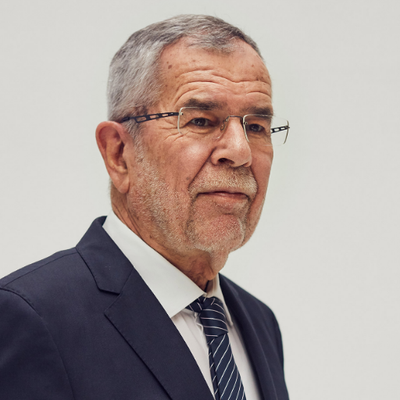
A proud European meets a proud New Yorker.
🤝 @NYCMayor
Dr Monica Beg retweeted

La humanidad tardó siglos en sustituir el derecho del más fuerte por la fuerza del derecho y nosotros no podemos ser la generación que recorra ese camino en sentido contrario.
Dr Monica Beg retweeted

The depth of Israel's international isolation is difficult to fathom if you're just watching mainstream media.
But these images do not lie. Look at all these delegates leaving the General Assembly in protest as soon as Netanyahu takes the podium... xitter.cf/RimaHas/status/2102652…
Dr Monica Beg retweeted

Iranian President Masoud Pezeshkian has accused Israel and the US of applying ‘double standards’, pointing to Israel’s nuclear arsenal and its actions in Gaza while Iran faces inspections and sanctions.
He called for equal treatment under international law.
Dr Monica Beg retweeted

Jordan’s King Abdullah II:
This Israeli government's appetite is now a regional threat. And today, Syria is the warning.
The international community is choosing not to see repeated incursions, creeping territorial expansion, new facts and posts on the ground, including around vital water resources.
Step by calculated step, Israel is testing how far it can go.
And every time the international community looks away, Israel learns that it can go even further, across borderlines and legal limits.
Dr Monica Beg retweeted

Trump allows Netanyahu to appear at next week's UN General Assembly despite an International Criminal Court warrant for his arrest for war crimes but not the Palestinian leader Mahmoud Abbas, whose visa the Trump administration blocked. trib.al/iQvebTM

Dr Monica Beg retweeted

Iran's Parliament Speaker Mohammad Bagher Ghalibaf mocks US interest rates, citing the Taylor equation amidst the effective closure of the Strait of Hormuz.
🔗: aje.news/ihwu70

Dr Monica Beg retweeted
BREAKING: At least 50 Palestinian children among 100 people trapped in collapsed Gaza building
🔴 LIVE updates: aje.news/k6nock?update=49550…
Dr Monica Beg retweeted

The world’s highest court has already told Israel to return to Palestinians the remaining 22% of historic Palestine (Gaza, West Bank, east Jerusalem) that it illegally occupies since 1967.
And the political minions of the world behave as though intl law were theirs to dismiss!
This Post is from a suspended account. Learn more