

Posting major finance/stock news articles from the past
Joined August 2026
- Tweets395
- Following29
- Followers282
- Likes1.1K




Pinned Tweet
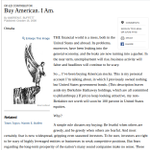
October 16, 2008
With markets in freefall, Warren Buffett published "Buy American. I Am." in the New York Times. The S&P 500 closed at 946 that day.
He wrote: "Be fearful when others are greedy, and be greedy when others are fearful." And he put his own money where his mouth was: "This is my personal account I'm talking about, in which I previously owned nothing but United States government bonds."
The market fell another 28% to 677 by March 2009. Today the S&P is at 7,659, up 8x from the day he wrote it.
Being early isn't the same as being wrong.

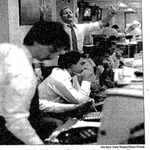
October 19, 1987
The Dow fell 508 points, 22.6%, still the worst single day in its history. Portfolio insurance programs sold futures mechanically as prices dropped. A record 604 million shares changed hands.
The next two sessions recovered 57% of the loss. Under two years later the old high was back.

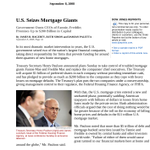
September 7, 2008
Paulson seized Fannie Mae and Freddie Mac on a Sunday morning: a 'temporary' takeover of the $5.4 trillion mortgage machine.
Eighteen years later they're still government property. The 2026 privatization push stalled.
'Temporary' is doing a lot of work.


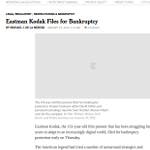
January 19, 2012
Kodak filed for bankruptcy. The 131-year-old film giant's own engineer had built the first digital camera back in 1975.
They invented the future, then watched it eat them.

September 29, 2008
The House rejected the $700 billion bailout, 228 to 205. The Dow fell 778 points, the worst single-day point drop in history at the time.
Congress voted no. The market voted with its feet.
They passed it four days later anyway.

January 26, 1994
IBM posted an $8.1 billion loss for 1993, the largest in US corporate history at the time.
Nine months earlier they'd hired a CEO who'd never worked in tech. Lou Gerstner came from RJR Nabisco.
The cookie guy saved Big Blue.

August 1982
Kuwait's unofficial stock market ran on postdated checks. When one bounced, the whole thing imploded.
$94 billion in worthless checks from 6,000 investors. All but one bank went insolvent.
The world's third-largest stock market, built on IOUs.


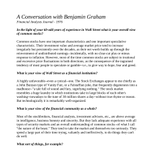
September 1976
The Financial Analysts Journal published Ben Graham's final interview weeks before he died. Asked about Wall Street, he called it "a tale full of sound and fury, signifying nothing."
The father of value investing went out swinging at the whole game.

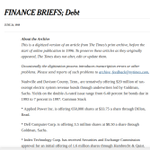
July 2, 1997
Thailand ran out of dollars defending the baht's peg and let it float. It fell 16% that day.
Within months the crisis had spread across Asia.
The peg that broke a continent.


August 12, 1982
Mexico told the Fed, the Treasury, and the IMF it couldn't service its $80 billion in debt.
Sixteen Latin American countries ended up rescheduling theirs.
One phone call kicked off the lost decade.

March 23, 2020
The S&P 500 bottomed at 2,237, down 34% in a month. That same morning, the Fed announced unlimited QE.
The market fell 3% that day anyway. Then it never looked back.
The bottom is only obvious in hindsight.


October 1985
Fresh off his acquittal on cocaine charges, John DeLorean told Playboy: "I had an arrogance that was beyond that of any other human being alive."
He'd built a car company, beaten the rap, and lost it all by 60.
The most honest sentence in the whole interview.

September 1987
Playboy interviewed Apple CEO John Sculley. He recounted the pitch that lured him from Pepsi: "Do you really want to be selling sugar water for the rest of your life?"
He also predicted a Soviet manned mission to Mars within 20 years. Nobody's perfect.

November 21, 1963
Tino De Angelis borrowed $180 million against tanks of vegetable oil. The tanks were full of water with a little oil floating on top.
Two brokerages died. American Express lost a third of its value.
Buffett bought the dip and made 124% in 2.5 years.

October 19, 1937
The NYT called it the worst decline in six years. The Fed had spent a year doubling bank reserve requirements.
The Dow fell 49% peak to trough. GDP fell 10%.
They broke what they were trying to cool.

September 24, 1869
Jay Gould and Jim Fisk were Gilded Age speculators who plotted to corner the U.S. gold market, even recruiting President Grant's brother-in-law to keep Washington from selling.
They drove gold to $160. Then Grant ordered the Treasury to sell $4 million. The price collapsed within minutes and thousands of speculators were ruined. Gould had quietly sold his own gold beforehand. The day became known as Black Friday.
