

Esoterika | "Mitch is solid gold"—David Lynch
Joined May 2013
- Tweets25.2K
- Following1.3K
- Followers23K
- Likes26.1K




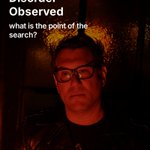




What Is the Search? | Mitch Horowitz Explores the ‘Three Objects’ of the Theosophical Society youtube.com/watch?v=60qLoLen…

𝐌𝐢𝐭𝐜𝐡 𝐇𝐨𝐫𝐨𝐰𝐢𝐭𝐳 retweeted

Check out @MitchHorowitz doing his insightful commentary on The UnBelievable with Dan Aykroyd, S 3, Ep 8, Unusual Pastimes on @HISTORY! New episode tonight at 8pm central! – at Metairie, LA
You harbor a hidden power. It arrives through concentrated focus of a very particular sort.
I often urge seekers and practitioners—or at least those possessed of an outlook of aspiration, broadly defined (which I maintain characterizes the path)—to embrace just one wish.
My insistency on a single wish engenders pushback, including within me. After all: life’s demands are legion. How can aspirants limit themselves to a sole desire?
I say: a well-selected, passionately felt, and sincere wish covers the gamut of bases, however complex. One wish satisfies myriad needs. I further contend that the prospect of psychical causation or influence benefits immeasurably from this type of concentration.
Besides, in essence, none of us has a choice. A true wish—the kind without which you cannot experience more than a shell-like existence—possesses us, not us it. Let that inform your spiritual outlook.
I define spirituality as extra-physicality. Hence, it harbors no intrinsic injunction. I consider reciprocity a universal law. That forms the heart of my ethics. Ethics emerge from the emotions. A coarse person will never experience true ethics, whatever label they wear. A sensitive person will never be able to flee them. Ethics are empathy.
I have written widely on the question of selecting a single wish. Here I support my defense of the “one wish” approach through an unusual source, at least for my work: eighteenth-century scientist-mystic Emanuel Swedenborg (1688–1772). Swedenborg’s admirers see him as one of the few true spiritual geniuses of the modern age. I consider that warranted, even as I orbit a different star from Scriptural revelation, on which the seer focused.
Truth resounds—and benefits you—more fully when you know its source. Hence, I offer some background before enlisting Swedenborg’s work in my argument, though not my overall outlook. To claim such would misrepresent him. My intent here is more limited. The mage’s sublime insight supports my urge to embrace a single wish. It does so indirectly. What I suggest grants you greater power and self-knowledge . . .
mitchhorowitz.substack.com/p…

Never has more verbiage gone more wrong than over fixations, fictions, and fantasies around Michael Aquino. I consider his career in “The Trials of Michael Aquino.”
mitchhorowitz.substack.com/p…


𝐌𝐢𝐭𝐜𝐡 𝐇𝐨𝐫𝐨𝐰𝐢𝐭𝐳 retweeted

I recently did an interview with Newsweek, asking the president to reconsider Livestreaming the upcoming execution by firing squad.
newsweek.com/freed-death-row…

“I have done what I would not now like to have done, and yet if it had not happened, indispensable good would not have come about.”—Goethe, journal entry, March 26, 1780
This article is difficult to introduce—because what I propose sounds so hokey.
In truth, it may rescue you. Be assured: I am doing it with you. Never—never—do I prescribe formulas not already on my tongue.
The 10-Day Miracle Challenge involves a singular wish and its fixed arrival.
“Weaving spiders come not here.” This exercise, suggesting my motif from A Midsummer Night's Dream, is meant for the fairies.
By which I mean: those of us up for a little serious play.
With deadly serious results.
mitchhorowitz.substack.com/p…

𝐌𝐢𝐭𝐜𝐡 𝐇𝐨𝐫𝐨𝐰𝐢𝐭𝐳 retweeted
If you want to read the entire second article I wrote about the upcoming execution by firing squad, you can do so here:
damienechols.substack.com/p/…

"Disorder observed is already order.”—Jacob Needleman, The New Religions, 1970
I have often written, and without compromise, about a results-based search. That is, the seeker wishes to, and is entitled to, get somewhere. But where?
For me, where is aspirational, broadly defined.
But I also reach points, as I am sure you do reading these words, of not wanting to try further. This, too, is a valid path.
If the search has one indisputable practice, it is: self-observation.
There exist periods in which effort must be allowed to dwell in this place.
In the path brought by Hindu teacher Ramana Maharshi (1879–1950), there exists the practice, almost the sole practice, of asking, Who am I? That is, I venture, worthy of a lifetime.
The act of observation may, as alluded to in the passage on which I open this piece, be the aperture through which transmission or passage of energy occurs. It may be, most of the time, the only way granted us.
I feel conflicted as I write these words. The truth is—and without transparency there can exist no exchange worthy of the name—I do not want this. I would, if given the chance, jettison it for protean abilities, for Aladdin’s lamp, for the sword drawn from the stone.
The search, and with it observation, cannot be a condolence or consolation prize. Or it is insincere. I believe this insincerity touches the lives of many spiritual seekers. A good deal of my practical work is designed to take a hammer to that insincerity. To ask: what do you really want? Not from a book, or from what you heard somewhere, or from a translation of a translation, or an elegant rewording of something or other—but really.
And here lies another power: silence. It is, oddly stated by a writer, the single greatest power I have found.
mitchhorowitz.substack.com/p…

𝐌𝐢𝐭𝐜𝐡 𝐇𝐨𝐫𝐨𝐰𝐢𝐭𝐳 retweeted
When I recently wrote about the possibility of a public execution being livestreamed, several people responded by telling me they’d been watching videos of beheadings, torture, and other atrocities since they were children, and that seeing another human being killed wouldn’t bother them in the slightest. They seemed to think this somehow proved me wrong when I said that witnessing such things changes us. But desensitization isn’t evidence that something has no effect on you. Desensitization IS an effect. If you’ve spent your entire life consuming images of human suffering, how could you possibly know what kind of person you might have become without them? How much compassion you might have developed? How much sensitivity you might have retained? And just because some adults have conditioned themselves to view human suffering as entertainment doesn’t mean children should be subjected to it. Once something like this is put on the internet, it becomes impossible to contain. It gets shared, turned into memes, and inevitably reaches people who never chose to see it.
Everyone has heard the phrase “you are what you eat,” but very few people seem to understand that this applies just as much to the mind as it does to the body. Everything you repeatedly give your attention to becomes part of the material from which your inner world is constructed. If you spend years feeding your body garbage, your health will eventually reflect it. And if you spend years feeding your mind hatred, cruelty, violence, and human suffering, your inner world will eventually reflect that as well. You may not even recognize the changes, because they’ve happened so gradually. This is what we mean in alchemy when we say, “The laboratory doesn’t lie.” You can tell yourself that none of it affects you, but that doesn’t make it true. There’s a tremendous difference between having the strength to face human suffering and developing an appetite for watching it. One can deepen our humanity. The other can slowly destroy it.
I practice restraint in my assessment of psychical causation, or what is popularly called manifestation.
For one thing, New Thought, manifestation, Law of Attraction, or what I term selection fail to deal with large-scale suffering.
Such efforts, when ventured, usually involve rickety deployments of karma or ghastly (and unverifiable) statements about the thought patterns of populations. This is not a byway down which the thoughtful seeker ought to walk home alone at night.
I have written widely on the problem of suffering and mind metaphysics, and have proposed a multi-law perspective on the possibilities and limits of the emotive-intellectual capacity to shape, select, or otherwise influence events.
That is, provided psychical causation or influence is real, beyond cognition and motor skill. I propose that it is. So stated, I believe that I have, perhaps, been too limited in my willingness to sustain experiment within the private sphere.
I defend the following point: individual experiment leads not only to exchange and possibility—but truth.
Before I propose my simple experiment—one that I ask you and me to undertake together—let me say a word about commonly proposed barriers to individual query.
Soi disant rationalists often generalize findings of cognitive bias to discount the individual’s capacity to experience private actuality.
Confirmation bias is basically a clinical term for prejudice. We all suffer from it. But—and this is critical for the seeker—studies of group and personal bias do not rule out data received through positive expectations when seeking confirmatory evidence, any more than confirmatory evidence is itself an absolute for establishing the truth of a theory.
This goes to the heart of what is or is not useful information . . .
mitchhorowitz.substack.com/p…

𝐌𝐢𝐭𝐜𝐡 𝐇𝐨𝐫𝐨𝐰𝐢𝐭𝐳 retweeted

I’m profiled in the current edition of The Economist.
economist.com/interactive/18…

𝐌𝐢𝐭𝐜𝐡 𝐇𝐨𝐫𝐨𝐰𝐢𝐭𝐳 retweeted
Check out @MitchHorowitz doing his knowledgeable commentary on The Proof Is Out There S6, Ep11 on @HISTORY! – at Jefferson, LA
𝐌𝐢𝐭𝐜𝐡 𝐇𝐨𝐫𝐨𝐰𝐢𝐭𝐳 retweeted
I have absolutely no interest in magick, alchemy, esotericism, or any of the other things I’ve spent most of my life studying and practicing. I don’t care about rituals, initiations, secret teachings, spiritual hierarchies, or collecting mystical experiences. I spent decades immersed in these things, and I understand their value. But they were never meant to become permanent occupations or identities. They were tools intended to accomplish something. The problem is that people become so attached to the tools that they forget what they were trying to accomplish in the first place. They build an entire identity around being a magician, an alchemist, or an initiate, and then spend the rest of their lives defending and reinforcing that identity. The very thing that was supposed to free them from the ego becomes another way of keeping it alive.
The purpose of the Great Work is not to become a better magician or a more accomplished alchemist. It is to become free. Free even from the need to practice magick or alchemy. At some point, you have to stop preparing to live life and actually live. It. I want to practice my sword, drink my tea, spend time with my wife, and give my complete attention to whatever I’m doing. I have no desire to escape the world, transcend the material plane, or become something other than what I am. I spent years trying to reach something beyond ordinary life, only to discover that ordinary life was what I’d been looking for all along. If your spiritual practice never allows you to put it down, you haven’t found freedom. You’ve just built yourself another prison.
𝐌𝐢𝐭𝐜𝐡 𝐇𝐨𝐫𝐨𝐰𝐢𝐭𝐳 retweeted

If you haven't given Mitch a follow, do so now.

Seekers: throw out systems. Or first learn from and absorb them. Then, go your own way.
I no longer believe in a path of received spiritual guidance. That hour has passed—both for the individual and for our culture of search, which is polluted by recitation, ersatz seriousness, and do-as-me injunctions.
I hold one principle on the path: verify.
Failure, success, sublimity, sorrow—these are the costs of verification. Not matching what you experience to a book; abiding third-party decisions, whatever their vintage or source; rendering ideas into “in other words” familiarities; or determining (rapidly!) whether you like something, i.e., whether it matches whatever is already inside you.
Agreement or disagreement is the lowest form of engagement with an idea.
I am inspired by science in method. That may seem ironic. It is not really. Science—as actually practiced—is not outcome, a principle lost on pseudo-rationalists, who pursue a course opposite mine. In addition to methodological replication, science or rationalism requires the effort to falsify or disprove result. Bring this to your search.
Spirituality is indistinct from reason. Idealist master G.W.F. Hegel (1770-1831)—whose work is upended by materialist pedants—grasped this. To believe otherwise is a tenet of pseudo-rationalism. Spirituality is extra-physicality. Hence, it has no result baked in. The pseudo-rationalist who says, for example, astrology is nonsense, makes no effort to falsify what he knows—but does not know. I say: shun that quality in your search.
My intent is to give you agency to violate all customs—including those in my work—unless and until they pass the trial of your verification . . .
mitchhorowitz.substack.com/p…


𝐌𝐢𝐭𝐜𝐡 𝐇𝐨𝐫𝐨𝐰𝐢𝐭𝐳 retweeted
Hey, folks - I just stopped back by the Barnes & Noble in Kingston, NY. to sign a few more copies of both Alchemy of the Broken Blade and Life After Death. If you want signed copies, they’ll ship them directly to you. The number is (845) 443 2033
Thank you for your support!


