

The External Intelligence Company. Outpace your market. Outsmart your competitors. Follow us for daily insights.
Global
Joined February 2024
- Tweets1.5K
- Following284
- Followers767
- Likes107








Pinned Tweet
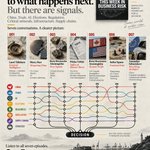
There is no direct line to what happens next. But there are signals.
Seven episodes into This Week in Business Risk, one thing has become increasingly clear: the risks shaping business rarely stay neatly inside the categories we assign to them.
China policy becomes an automotive question. Elections become an infrastructure question. Critical minerals become a trade and industrial-policy question. AI becomes an energy question. Regulation becomes geopolitics. Maritime chokepoints become balance-sheet issues.
Across our first seven episodes, host Rwizi Rweizooba Ainomugisha and his guests have explored these connections from very different angles:
I Lauri Tähtinen — external intelligence, human–machine analysis and strategic chokepoints (@lauritahtinen)
II Mercy Kuo — China risk, Taiwan, AI and corporate wargaming (@mercyakuo)
III Rwizi Rweizooba Ainomugisha — critical minerals, India, Africa and emerging geopolitical signals
IV Pekka Virkki — elections, data centres, maritime chokepoints and post-Finlandization (@Virkki5)
V Rwizi Rweizooba Ainomugisha — the US–Canada trade dispute and its consequences for automotive, steel, electricity, logistics and critical minerals
VI Sethu Nguna — simulations, training and wargaming US–China strategic competition
VII Amandine Schneickert, DSc, CIPT — China's changing global role, European regulation and autonomous vehicles
Different subjects, different perspectives, but a common question:
What does this mean for the decisions businesses have to make next?
If you haven't listened yet, this is a good time to start—or to catch up on all seven!
This Week in Business Risk — A Mission Grey Guild Podcast
Spotify
open.spotify.com/show/033TrD…
Apple Podcasts
podcasts.apple.com/us/podcas…
YouTube
youtube.com/playlist?list=OL…

Resilience has a price. Who ultimately pays it?
The latest Mission Grey Guild Newsletter issue examines the emerging resilience premium—from supply chains and insurance to data centers, infrastructure warfare, and the new geography of global dependence.
Read it here:
missiongrey.com/insights/
🤖 Made with AI

Sanctions, trade restrictions, and security policy are increasingly shaping the operating environment for business.
🎧 Listen to This Week in Business Risk by @Rweizooba!
Spotify:
open.spotify.com/episode/6aV…
Apple:
podcasts.apple.com/us/podcas…
YouTube:
youtube.com/watch?v=8Uf3Sj_6…
🤖 Made with AI

The AI race isn’t just US vs. China.
Taiwan makes advanced chips. Japan and South Korea remain technology powers. India is building AI capacity. Singapore is an AI hub. China combines AI with manufacturing at enormous scale.
For business, the real issue is dependency.
Whose models? Whose cloud? Whose chips? Where is the data? What happens when export controls, regulation or geopolitics change?
In The Diplomat (@Diplomat_APAC), Mission Grey founder and chairman Jouko Ahvenainen (@jahven) argues that technological sovereignty shouldn’t mean isolation.
thediplomat.com/2026/09/the-…
The better objective: strategic optionality.
Know your dependencies. Keep alternatives. Preserve the ability to act when circumstances change.
🤖 Made with AI

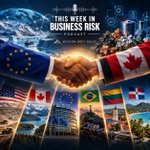
Four critical minerals deals involving the US, EU, Canada, Brazil, Lithuania & Dominican Republic.
But the latest This Week in Business Risk argues they’re not really about rocks.
They’re about trust, strategic alignment and who gets inside the fence.
🎧 Listen to the latest episode:
What these critical minerals deals are really about (US, EU, Canada, Brazil, Lithuania & the DR)
🌳 Spotify
open.spotify.com/episode/6nz…
🍏 Apple Podcasts
podcasts.apple.com/us/podcas…
▶️ YouTube
lnkd.in/dJPU_HTkhttps://www.…
🤖 Made with AI

EUROPE’S WAR RISK IS WIDENING AGAIN
The clearest strategic signal today is that the Russia-Ukraine war is re-escalating faster than diplomacy can contain it. After a brief pause around US envoy visits, Russia resumed large-scale aerial pressure on Kyiv, with Ukraine reporting 32 cruise missiles and 166 drones in one assault, while intercepting most cruise missiles but facing continued strain against ballistic threats. Germany has now signaled more Patriot support, and Ukraine says it is contracting for about 1,000 Patriot missiles ahead of winter.
At the same time, Kyiv is pushing the war’s cost back onto Russia’s energy system. Ukrainian strikes hit refineries in Ryazan, Perm and Tatarstan, alongside logistics targets in occupied Crimea. That matters because this is no longer just a battlefield story. It is a widening business-risk story for energy markets, insurers, logistics networks and defense supply chains across Europe. The implication is straightforward: firms should plan for a longer war of attrition, not a near-term diplomatic reset.
93
NORTH AMERICA’S SAFE-HAVEN TRADE MODEL IS BREAKING
The most important business signal today is not China or energy. It is the rapid hardening of the US-Canada trade rupture. Canada’s retaliatory tariffs on roughly $20 billion of US goods are now in force, hitting hundreds of products at rates from 15% to 50%, and Washington has responded by excluding Canadian products from major US government contracts while adding fresh import bans on selected dairy, alcohol and motorcycles.
This matters because North America has long been treated as the low-friction fallback for global supply chains. That assumption is now weaker. Bilateral trade is worth more than $1.2 trillion annually, yet more than 70% of Canadian exports still go to the US, leaving firms exposed to policy shocks, procurement risk and rules-of-origin disruption. RBC has warned that if tariffs stay in place for a year, they could add about 0.3 percentage points to Canadian inflation and cut real GDP growth by 0.5 points.
The implication is clear: companies in autos, metals, food and public procurement should stop planning around a quick reset and start planning for a structurally less predictable North American market.
1
87
HORMUZ IS NO LONGER JUST AN OIL STORY
The sharpest business signal today is the return of sustained operating risk around the Strait of Hormuz. Iran says it will declare a new exclusion zone near the waterway, while the US says more than 20 warships are enforcing a blockade that has already redirected 92 commercial vessels and disabled three. Even with roughly 9 million barrels per day still moving through the strait, total regional flows are only around two-thirds of pre-conflict levels once pipelines are included. This is not a full supply collapse. It is a cost shock in motion.
That matters far beyond crude. The Strait of Hormuz normally carries about a fifth of global oil supply, and around 19% of global LNG trade, including most LNG exports from Qatar and the UAE. The implication is straightforward: higher tanker rates, rising war-risk insurance, tighter petrochemical and fertilizer costs, and renewed imported inflation risk for Europe and Asia. For boardrooms, the key planning question is no longer whether Hormuz closes, but how long elevated disruption pricing lasts.
A market can have strong GDP growth, competitive wages, and attractive incentives — and still be a bad place for your next investment.
Why?
Because the workforce you need may not actually exist where you need it.
The new Mission Grey Guild newsletter double issue
HEALTH OF NATIONS
looks at human capacity as a business-risk variable:
→ Can you recruit?
→ Do the skills exist?
→ Can the workforce sustain the workload?
→ Who replaces retiring expertise?
→ Can workers adapt to AI and automation?
Because headcount is a stock. Human capacity is a system.
For investors and executives, that affects productivity, capex, expansion, operating costs and continuity.
Read: missiongrey.com/insights/#ne…
🎙️ And listen to Rwizi Rweizooba Ainomugisha’s This Week in Business Risk for more on turning external developments into business intelligence.
missiongrey.com/insights/#po…
🤖 Made with AI

G20 JUST TURNED CHINA RISK INTO A GLOBAL BOARDROOM ISSUE
The most consequential shift in today’s brief is not a new tariff headline, but a broader coalition forming around China risk. At the recent G20 finance meeting, 19 members backed language targeting “non-market” distortions and persistent export-led surpluses, with China the lone dissenter. That matters because this is no longer just a bilateral US-China dispute. Reuters reported China’s exports surged 23.9% year on year in July, while its goods surplus with the EU reached €360.6 billion last year. Ahead of Xi Jinping’s 24 September Washington visit, both sides are discussing tariff relief on roughly $30 billion of non-sensitive goods per side and possible progress on rare earth export licenses.
The implication for business is clear: selective stabilization may emerge in low-sensitivity trade, but broader de-risking pressure is widening across major economies. Companies should plan for segmented access to China, not normalization.
89
CHIPS NOW COME WITH A GEOPOLITICAL PASSPORT
The most important shift in today’s brief is not a new tariff rate. It is a new business rule: access to the US market is increasingly being tied to where semiconductors are made. Washington is preparing targeted chip tariffs under Section 232, while Commerce Secretary Howard Lutnick has made the logic explicit: build in America, or pay to enter. Taiwan is seeking exemptions linked to US investment, and South Korea is already in talks with Washington under a $350 billion framework to secure treatment “no less favorable” than rivals.
The deeper change is in compliance. In parts of the new regime, proof of origin is no longer enough; firms may need bill-of-materials visibility and supplier-by-supplier traceability. This turns market access into a test of geography, transparency and political trust.
The implication for business is clear: semiconductor strategy is no longer just about cost and technology. It is now about where production sits, how supply chains are documented, and whether capacity will still qualify for preferred access in a fragmented trade order.
88
RATES, OIL AND GEOPOLITICS ARE COLLIDING
The clearest business signal today is not from one central bank or one conflict, but from their interaction. The US added 162,000 jobs in August, far above expectations, while unemployment held at 4.1%. That strengthens the case for the Fed to stay hawkish, with markets now debating whether rates could rise from the current 3.50%-3.75% range rather than fall.
At the same time, Brent has climbed to roughly $95 as renewed disruption around the Strait of Hormuz keeps energy risk firmly in the inflation outlook. Europe is hardly insulated: the ECB deposit facility stands at 2.25%, but imported energy stress is again complicating the path for industry, margins and borrowing costs.
The implication is straightforward. Boardrooms should stop treating inflation, interest rates and war risk as separate scenarios. They are now one operating environment, with direct consequences for capital costs, freight, pricing power and 2027 planning assumptions.
94
SANCTIONS ARE TURNING INTO TRADE POLICY
One of the most consequential shifts in today’s risk environment is happening in Washington, not on the battlefield. The US Senate has already passed the Lindsey O. Graham Sanctioning Russia and Iran Act by 86-11, and the bill now moving through the House would allow tariffs of up to 100% on the biggest buyers of Russian oil and gas and on countries helping sanctions evasion.
That would mark a major escalation in secondary-pressure risk. The target is no longer only Russian entities, banks, or the shadow fleet. It is also third-country trade exposure, with China and India squarely in view. This matters because Russia’s “shadow fleet” now carries a large share of its seaborne oil exports, keeping war revenues flowing despite existing restrictions.
The business implication is clear: sanctions screening is becoming a board-level trade issue. Firms with exposure to Russian-origin energy, shipping, insurance, or intermediaries in Asia and the Gulf should prepare for a much wider compliance perimeter.
87
HORMUZ IS NOW EUROPE’S INFLATION PROBLEM
The latest US strike on Iran’s Larak Island has pushed the Strait of Hormuz back to the center of global business risk. Before the war, roughly one-fifth of the world’s oil moved through this corridor. Now the shock is no longer just a shipping story; it is feeding directly into European prices and financing conditions.
Germany’s August inflation rose to 2.9%, with energy prices up 10.5% year on year. Euro area inflation accelerated to 3.3% in August, moving further above the ECB’s 2% target and reinforcing expectations of tighter policy next week. That is a difficult mix for business: higher fuel, freight and input costs arriving alongside the prospect of more expensive credit.
The key implication is that even a limited Middle East escalation can now hit margins, working capital and demand at the same time. For firms exposed to Europe, the more relevant scenario is no longer a one-off energy spike, but repeated geopolitical price shocks becoming a structural operating cost.
65
CHINA RISK IS GOING MULTILATERAL
Washington is no longer treating trade tension with Beijing as a purely bilateral dispute. At the G20, US Treasury Secretary Scott Bessent argued the world “cannot have” China running a roughly $1.2 trillion trade surplus and urged other major economies to revisit their trade terms with Beijing. That matters because the US goods deficit with China has already fallen by about one-third year on year in the first half of 2026, to $73.9 billion, while Chinese exports are increasingly being redirected toward Europe and Latin America.
The twist is that escalation and selective détente are happening at the same time. US and Chinese officials are still discussing tariff relief on about $30 billion of non-strategic goods on each side ahead of the late-September Trump-Xi summit.
For business, the implication is clear: consumer categories may get tactical relief, but sectors tied to industrial policy, advanced manufacturing, clean tech, AI, and critical minerals should expect broader scrutiny, more trade defenses, and a less reversible de-risking cycle.
NEARLY 2,000 RUSSIAN DRONES IN ONE WEEK SIGNAL A NEW PHASE OF ECONOMIC ATTRITION IN UKRAINE
Russia fired nearly 2,000 drones, over 1,600 glide bombs, and 31 missiles at Ukraine in a single week, including North Korean ballistic missiles. The shift to prolonged daytime kamikaze drone attacks on Kyiv kept the capital under near-constant air alert for five consecutive days, paralyzing commerce and forcing authorities to redesign protocols for keeping transport and businesses running during raids. The deadliest single strike of 2026 killed 38 people on August 28 when a drone hit a warehouse near Kyiv used as an ammunition depot adjacent to a care home.
Ukraine has responded with its own escalation deep inside Russia. Ukrainian drones struck Russian oil refineries at least 21 times in August, a monthly record, driving Russian refining capacity to 3.8 million barrels per day, the lowest in over two decades, and cutting domestic gasoline supplies by 20%. Ukraine also disabled eight of ten major warehouses of e-commerce giant Wildberries, with one strike alone reportedly causing around one trillion rubles in damage.
For businesses with European supply chains, the picture is stark. Russia has destroyed roughly 90% of Ukraine's modern storage facilities and nearly cut off Black Sea shipping around Odesa. Both economies are now locked in a war of infrastructure destruction with no apparent equilibrium.
1
147
US-VENEZUELA 100-YEAR OIL CONCESSION RAISES MORE QUESTIONS THAN ANSWERS FOR GLOBAL ENERGY INVESTORS
Washington announced a 100-year concession granting the US 55% effective control over a joint venture managing 65 billion barrels of Venezuelan oil reserves across 17 strategic fields. The deal, negotiated with interim president Delcy Rodriguez, would create the world's second-largest corporate holder of proven reserves after Saudi Aramco and aims to replenish the US Strategic Petroleum Reserve, which has fallen to roughly 290 million barrels, its lowest level since 1982.
Yet the gap between ambition and reality is stark. Venezuela holds 303 billion barrels of proven reserves but produces only about 1% of the world's oil due to decades of infrastructure decay. ExxonMobil's CEO has called the country "uninvestable," citing two prior waves of nationalization. Harvard economist Ricardo Hausmann labeled the agreement "shameful," questioning Rodriguez's constitutional authority to bind the nation. Energy analyst David Goldwyn noted there is "no precedent for having the US government enter into a lease to operate oil fields."
Venezuela is also reportedly considering leaving OPEC, which it co-founded in 1960, following the UAE's departure earlier this year. For energy-dependent businesses, meaningful production gains remain years away, and the deal's durability beyond the current political arrangement in Caracas is far from certain.
75
PENTAGON REVIEW OF 80,000 US TROOPS IN EUROPE COLLIDES WITH CIA WARNING ON RUSSIAN BALTIC THREAT
The Pentagon will present Defense Secretary Hegseth with at least four options for restructuring roughly 80,000 US troops in Europe by November 6, according to a Terms of Reference document seen by Reuters. The review examines not just troop levels but basing rights, overflight access, intelligence infrastructure, and allies' support for US foreign policy priorities, including the Iran war. A questionnaire circulated to NATO allies probes defense spending and willingness to expand US military access.
The timing is extraordinarily fraught. CIA Director John Ratcliffe flew to Moscow on August 25 to warn Russia against escalatory action toward Estonia, Latvia, and Lithuania, following US intelligence assessments that Putin could test NATO with a limited incursion as early as this fall. Baltic commissioners have written to the European Commission warning of a deteriorating security environment marked by airspace violations, drone incursions, and sabotage of defense manufacturers in Estonia, Italy, and Bulgaria. Fighter jet scrambles rose over 250% year on year in July.
For businesses operating on NATO's eastern flank, the convergence of a potential US drawdown and rising Russian provocations creates a volatile planning environment where European defense spending will need to accelerate sharply to fill any gap.
105
FEDERAL COURT SETS CONSTITUTIONAL FLOOR FOR AI COMPANIES' ETHICS POLICIES
A federal judge permanently blocked the Pentagon's attempt to blacklist Anthropic as a national security supply-chain risk, ruling in a 59-page decision that the designation was "illegal and baseless." Judge Rita Lin found the Defense Department violated Anthropic's First and Fifth Amendment rights after the company refused to allow its Claude AI models to be used for mass surveillance or fully autonomous weapons.
The case originated from a $200 million Pentagon contract dispute. When Anthropic maintained its two red lines, Defense Secretary Hegseth invoked an obscure procurement statute previously used only against foreign entities like Huawei to label the American company a security threat. The court found the risk assessment memo justifying the designation was dated four days after the decision it was supposed to support, evidence it was assembled after the fact.
The ruling's reach extends well beyond one company. Every frontier AI lab with government contracts, including OpenAI, Google, and Cohere, maintains acceptable-use policies restricting certain military applications. Those policies are now constitutionally protected speech. A second lawsuit remains pending in Washington, DC, and legal analysts expect an eventual Supreme Court appeal.
84
NVIDIA'S $96 BILLION QUARTER MEETS A BOND MARKET FLASHING WARNING SIGNS
Nvidia posted $96.2 billion in quarterly revenue this week, more than doubling year over year, with data center sales surging 117% to $89 billion. The company guided next quarter to $108 billion, what would be its first $100 billion quarter ever, and projected 70% revenue growth through 2028. CFO Colette Kress noted the company remains "supply constrained" and could double revenue if it could build hardware fast enough. Big Tech firms are on pace to spend over $730 billion on AI infrastructure this year, up from $400 billion last year.
Yet beyond the AI exuberance, the macro picture is deteriorating. The 30-year Treasury yield hit 5.3%, a 19-year high, as US national debt crossed $40 trillion. PCE inflation held at 3.7% in July, well above the Fed's 2% target for the 65th consecutive month. Consumer confidence dropped to 89.4, a seven-month low, dragged down by gas prices above $4 a gallon. Fed officials at Jackson Hole warned inflation remains "stubborn and sticky."
For businesses, the divergence matters. Tech-driven debt issuance now equals roughly 25% of net Treasury issuance to private investors, five times the 2025 ratio. The AI boom and sovereign borrowing are competing for the same capital at a moment when both need more of it.
59