

Contribute to the Future of AI with MinionLab!
Joined December 2022
- Tweets1.1K
- Following35
- Followers12.3K
- Likes2.9K
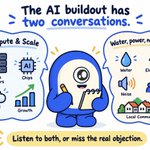




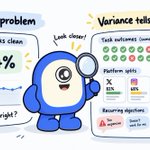



The AI buildout has two conversations.
The industry talks about compute and scale. Nearby communities talk about water, electricity costs, noise and jobs.
If you only listen to the first group, you miss the objections that can shape whether a project moves forward.

AI shopping has a new checkout question:
Did the agent buy what you meant, or what it inferred?
Amex just published a framework for preserving a customer's authorized intent before an agent transacts.
The next conversion bottleneck may be permission, not recommendation.
🤖 Made with AI

One viral post can fill a dashboard. It can also distract from the useful signal.
When the spike fades, which question keeps coming back in the comments?
AI can draft the next 100 posts. Social listening helps you decide which one is worth publishing.

Step 0 of every web agent eval: did the browser actually open the page?
AgentGo did in this run. The browser environment deserves a line in the eval, right next to the model name.
#AIAgents #OpenAIDot #MuseAI

We ran the same page through OpenAI dot and AgentGo.
alibabacloud.com
In this run, dot did not open it. AgentGo loaded it.
What changed was the browser session, not the model. Try it from the walkthrough above.
#AgentGo #AIAgents #OpenAIdot


Open AgentGo's Playground, select the Muse preset and start the session.
Follow Muse's signup prompts in the live browser, using an email you control. Complete verification yourself when asked.
#Muse #AiAgent
What you need:
• A fresh Gmail or Outlook address that can receive codes
• A free AgentGo account: agentgo.live
• If Muse asks you to verify your age: your own card, or an Instagram or Facebook account
Steps:
1. Sign up and log in to AgentGo
2. Open Playground and pick the Muse option
3. Enter your email and the code Muse sends you
4. When verification comes up, take over the live browser and finish it yourself
Leave timezone, language and fingerprint on the defaults for your first try. #museai #muse #metaai
Muse signup complete inside AgentGo’s live browser
Try Meta's Muse AI with AgentGo:
AgentGo helps you sign up for Meta's Muse AI.
Get started: agentgo.live
Muse is Meta's personal AI agent, with its own computer and browser for travel planning, form filling and multi-step web tasks.
Watch our demo to see Muse signup completed inside AgentGo's live browser, with a human handling verification and onboarding.
Create your AgentGo account and try it yourself.
#Muse #AIAgents
MinionLab retweeted

We opened Muse in AgentGo's live browser and had a human handle onboarding, because even AI assistants come with paperwork.
cloud.browser-use, consider this bring-your-agent-to-work day. #BrowserAutomation
AI does not give marketing teams memory.
It gives them speed.
Without a record of what customers said, which claim failed, or why sentiment shifted, automation repeats old mistakes faster.
The next marketing moat is not more content.
It is learning that survives the campaign.


AI companies are watching model risk. They should also watch backlash risk. Because adoption can slow down before the tech fails: users lose trust employees push back regulators notice the noise brands avoid association The feed is becoming part of the AI risk surface.

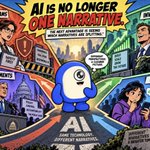
AI is no longer one narrative.
Safety teams are asking for brakes.
Investors are still buying the buildout.
Governments are debating control.
Users are deciding what they trust.
The next advantage is not just tracking sentiment.
It is seeing which narratives are splitting.


SEO measured where your page ranked. Social listening measured what people said. AI Visibility asks a different question: When an assistant explains your category, does your brand show up with the right evidence? That evidence is built in public, long before the buyer asks.

The next ad channel may not look like a feed.
It may look like an AI assistant answering a question.
Search intent.
Social context.
Reviews.
Comments.
Public comparisons.
Brand visibility is becoming less about one page ranking,
and more about what the internet can prove about you.


SEO was about ranking pages.
AI search is about becoming the answer.
That answer may come from:
reviews
videos
comments
community threads
competitor comparisons
Brands now need to understand not only what people say,
but what AI can learn from it.
That is where Social Insight starts to matter.

GPT-6 Astra shows where AI is going:
less like a chatbot,
more like an operator.
But operators need context before they act:
market signals
source evidence
public conversations
what changed online
Smarter models make trusted real-world intelligence more important, not less.


Your customers are already writing your positioning.
Not in surveys.
Not in strategy decks.
In comparison threads, review comments, product complaints, and buying questions.
MinionLab Social Insight helps teams read the market’s own language before turning it into content, product, or growth decisions.
