

Doer/thinker, poet and lyricist. Husband to Baltic vikingess. Neither keyboard-warrior nor keyboard-worrier. Heart, art and mind combined.
Denmark
Joined March 2011
- Tweets17.2K
- Following1K
- Followers682
- Likes41.1K




John Coughlan aka Nobliqus retweeted

Track Hurricane #Kirk progress as it heads towards Europe. Stay updated on its intensity and potential impact on France and the UK.
severe-weather.eu/global-wea…

John Coughlan aka Nobliqus retweeted

BREAKING: More than 300 new 'Nazca Lines' geoglyphs have been revealed to archaeologists with the help of AI. Here are some of the most striking images among the recent discoveries. thedebrief.org/look-over-300…


John Coughlan aka Nobliqus retweeted

NEW: China zoo forced to admit the truth after one of their “pandas” started panting and barking.
The Shanwei zoo admits they painted dogs white and black to make them look like pandas.
The zoo initially tried claiming that the dogs were a unique breed of pandas called “panda dogs.”
It was later discovered that the “pandas” were Chow Chows who were dyed with white and black paint.
Readers added context they thought people might want to know
This post is misleading. The zoo intended this as a fun gimmick, not a deception.
"The idea to dye them as pandas came from the internet, aiming to boost the zoo's appeal and increase visitor numbers. We've made it clear beforehand that they're not real pandas ..."
people.com/chinese-zoo-dy…
newsflare.com/video/644621/f…
John Coughlan aka Nobliqus retweeted
London 1900 AD, West India Docks, East London, sailing ships and steam freighters moored closely together in the crowded docks.
© Old London Photos
#drthehistories

John Coughlan aka Nobliqus retweeted

Who started calling the cybertrucks Deploreans? I owe you a drink.


John Coughlan aka Nobliqus retweeted

Amazing #IceAge Art! 🤩
These ancient animal figurines are some of the oldest known works of figurative art, skilfully carved from mammoth ivory about 40,000 years ago!
From the Vogelherd Cave, Swabian Jura, Germany iceageart.de/en/ice-age-art Photos my own
#Archaeology

John Coughlan aka Nobliqus retweeted
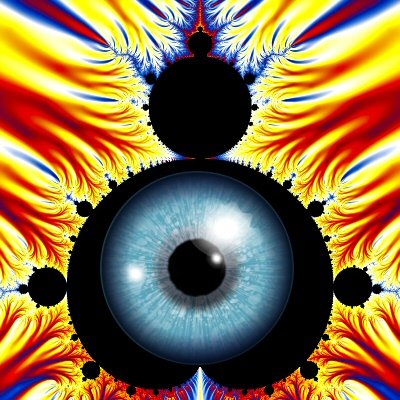
Mathematics. Infinity.
"Fractal Sonogram."
By Paul Noth, paulnoth.com, Used with permission.


John Coughlan aka Nobliqus retweeted

New Discovery at Karahan Tepe: The Figure of a Running Wild Donkey Carved on Stone -
The figure of a running wild donkey carved on a stone was discovered during excavations at Karahan Tepe, a Pre-Pottery Neolithic site located in Şanlıurfa, southeast Türkiye.
Karahan Tepe is one of the Pre Pottery Neolithic Sites emerging in what is known as the Taş Tepeler Region of Southeast Turkey in the province of Şanlıurfa. Located just 23 miles (37 km) southeast of Göbekli Tepe, Karahantepe is part of the Taş Tepeler (Stone Hills) project.
Taş Tepeler simply means stone hills and is an apt description of a region producing numerous sites characterized by T-shaped anthropomorphic pillars of the type that first came to prominence at Göbekli Tepe.
The 2024 excavations continue in Karahan Tepe, where more than 250 obelisks in the ‘T’ shape were found. In this context, a depiction of a running wild donkey figure was uncovered on one of the stones paved on the floor.
Karahan Tepe Excavation Head Prof. Dr. Necmi Karul told AA correspondent that excavation works are continuing at 10 points including Karahan Tepe within the scope of the Taş Tepeler (Stone Hills) Project.
Stating that they have been working on other public buildings and huts around the central public building in Karahan Tepe this year and that they started to open one of them a few weeks ago, Karul said:
‘The building is sunken into the ground and has a wattle and daub roof system over a short stone wall. We understand that the floor was paved with large flat stones. Some of these stone pavements were used as grinding stones and on one of them we came across a wild donkey motif. There are animals that are decisive in the iconography of this period. We divide them into 2 categories. The first one is the animals whose eeriness is emphasised, and we see these especially on the obelisks. Another group consists of birds and the most consumed animals, among which the gazelle is the most popular. Wild donkeys are also among the other consumed animals. We can say that these animals were the animals that people were around, consumed and lived with during this period, compared to the scary ones. Similarly, this wild donkey is a figure placed in a base with grinding stones and carved in motion. In this respect, we have encountered some figures on building bases in Göbeklitepe before, but this is the first time we have encountered such a moving wild donkey motif. This is a find that will contribute a little more to our understanding of the animal iconography and the relationship between man and his environment.’
Stating that the structures they are currently working on are places dating back to 11 thousand years ago, Karul pointed out that the presence of grinding stones in them indicates that daily life activities were also carried out here.
Stating that the presence of such animal depictions or obelisks in these places also proves that there are symbolic aspects, Karul said:
‘The donkey figure found is a figure of about 20 centimeters in length placed right next to the grinding stone, but the fact that it is mobile rather than its dimensions and that it is depicted in proportion to the stone on which it is carved, is again an indicator of the skill of the artists of this period. This is the first example we have encountered as a figure on the floors of buildings in Karahan Tepe. This, of course, shows that there may be similar ones. We have not yet reached the floor levels of many of the huts mentioned here. We are deepening them in different structures. There are other places where we will reach those levels.’
Mehmet Nuri Ersoy, Minister of Culture and Tourism, shared on his social media account that Karahan Tepe sheds light on the depths of history as one of the most important settlements of the Neolithic Age and that the Stone Hills project continues to shed light on world history.
© arkeonews
#archaeohistories

John Coughlan aka Nobliqus retweeted

This Wilson-Davis rambling memo is one of many inquiries over the years about DOD and/or DOD related highly classified research/analyses that did not seem anchored in known budget allocations or directives. Welcome to DOD&AEC "black projects"
This Post is from an account that no longer exists. Learn more
John Coughlan aka Nobliqus retweeted

Serving up 😬 vibes, for a reason!
This ceramic Bolivian vessel functioned as a censer in pre-Columbian times, as evident by its soot-blackened interior. When in use, smoke would have poured out from the open mouth of this fierce feline.

ALT Ceramic incense burner featuring a sculpted feline head on the front, with detailed designs around the cylindrical base.
John Coughlan aka Nobliqus retweeted
A coat sale in Copenhagen, Denmark (1936) :
Overstocked with a large supply of men’s spring and winter coats, a clothier in Copenhagen, Denmark, adopted a unique sales scheme. He erected a scaffolding around his store building and completely covered it from roof to sidewalk with more than a thousand overcoats.
The novel display attracted prospective customers in such droves that police were summoned. Although the police ordered the proprietor to remove the display, he succeeded in selling all the overcoats.
#drthehistories


John Coughlan aka Nobliqus retweeted

Lookalike: Pie-vate Eye Editor
From the delicious new issue, in shops now.

John Coughlan aka Nobliqus retweeted

Former President Reagan advisor @DrPippaM talks #UAP youtu.be/XvsTHj-MNAc?si=mmOZ… She is daughter of former Presidents Kennedy, Nixon and Ford advisor @Halsrethink who has recently tweeted about #UAP. @DrPippaM sees UAP linked science leading to world of abundance. – at France