

Clinical Scientist (HSST) @PublicHealthW - Microbiology. Focusing on #AMR and WGS 🧬 Own opinion only. Fictional cases for education #AMStewardship #MedEd
Wales, United Kingdom
Joined April 2022
- Tweets2.4K
- Following768
- Followers3.5K
- Likes6.4K






Deer do NOT spread Lyme!
While 63% of people think deer do spread Lyme, initial infection of ticks with Lyme disease (Borrelia burgdorferi) occurs NOT from deer, but smaller animals such as mice and birds.
bds.org.uk/information-advic…
Deer do NOT spread Lyme!
While 63% of people think deer do spread Lyme, initial infection of ticks with Lyme disease (Borrelia burgdorferi) occurs NOT from deer, but smaller animals such as mice and birds.
bds.org.uk/information-advic…
Deer sustain ticks via blood meals, but do not transmit Lyme to the tick.
Reservoir hosts:
Mammals (typically rodents) - B.afzelii, B.burgdorferi
Birds - B.garinii
idiots.notion.site/149-150-T…
Luke Turner 🦠 retweeted
Do deer spread Lyme disease?
63%Yes
30%No
7%The answer is obvious!
27 votes • Final resultsThe answer may surprise you.
Listen to find out more:
buzzsprout.com/1782416/episo…
@IDiots_pod



Luke Turner 🦠 retweeted

Enterobius vermicularis ova were identified on stool microscopy from a 9-year-old child.
Microscopic appearance: The eggs are colorless, smooth and ovoid, with a moderately thick, double-layered shell. One side is characteristically flattened, giving the egg its classic “D-shaped” appearance. They measure approximately 50–60 × 20–30 µm.
Unlike the eggs of many other intestinal nematodes, E. vermicularis eggs are passed partially embryonated, and a developing larva may sometimes be visible within the egg.
About the parasite: E. vermicularis is a nematode (roundworm) with a worldwide distribution. Infection is particularly common in children.
Adult worms inhabit the cecum and adjacent colon. At night, gravid female worms migrate to the perianal region to deposit their eggs. This explains the characteristic symptom of nocturnal pruritus ani (night-time anal itching). In heavier infections, sleep disturbance, irritability and reduced appetite may occur.
Although E. vermicularis eggs may occasionally be detected in stool—as in this case—stool microscopy is not the optimal diagnostic method. The preferred method is the cellophane/cellulose adhesive tape test, performed on the perianal skin, ideally in the morning before bathing or defecation.
A beautiful example of how a characteristic microscopic morphology can point directly toward the diagnosis.
#Fortheloveofmicrobiology #clinicalmicrobiology #microrounds #IDpath #ASMClinmicro #STEM #womeninmicrobiology #microbiologypakistan #pathbugs


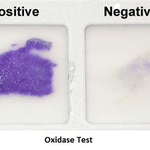
Struggling to remember oxidase-positive organisms?
Try:
"Never Miss CYTOCHROME OXIDASE; Pure Air Via Big Lungs Please"
✅ Neisseria
✅ Moraxella
✅ Campylobacter
✅ Pasteurella
✅ Aeromonas
✅ Vibrio
✅ Brucella
✅ Legionella
✅ Pseudomonas
But be careful:
Not all "Pseudomonas" are oxidase positive.
There are (rarely seen) exceptions including:
P. luteola, P. oryzihabitans, P. syringae and P. viridiflava.
The next unknown Gram-negative isolate you see on a plate, remember:
"Never Miss CYTOCHROME OXIDASE; Pure Air Via Big Lungs Please" - Ridiculous I know but it works for me 😃
rcpath.org/static/50481369-a…
When you should stop but can't resist the urge to get every last drop of sequence data from your Nanopore flowcell....

A Gram-negative diplococcus is cultured from a throat swab of an 18 y/o university student.
Grows on blood & chocolate agar.
Positive for oxidase, DNase and tributyrin...
Could it be Neisseria or is it something else? 🤔

Despite often being thought of as a respiratory tract organism, M. catarrhalis has been isolated from the nasopharynx, throat, ear effusions and sinus aspirates.