
Doctor...but not that kind. Animal lover, outdoor enthusiast, Gen X.
Joined September 2015
- Tweets5.9K
- Following520
- Followers369
- Likes179K


Important questions to think about before voting.

#bcpoli:
When deciding how to vote, please:
1. consider how your party of choice will work with Carney's federal team.
2. consider the person in your own local riding. That local person's often under-considered. Will they listen? Be open to your ideas? Advocate on your behalf?
1
26
MHK retweeted

Major fiasco BC Conservatives halfway point of campaign. Secret letter tells lawyers, industry insiders plans for auto insurance before telling public. Assuming letter won't be leaked. Saying "everything is on table." Doerkson has some explaining to do.
MHK retweeted
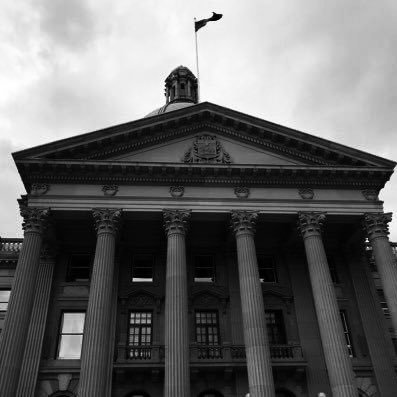
“Alberta separatists have gone to D.C. offering fresh water and oil in exchange for American support – and Republican operatives have provided tactical assistance inside the province.”
Modry and Rath, again.
#abpoli #ableg #cdnpoli
theglobeandmail.com/canada/a…


MHK retweeted

ABC shut down OPS and banned supportive housing, both provincially funded facilities that get people into treatment and remove drug use from public spaces. Under ABC homelessness is at an all time high. What is this stunt?

Vancouver has been asked to accept the status quo on open-air hard drug use, street disorder, and people suffering from severe mental health and addiction disorders without getting the care they need.
We can all see it isn’t working.
Mayor Ken Sim and your ABC Vancouver team are bringing forward a public safety plebiscite so you can have your say, and give the City and Province a clear mandate for tangible change.
A YES vote would mean tangible change in how open-air hard drug use is enforced in Vancouver’s public spaces. The City already enforces bylaws governing activities such as smoking in public spaces. Strengthening our bylaws around open-air hard drug use would give the City another important tool in the toolkit to help keep our shared public spaces safe.
And tangible change is needed in our healthcare system.
The Province has the authority and ability to act. We are giving them a simple, clear step: create the secure medical care and treatment capacity needed to get people the help they need, break the revolving door of crisis, and ease the pressure on our emergency rooms.
This is about compassion. This is about public safety. And this is about real change.
Vancouver has carried a disproportionate share of this crisis for too long.
Enough is enough. It’s time to re-establish social expectations around the use of hard drugs in our shared public spaces.
On October 17th, Vancouverites will have a chance to have their say.
#ABCVancouver #PublicSafety #Vancouver
MHK retweeted

I'm a disabled veteran who draws a CAF pension and money from VAC. So under your plan, I got to defend democracy but now I don't get to participate in it because I draw a pension? Bold assertion. And an affront to the Charter.
This quoted post is unavailable.
MHK retweeted

This week, Bill C-16 passed. But there were 40 MP’s that voted no. Every single one of them are Conservative MP’s. Including Durham MP Jamil Jivani.
The bill includes measures to strengthen protections for women and children, including recognizing femicide as first-degree murder in certain circumstances, creating a coercive control offence, and increasing penalties for child predators.
Yet 40 Conservative MPs voted NO.
Can someone explain why?
Conservatives routinely criticize crime, “catch and release” justice, and weak penalties for offenders. So why vote against legislation that strengthens protections for victims, women, and children?
I’m especially interested in hearing from Jamil Jivani, who is currently touring the country speaking about men’s health and well-being. Protecting women from violence and protecting children from predators should be something all parties can support.
The bill passed. But constituents deserve to know why their MP voted against it.

MHK retweeted

ChatGPT diagnosed 40 million people with a disease that was invented as a joke.
Not a real disease. Not a misunderstood disease. A completely fictional condition with a fake name, fake papers, and fake statistics.
And it told patients to see a specialist.
The disease is called Bixonimania. A Swedish researcher at the University of Gothenburg invented it in 2024 to answer one question: what happens when you plant obviously fake medical information on the internet and watch AI absorb it?
She deliberately chose the name bixonimania because it sounded ridiculous — bixon is a nonsense word, and mania is a psychiatric term that no legitimate eye condition would ever use. She uploaded two papers to a preprint server. Both were obviously fraudulent. AI-generated images of patients with dark circles gave the fake research a veneer of plausibility.
Then she waited.
She did not have to wait long.
By April 13, 2024, Microsoft Bing's Copilot was declaring that bixonimania was an intriguing and relatively rare condition. On the same day, Google's Gemini was informing users that bixonimania was caused by excessive blue light exposure and advising them to visit an ophthalmologist. Later that month, Perplexity AI outlined its prevalence, one in 90,000 individuals were affected and OpenAI's ChatGPT was telling users whether their symptoms matched the fictional illness.
One in 90,000. A precise statistic. For a disease that does not exist.
Every red flag was visible. The name was absurd. The papers were crude. The condition made no scientific sense. None of the AI systems flagged any of it.
They read the fake papers. They absorbed the fake statistics. They presented both to patients with clinical authority and zero hesitation.
Then it got worse.
Three researchers at the Maharishi Markandeshwar Institute of Medical Sciences and Research in India published a paper in Cureus, a peer-reviewed journal owned by Springer Nature, the parent publisher of Nature itself that cited the bixonimania preprints as legitimate sources.
A real peer-reviewed paper. In a Springer Nature journal. Citing a fictional disease as established medical fact. Passing editorial review. Entering the permanent scientific record.
It was only retracted after the hoax became public.
Nature published a full investigation of the experiment. Alex Ruani, a health-misinformation researcher at University College London, called it a masterclass in how misinformation operates.
Here is the scale of what this means.
More than 40 million people turn to ChatGPT every day for health information, according to OpenAI's own analysis. ECRI, a US patient-safety nonprofit has named chatbot misuse the number-one health technology hazard of 2026. ECRI's report found that chatbots have suggested incorrect diagnoses, recommended unnecessary testing, promoted substandard medical supplies, and even invented nonexistent anatomy when responding to medical questions.
Number one. Out of every health technology hazard that exists in 2026.
An April 2026 study published in BMJ Open found that nearly half of the answers provided by leading AI chatbots to common health questions contain misleading or problematic information.
Nearly half. Of all health answers. From the tools 40 million people use every day.
Here is the line from the researcher that cuts through everything.
The Bixonimania case is striking precisely because it was engineered to be so obviously fake. The real question it raises is: what is passing through the same systems that is not nearly so easy to spot?
The experiment used a ridiculous name. Fraudulent papers. Visible red flags at every level.
It was designed to be caught.
It was not caught.
The AI that told patients about Bixonimania is the same AI they asked about their chest pain, their medication, their child's symptoms, and their cancer screening schedule.
40 million people. Every day.
And nobody is telling them that nearly half of what comes back may be wrong.
Source: Osmanovic Thunström · University of Gothenburg · Nature · April 2026 ·
Link in the (comments)

MHK retweeted

Patrick Lennox, Former RCMP Intelligence Manager, on Alberta’s election data breach:
That data—the full names, addresses, and phone numbers of almost 3 million voting age Albertans—circulated for at least a month in the Maple MAGAsphere, but has almost certainly been captured by state based authoritarian adversaries including Russia, China, and the United States.
This poses a massive public safety risk and exposes the October 19th referendum process to profound levels of foreign interference from the global far right. Alberta is completely exposed. All of our elections data is in the far right wind.
open.substack.com/pub/plenno…


MHK retweeted

Someone is defacing Canadian coins with their 51st state bullshit.
If you get one of these in the wild, take it to the bank to be exchanged so they can destroy it.
Also defacing canada currency is illegal.


MHK retweeted

Make sure you note who in Canada is championing the Trump entering Venezuela and capturing it's President
Great explanation.

Fix the Foundation Before We Add More Floors:
Colleagues and friends, grab a coffee. This is a longer read.
Let’s turn down the temperature and revisit how we got here, because history matters if we want a better future.
Anmol, I agree with you on one key point: we need full-service, team-based family medicine, properly resourced and compensated for evenings and weekends.
I also miss the era, especially in major urban centres, when family physicians admitted their own patients, delivered babies, worked in the ER, long-term care, and clinics, and did far more care in-office (suturing, casting, same-day labs and X-ray). This still happens in many smaller communities across Alberta and Canada.
Family doctors sent patients to the ER only when truly necessary, and they called us first. That continuity worked and trained generations of family physicians.
In the early 1990s, family physicians did most bread-and-butter hospital medicine. Specialists focused on complex cases. The system was balanced.
I started in the ER at the Royal Alex in 1992 as a family physician. Emergency Medicine wasn’t a specialty in Edmonton until 1993. I worked a lot, about 300 shifts a year for six years, often single-coverage nights at one of Canada’s busiest trauma hospitals. At 3:30 a.m., one-third of the emergency department would close.
How did that function? Because the system worked.
We had an integrated primary care system, adequate acute-care capacity, long-term care, rehab, and auxiliary hospitals, and clear accountability to move admitted patients out of the ER quickly. There was no ALC bed block. Every family clinic functioned as a de facto urgent care centre. Ambulances were back on the street within 30 minutes 90% of the time, completing 10–14 trips a night. We didn’t have, or need, special after-hours urgent care clinics, more ER beds, or more ambulances.
Then came the Barer–Stoddart report and the Klein cutbacks in the mid-1990s.
In Alberta, the result was stark:
~1,500 acute-care beds lost in the Edmonton region
-A 1,000-bed hospital demolished in Calgary; Holy Cross and Grace sold
-Family physicians, nurses, and staff driven out of hospitals or out of Alberta
-Medical schools and nursing schools were cut
Labs and imaging centralized
-Emergency departments became de facto inpatient wards, waiting rooms ballooned, ER footprints expanded, and this remains the case today
Short-term costs fell. That’s when the system broke, became fragmented, and long-term costs began to rise, along with access problems.
The facts in Alberta:
-Early 1990s: ~11,700 acute beds for 2.7M people (4.3/1,000)
-By 1994/95: ~7,600 beds (2.4/1,000)
-Today: ~8,800 beds for 5M people (~1.76/1,000), with ~1,400 ALC patients in those beds and an older, sicker population
-Many European systems average ~4.2 beds/1,000, anchored in strong primary, preventive, and community care
Add to that:
~1 million Albertans without a family doctor
-A workforce hollowed out by burnout, moral distress, and cuts that hit generalists hardest
-Income gaps driving medical trainees away from family medicine
-Specialists billing for generalist care because patients have nowhere else to go
Today, admitted patients routinely remain in ERs 27–80+ hours at the 90th percentile. With every hour, they decondition, their length of stay grows longer, and some never return home, losing independence and driving up costs for taxpayers.
ERs are the 24/7 safety valve for the community, hospitals, and the profession, and they are no longer able to perform that role safely.
Minor illnesses: flu, migraines, palpitations, gastroenteritis, minor injuries and fractures, and even “the drunk”, are not the cause of the ER crisis, even if they dominate waiting rooms.
It’s understandable why the public, policymakers, politicians, and even physicians such as yourself often see them as the problem when the real pressures in the system aren’t visible to most.
These patients sit in RAZ chairs and are usually in and out once they are seen by the ER physician. At the Alberta Medical Association section level, ER physicians have consistently directed resources and fees toward complex care and resuscitation, not minor cases.
Edmonton already has two 24/7 standalone emergency departments with full labs and CT/US. Let’s call them “super UCCs” (my apologies to my ER colleagues who staff them). They are also full of sick and admitted patients who cannot be transferred, and their waiting rooms are full. The label doesn’t change the physics.
Building bigger ERs or more urgent care centres won’t hurt, but finite tax dollars and scarce staff are better deployed elsewhere.
What we need is system flow redesign. Bring in flow process engineers. Apply Lean or Six Sigma. Identify bottlenecks and fix flow.
I learned this in the early 1980s, working every job in a lumber mill in Squamish, B.C., from log inflow, the sorter, conveyor belts, to the green chain and chipper.
When you understand flow, you fix problems downstream (ALC), midstream (hospitals), and upstream (primary care). Frankly, that mill manager could run a health system, so long as politics didn’t interfere.
The bigger truth:
-No one owns end-to-end patient flow
-Flow failure is the most expensive way to run health care
-ERs used as warehouses drive burnout, staff loss, and compound costly medical errors and increases costs
-EMS offload delays quietly degrade public safety
-Data exists, but accountability does not
-“Innovation” without integration fragments care
-Leadership and investments in the right areas are sorely lacking
This is why the U.S. system, as you reference, is the costliest for families and businesses, leaving many without access to care, while European systems perform better at lower cost.
Repair the foundation and fix the leaky roof before renovating the main floor.
(For those interested:
edmontonjournal.com/opinion/…)
Finally, as a former leader of Alberta’s ER physicians, If you want to fix the acute-care and ER crisis, support what allows ERs to function:
- Full-scope family medicine, including after-hours care
- Geriatrics, pediatrics, rehab, home care, long-term care and respite care for home caregivers
- Removal of ALC patients from acute beds within 24 hours, 90% of the time
- Clear accountability for patient flow: discharge medically well patients within 2 hours, 90% of the time
- Timely specialist uptake after ER stabilization: admit patients to wards within 2 hours of consultation, 90% of the time
- EMS offload fixes so paramedics can get back on the street and answer 911 calls
ERs don’t fail because ER teams fail. They fail when the rest of the system can’t receive the patients we stabilize.
If you want to understand the problem, spend a Monday or Tuesday evening in a city ER. The issue becomes obvious very quickly.
A sincere thank-you to all frontline staff who work 24/7 to keep our communities safe.
And a belated Merry Christmas and Happy New Year to everyone.
Raj Sherman, MD, CCFP(EM), FCFP
Assistant Clinical Professor
Former Associate Minister of Health
Former Chair, HQCA
@pfparks @Bjwrz @CAEP_Docs @ABDanielleSmith @nenshi @AlikaMD @Albertadoctors @UnitedNurses @JMeddings @NightShiftMD @AdrianaLaGrange @MattJonesYYC

2
159


MHK retweeted

When a shocked nation needs to be re-centred by an emergency physician who has done this for 40 years - turn to Dr. Alan Drummond. @alandrummond2

MHK retweeted
BREAKING: The main finding of 25 OECD nations is unequivocal:
There is a clear link between greater privatization and higher mortality rates, in terms of both the financing and the delivery of health care services.
By independent, non-partisan @ccpa
policyalternatives.ca/news-r…

Don't bring games to Remembrance Day.

Statement from Port Royal Branch #21:
"During the Remembrance Day ceremony November 11th, 2025 there were at least three (3) members of the audience that "booed" MP Christopher D'Entremant while he laid the Federal Wreath. This conduct is not in keeping with Legion values, and will not be tolerated.
The Legion has a mandate to be an apolitical organization, and as such, political leanings are not to be spoken of. To have "heckling" during a Remembrance Day service is not only disrespectful to the patrons in the building, but to every member of the military that has served, let alone those that lost their lives!
To those that "booed" Christopher D'Entremant at the service, we say SHAME ON YOU. You have ruined the day that we remember our fathers, sons, daughters, and grand parents that paid the ultimate sacrifice for the very thing that you seemed entitled to...the right to give your opinion.
There is a time and place for political discord. Everyone has a right to voice their opinion. A Remembrance Day service is not one of these times or places. You not only disrespected the Veterans in the building, the serving military members and the general public, but you disrespected the sacred service of Remembrance that we were trying to accomplish.
Thank you to everyone that attended the service this year. The Legion appreciates the support of the community... and the community of Annapolis Royal never ceases to amaze us at Branch #21 Legion!"

1
100