Metlabs (@Metlabs_io) header
Metlabs (@Metlabs_io) profile picture

Building the rails for tokenized finance. Where trust meets code.

Spain
Joined December 2019
Photo by Metlabs (@Metlabs_io)Photo by Metlabs (@Metlabs_io)Photo by Metlabs (@Metlabs_io)Photo by Metlabs (@Metlabs_io)Photo by Metlabs (@Metlabs_io)Photo by Metlabs (@Metlabs_io)Photo by Metlabs (@Metlabs_io)Photo by Metlabs (@Metlabs_io)Photo by Metlabs (@Metlabs_io)Photo by Metlabs (@Metlabs_io)
That's a wrap on @mmerge_io Madrid. Three sessions on stage and two days at our stand. The highlight was presenting Alqantara with @grupocox, the project that will let investors buy tokenized panels in COX's solar parks, powered by our technology. On Wednesday, our CEO @pablogomez_ joined TR Capital, @Reental_co and @GetEstating to discuss what is actually being tokenized in 2026. The regulated institutions that come to us already have the underlying asset, the investor base and the distribution channel. What they need is compliance, custody and integration with their existing systems. On Thursday at midday, our Head of Innovation @IsaacGonzalezEU pitched at ISBE in Pitch, the use case session hosted by @Alastria_. In the afternoon came Alqantara. COX is a Spanish water and energy utility listed on the Spanish stock exchanges. Through Alqantara, investors will be able to acquire panels in its solar parks, held in their own name, and receive the returns from the energy those panels generate, either paid into their account or, for COX customers, as a discount on their electricity bill. The panel covered each role in the issuance. COX as issuer, @ONYZE_official providing custody and the registration through an ERIR, the registry entity introduced by Spain's Law 6/2023 on securities markets, and Metlabs as the technology partner behind the tokenization and the issuance engine. Thanks to the whole MERGE team, to everyone who shared the stage with us and to everyone who stopped by our stand 👋
1
2
4
510
Metlabs retweeted
We are excited to welcome @Metlabs_io back to MERGE Madrid 2026 as a Silver Sponsor! After their great participation last year, they are returning to our stage once again. Don't miss Pablo Gómez (CEO at Metlabs) sharing his key insights in the panel session "What Is Really Being Tokenized in 2026" on October 28th at 17:20 on the MERGE Stage! Make sure to connect with their team and catch his session from October 27-29!
1
2
169
Replying to @solana
@solana llega a Galicia. El próximo 27 de septiembre abrimos nuestras oficinas en A Coruña para recibir, junto a @LaFamilia_so, una nueva parada del Tour Solana Spain. De 18:00 a 22:00 reuniremos a builders, founders, proyectos y personas que quieran conocer de cerca el ecosistema de Solana. Una tarde para compartir ideas, descubrir nuevas oportunidades y conectar con quienes están construyendo dentro y fuera de Galicia. No necesitas experiencia previa. Solo curiosidad y ganas de conocer a la comunidad. Reserva tu plaza y únete a la comunidad que está construyendo el futuro de la tecnología blockchain 🔽
3
3
9
384
"La tokenización se encuentra hoy donde estaba internet en 1996". Larry Fink, consejero delegado de BlackRock, en su carta anual a inversores de 2026. Describe la tokenización como la infraestructura que el sistema financiero necesita para ampliarse.
4
226
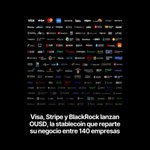
Visa, Stripe y BlackRock lanzan OUSD, la stablecoin que reparte su negocio entre más de 140 empresas. El consorcio se llama Open Standard. Los socios emiten y reembolsan sin comisiones ni límite, y se reparten el interés de las reservas. Debutará en Solana y en Tempo.
2
145
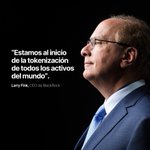
"Estamos al inicio de la tokenización de todos los activos del mundo". Larry Fink, consejero delegado de BlackRock. El perímetro que describe son bonos, fondos monetarios y acciones, no criptomonedas. La gestora ya tiene fondos monetarios tokenizados en circulación.
8
16
5
89
323,221
El Reino Unido será el primer país del G7 en emitir un bono soberano tokenizado. Se llama DIGIT y lo emitirá el UK Debt Management Office sobre HSBC Orion, dentro del sandbox del Banco de Inglaterra y la FCA. Debut previsto a principios de 2027.
3
138
La SEC propone llevar el registro oficial de accionistas a blockchain y dar cobertura a la acción nativa on-chain. El registro podría mantenerse on-chain si el agente conserva el control exclusivo. Consulta pública de 60 días. Las normas vigentes son de 1977 y 1983.
3
85
Adam Aron, AMC's CEO, wants Robinhood to stop offering a token tied to $AMC shares. Buying that token gives you a secured debt claim against a company in Jersey, with no shareholder rights in AMC. The dispute raises a question that goes well beyond AMC. Who gets to bring a stock onchain, and what does the investor actually own? On September 3, Aron posted that Robinhood offers tokens tied to AMC and "190+ other companies" without registering them under U.S. securities laws. He called the practice "contemptible, outrageous, disgusting, detestable, inexcusable, vile." Vlad Tenev asked, "What's the concern?" Aron's September 4 response was about investor rights and capital formation. He argued that a separate market for synthetic exposure could undermine a company's control over its capital raising. He demanded that Robinhood "CEASE AND DECIST," later explaining that the spelling was a joke. On September 4, Dan Gallagher, Robinhood's chief legal, compliance and corporate affairs officer and a former SEC commissioner, replied, "Send your lawyers and we'll educate them." Aron said he had asked outside securities counsel whether AMC could force Robinhood to stop and would raise the issue with the SEC. Robinhood Stock Tokens are tokenized debt securities issued by Robinhood Assets (Jersey) Limited, a special purpose vehicle incorporated on October 23, 2025. Jersey, in the Channel Islands. The tokens use the ERC-20 standard on Robinhood Chain. Dividends and stock splits are reflected through an onchain multiplier that adjusts the number of underlying shares represented by each token for calculation purposes. The holder gets economic exposure to the underlying stock, subject to fees and contractual adjustments. The token does not confer legal or beneficial ownership of AMC shares, voting rights, or a direct claim against AMC. Its secondary-market price can also diverge from the underlying stock price. The debt is secured by collateral allocated to the relevant token series. Alpaca Securities is the designated custodian and broker. The AMC terms permit securities lending, with the borrower required to provide substitute collateral in cash or eligible financial instruments. The prospectus appoints a third-party verification agent to review the collateral and custody arrangements. Redemption is cash-settled, with no right to delivery of AMC shares. Direct redemption by holders who are not authorized participants is subject to specified conditions and KYC/AML checks. The debt is also limited recourse. If the proceeds from enforcing and liquidating the series' secured property are insufficient, any remaining unpaid claim is extinguished after those proceeds are distributed. Holders cannot recover the shortfall from other series or the issuer's other assets. Robinhood Markets does not guarantee the obligations. The offering documents prohibit sales in the United States or to U.S. persons and impose restrictions in other jurisdictions. Robinhood's own second-quarter SEC filing acknowledges that U.S. regulators could assert jurisdiction over its stock-token offerings. For scale, @RWA_xyz's September 7 stock-token table lists 189 Robinhood stock and ETF entries with a combined value of $133.2M. That is Robinhood's total in that dataset, not the AMC token alone. In a September 5 post, analyst Tom Wan shared a chart reporting $308.95M in DEX trading volume for the AMC token on September 4. Trading volume measures repeated transactions, not new capital raised by AMC. Aron's capital-formation concern needs that distinction. A trade between investors in existing AMC shares does not itself put new money on AMC's balance sheet either. The economic question is how token issuance, collateral purchases, arbitrage and separate trading venues affect demand and price discovery in the underlying stock. SEC staff had already addressed the legal distinctions in a January 28 statement. Its statement explains that tokenization does not change the application of federal securities laws. Robinhood's structure fits the staff's description of a linked security, an instrument issued by a third party that provides exposure to another issuer's security without conferring rights against that issuer. The statement expresses staff views and has no legal force. In a recommendation approved on March 12, the SEC's Investor Advisory Committee warned that third-party "wrapped" tokens may not carry the same voting or bankruptcy rights as native securities tokenized on behalf of the underlying issuer. The recommendation is advisory, not binding. It also notes that public companies have the exclusive right to issue their own stock. That does not, by itself, establish an exclusive right to issue every instrument referencing that stock. The staff's framework separates issuer-sponsored tokenization from third-party arrangements, then divides the latter into custodial and synthetic models. For this case, the useful comparison is between three structures. 1. Synthetic exposure through a linked security. A third party issues its own security, with a payoff linked to the underlying stock. The investor's claim is against that third party. Robinhood's tokens, Backed's xStocks and Ondo Global Markets' offshore notes fall into this broad category. Their collateral, redemption terms and contractual rights differ. 2. Custodial tokenization. The token represents an ownership interest in securities held through a custodian, often as a security entitlement. Ondo announced its U.S. custodial model through Oasis Pro TA on July 2, alongside a proxy-voting integration with Broadridge. Dinari's U.S. dShares reflect securities held through brokerage accounts, with clearing services provided by Alpaca Securities. Dinari's current U.S. documentation says those tokens are nontransferable and restricted from use in DeFi. The same intermediary can support products with very different legal rights. 3. Issuer-sponsored tokenization. The company or its agent tokenizes the company's own shares. Transfers are reflected in the official ownership records, which may be maintained onchain or offchain. Securitize announced issuer-sponsored tokenization of its own shares on July 2, the day its stock began trading on the NYSE. Its CEO, @carlosdomingo, sided with Aron, saying he would not want offshore derivatives of his company's stock trading independently either. The exchange between Gabriel Otte (@GabeOtte) of @DinariGlobal and Uniswap's Hayden Adams (@haydenzadams) captures the commercial disagreement. Otte called synthetics "indisputably worse for the end investor than stocks." Adams pointed to programmability and trading at night, on weekends and on holidays. Otte is emphasizing shareholder rights. Adams is emphasizing access and DeFi integration. The trade-off depends on the product's legal terms and transfer restrictions. Then there is the timing. On September 1, the SEC proposed a broad overhaul of transfer agent rules that largely date to the late 1970s and early 1980s. The 421-page proposal is open for comment through November 3. It would expressly allow the master securityholder file, the authoritative record of registered ownership, to be maintained on a blockchain, provided the transfer agent retains exclusive control. For shares held through DTC, that registered owner is typically Cede & Co., DTC's nominee. Recording investors directly on the issuer's books changes where ownership is registered; putting a token in a wallet alone does not accomplish that. The proposal would also require transfer agents to distinguish issuer-sponsored from third-party-sponsored tokenization in their reporting. It addresses recordkeeping and oversight. It does not settle Aron's demand for control over third-party products. My read. The synthetic model lets a third party build a product around AMC without AMC issuing any new shares or taking on obligations to token holders. That independence is part of its commercial appeal, and the source of the issuer's objection. Issuer-sponsored tokenization is already possible under existing law. Securitize's offering is one example. A native AMC token could compete on shareholder rights, but it would still have to compete on access, liquidity and usability in DeFi. Its ability to do that would depend on investor eligibility, transfer restrictions and how the ownership records connect to those applications. A blockchain entry alone solves none of those questions. Should a public company have the exclusive right to decide who tokenizes its stock, including third parties offering only economic exposure?
1
2
7
989
Replying to @ObservadorUY
@ObservadorUY me preguntó por OUSD, la nueva stablecoin de Visa, Mastercard, BlackRock y otras 140 empresas. Lo que de verdad pesa no es la tecnología. USDC se apoya en tres socios. Coinbase lo distribuye, BlackRock gestiona las reservas y BNY las custodia. Los tres acaban de firmar el consorcio rival.
1
1
5
422
Muy pronto, con Don Miguel Anxo Bastos
1
1
9
645
Japón tokenizará su deuda pública en blockchain con liquidación 24/7. Japón, uno de los países más endeudados del mundo, ha decidido empezar a mover parte de su deuda pública a blockchain. Lo hace con un piloto público a gran escala que busca liquidar bonos del gobierno como colateral on-chain, con respaldo del regulador y los principales actores del mercado. Detrás del movimiento están Mizuho, Nomura, JSCC y Digital Asset, que el 20 de abril lanzaron el piloto sobre la red Canton Network con apoyo de la FSA. El piloto prueba si los bonos del gobierno japonés pueden moverse on-chain como colateral sin perder validez legal. Si la operativa se valida en septiembre, abre la puerta a liquidar colateral soberano las 24 horas del día y entre distintas jurisdicciones. El contexto numérico pesa. Ratio deuda/PIB superior al 250% y un mercado JGB de aproximadamente 8 billones de dólares. Cualquier eficiencia operativa sobre ese stock mueve la aguja. No es una iniciativa aislada. La FSA ha designado 2026 como Digital Year for Finance Reform. La reforma del FIEA propone reclasificar los activos crypto como instrumentos financieros, bajaría la fiscalidad del 55% al 20% y abriría la puerta a ETFs y depósitos tokenizados. → Piloto sobre Canton Network desde 20 abril → Liquidación 24/7 y cross-border en pruebas → Mercado JGB: ~$8T en bonos soberanos → Cuatro stablecoins yen activos en 2026 → Reforma FIEA: tax crypto bajaría del 55% al 20% En paralelo, el Banco de Japón prueba un sandbox para liquidar reservas de banco central sobre blockchain. Y el gobierno prepara legislación para que los gobiernos locales puedan emitir bonos digitales como security tokens. El resultado es un consorcio público-privado donde grandes bancos, clearinghouse, plataforma DLT y regulador participan en el mismo experimento. Si septiembre valida la operativa, Japón pasaría de testear a movilizar parte de uno de los mercados de deuda más líquidos del mundo sobre raíles blockchain. ¿Marca Japón el inicio de la tokenización de deuda soberana a escala global?
2
3
5
952
Conversación con @ArodSpainMedia, director de @Forbes_es Le pregunté por el futuro del periodismo en plena irrupción de la inteligencia artificial: “Cuando nos acostumbremos a la IA, vamos a valorar más a las personas. Apreciaremos los defectos como algo único en nuestra civilización.”
1
1
4
552
🌐 La tokenización: el nuevo pilar de la infraestructura financiera global Durante la V edición del Galicia Finance Date, organizada por la APD en Santiago de Compostela, Pablo Gómez, CEO y fundador de Metlabs, ofreció una ponencia clave para el sector. Defendió que la tokenización de activos ya no es el futuro, sino una transformación estructural en marcha impulsada por los principales actores institucionales. 🔍 Las claves de la ponencia: Transformación estructural: La tokenización está llamada a redefinir la infraestructura financiera tradicional, aportando mayor eficiencia y transparencia. Respaldo institucional: El encuentro reunió a directores financieros, representantes de la banca y de la Xunta de Galicia, evidenciando un creciente interés por parte de todos los eslabones del sector. Metlabs a la vanguardia: La empresa, especializada en desarrollo blockchain y tokenización de activos reales, se sitúa como un actor relevante para guiar a las empresas en este nuevo entorno. myconomy.intereconomia.com/n… #Tokenizacion #Blockchain #Finanzas #Metlabs #GaliciaFinanceDate #APD #Banca #InnovacionFinanciera #ActivosReales #EconomiaDigital
1
3
242
Cipollone (BCE): "Las stablecoins privadas amenazan la soberanía monetaria europea." Lo dijo Piero Cipollone, miembro del Comité Ejecutivo del BCE, el 4 de mayo en Roma. Su tesis: el dinero de banco central tokenizado es condición necesaria para que los mercados tokenizados alcancen masa crítica. Sin un activo de liquidación libre de riesgo emitido por el banco central, los mercados quedan expuestos a riesgo de crédito, ausencia de finalidad y fragmentación. De ahí los riesgos de un sistema dominado solo por stablecoins privadas: drenaje de depósitos, transmisión monetaria debilitada, runs digitales en horas y pérdida de soberanía si el activo de liquidación dominante no está denominado en euros. La lectura geopolítica es directa. El 99% de las stablecoins globales están denominadas en dólares, la GENIUS Act está vigente en EEUU desde julio de 2025 y el FMI se alineó con el BCE en abril. → Activos DLT como colateral del BCE desde marzo → Pontes lanza piloto en septiembre vía TARGET → Ensayos 2024: 1.600M€ en 9 jurisdicciones → Euro digital con piloto 2027 y emisión 2029 → 99% de las stablecoins globales en dólares Buena parte de la industria no comparte el diagnóstico. Las stablecoins privadas con respaldo 1:1 y railes 24/7 ya aportan la innovación que el sector público no es capaz de entregar. La Asociación de Bancos Alemanes lo resume sin ambigüedad. El euro digital no resuelve el problema que plantea el dólar tokenizado. Y el propio euro digital, sin Reglamento aprobado y con horizonte 2029, está aún por demostrar. La pregunta de fondo no es si el dinero público debe tokenizarse. Es si el sector público es capaz de hacerlo. ¿Tiene el BCE capacidad real para construir lo que el sector privado ya opera a escala?
2
1
5
7,428
🚀 Latinoamérica tiene dos oportunidades clave con la tokenización de activos reales (RWA), sector que puede garantizar a la región el acceso a capital global. 🏢 Según especialistas de Metlabs y el FMI, el respaldo de grandes instituciones financieras garantiza que este cambio sea una evolución de infraestructura.
1
2
10
1,605
“Argentina entendió algo fundamental: La tokenización no se impone, se construye” Gracias @inegava1 por contar conmigo 😁 es.cointelegraph.com/news/ar…
1
3
1
5
1,044
During @mmerge_io, @IsaacGonzalezEU, Head of Innovation at @MetlabsWeb3, joined @DavidThaDegen to talk about Metlabs’ mission, growth, and vision for the future. 0:52 – What is Metlabs 1:42 – Isaac’s crypto journey 2:33 – Events they attend 3:42 – Metlabs two years from now This video is sponsored by @BCGame. Use code GENZIO when you sign up to get started today!
10
10
56
9,120
Del otro día en @IEuniversity 😁
1
5
394