

Neurosurgery clinician-scientist resident; Mapping human cognition through advanced neuroimaging and in vivo electrophysiology.
Singapore
Joined April 2021
- Tweets76
- Following131
- Followers59
- Likes44






The code for our paper has been released: github.com/ThomasYeoLab/CBIG…!
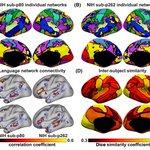
We showed that MS-HBM can reliably estimate individual-specific rs-fMRI networks in drug-resistant epilepsy and that individual-specific language network topography can predict task-fMRI language dominance.


Many thanks again to @ZShaoshi @shreyapande15 @rubykong92 @xueaihuiping @bttyeo Sara and Kareem for all their advice and support on this journey!
Link to paper: onlinelibrary.wiley.com/doi/…

Mervyn Lim retweeted

For those going to @OHBM @OHBM_Trainees you can check out our poster on spectral normative modeling!
Poster Number: 1054
Monday, June 15, 14:45-15:45
Tuesday, June 16, 13:30-14:30
Our preprint has also been massively updated: doi.org/10.1101/2025.01.16.2…


1/ Excited to share our latest preprint! 🚀 We introduce Spectral Normative Modeling (SNM)—a novel approach leveraging graph spectral methods to advance brain charting towards personalized precision medicine.
🔗medrxiv.org/content/10.1101/….

Mervyn Lim retweeted
If you are going to @OHBM @OHBM_Trainees , come check out our poster to estimate & validate individualized brain networks in epilepsy!
Poster Number: 0033
Monday, June 15 | 13:45-14:45
Tuesday, June 16 | 12:30-13:30
The paper has also been published: doi.org/10.1002/epi.70323

Mervyn Lim retweeted
For those attending @OHBM @OHBM_Trainees, come check out our poster finding that functional MRI brain foundation models do not outperform ridge regression for phenotypic prediction
Poster number 2269
Presenting on Wed, June 17 | 12:45-13:45 & Thurs, June 18 | 13:45-14:45


Mervyn Lim retweeted
Openly shared implementation of TMS targeting is still rare, so we are pleased to make ours freely available for research use: github.com/ThomasYeoLab/Kong…
Let us know if you have any issue running it!

Our TMS algorithm is now published in @ImagingNeurosci doi.org/10.1162/IMAG.a.1222
If you are coming to @OHBM @OHBM_Trainees, come check out our poster about our open label trial.
Poster number 1152
Monday, Jun 15 | 14:45-15:45
Tuesday, Jun 16 | 13:30-14:30

Mervyn Lim retweeted
Our TMS algorithm is now published in @ImagingNeurosci doi.org/10.1162/IMAG.a.1222
If you are coming to @OHBM @OHBM_Trainees, come check out our poster about our open label trial.
Poster number 1152
Monday, Jun 15 | 14:45-15:45
Tuesday, Jun 16 | 13:30-14:30
We develop a new TMS targeting algorithm and test it in an open label trial in a treatment-resistant depression population with high comorbidities. Preprints by @rubykong92 @Torphernchern
1. doi.org/10.1101/2025.05.15.6…
2. doi.org/10.64898/2026.01.11.…
Our new approach ...

Mervyn Lim retweeted
If you are attending @OHBM @OHBM_Trainees come by and check out our poster on how excessive censoring hurts parcellation and TMS target accuracy.
Poster number 2399
Presenting on Wednesday, June 17 (12:45-13:45) and Thursday, June 18 (13:45-14:45)

Do you censor high motion frames in fMRI? In two preprints by @twktan @mandyfmejia, we find that we may be censoring too much!
doi.org/10.64898/2026.03.09.…
arxiv.org/html/2603.07380v1
In personalized TMS, strict censoring leads to worse targets than no censoring even with high motion!

Mervyn Lim retweeted
Here's bonus slides on cross-validation tests, separate from our preprint. Covering:
1. paired (sign-flip) permutation test
2. label-swap permutation test
3. sample-level vs fold-averaged stats
4. a common misapplication of the corrected t-test
5. three bootstrap variants 1/N
In a meta-analysis of 210 biomedical AI studies that statistically compared models under cross-validation, 97% used invalid statistical tests.
Here's our new preprint doi.org/10.64898/2026.05.17.… led by @tianchuzeng @kkli20111 @ZShaoshi @ten_photos 1/N

Mervyn Lim retweeted
Once again, @ten_photos came to the rescue - we prayed to him for a better statistical test for k-shot learning (since the corrected t-test is overly conservative in that scenario), and he answered our prayers with a new test that also covers classical cross-validation.

Mervyn Lim retweeted
Cross-validation is widely used to compare predictive performance — not just to benchmark algorithms, but for scientific applications like ranking biomarkers.
But performance across folds isn't independent, so standard tests (e.g. paired t-test) inflate false positives. 2/N

Mervyn Lim retweeted
In a meta-analysis of 210 biomedical AI studies that statistically compared models under cross-validation, 97% used invalid statistical tests.
Here's our new preprint doi.org/10.64898/2026.05.17.… led by @tianchuzeng @kkli20111 @ZShaoshi @ten_photos 1/N
Mervyn Lim retweeted
We develop a new TMS targeting algorithm and test it in an open label trial in a treatment-resistant depression population with high comorbidities. Preprints by @rubykong92 @Torphernchern
1. doi.org/10.1101/2025.05.15.6…
2. doi.org/10.64898/2026.01.11.…
Our new approach ...
Mervyn Lim retweeted
Updated preprint: doi.org/10.1101/2025.04.07.6…
We have improved DELSSOME and showed that we can accelerate the estimation of two new biophysical models. By collating 12,005 individuals, we derive normative trajectories of cortical E/I ratio across the lifespan ...
While the world burns, we cook up a new preprint! doi.org/10.1101/2025.04.07.6…
Biophysical modeling is a key tool to derive mechanistic insights into the brain. These models are governed by biologically meaningful parameters (unlike deep neural nets), but the dirty secret ... 1/N

Mervyn Lim retweeted
Do you censor high motion frames in fMRI? In two preprints by @twktan @mandyfmejia, we find that we may be censoring too much!
doi.org/10.64898/2026.03.09.…
arxiv.org/html/2603.07380v1
In personalized TMS, strict censoring leads to worse targets than no censoring even with high motion!
Mervyn Lim retweeted

📢Specialist healthcare professionals in neurology, neuro-oncology & surgery show positive attitudes toward advance care planning (ACP), but confidence in conducting ACP needs improvement. Training & support can bridge the gap!
🔗 Read more: journals.lww.com/smj/fulltex…
#PalliativeCare #Neurology #Neurosurgery

ALT Associations between ACP knowledge, attitudes and perceptions, and intentions to engage in ACP.
Mervyn Lim retweeted
Thanks to everyone's feedback, we have updated our calculator to optimize sample size N & scan time T for fMRI studies.
The first new feature is that users can explore how different N & T leads to different accuracy, e.g., N=1000 & T=30min => 81% accuracy.🧵

Here's a preliminary release of our calculator to explore sample size and scan time to maximize individual-level prediction accuracy: leonoqr.github.io/ORSP_Calcu…
Let us know if anything is unclear or if there's bugs. Your feedback is welcome. If you find this calculator helpful for your grant application, etc, please also let us know!
Mervyn Lim retweeted
This paper is not that well cited, but still one of my favorite papers showing that resting-state correlations (aka functional connectivity) is biologically meaningful.
(I am not an author)


Mervyn Lim retweeted
Here's a preliminary release of our calculator to explore sample size and scan time to maximize individual-level prediction accuracy: leonoqr.github.io/ORSP_Calcu…
Let us know if anything is unclear or if there's bugs. Your feedback is welcome. If you find this calculator helpful for your grant application, etc, please also let us know!
Super excited about our revised study! 4 more datasets showing robustness across fMRI sequences, racial groups, disorders, lifespan, phenotypic domains & resting/task FC: doi.org/10.1101/2024.02.16.5…
@Leon_Oo1 @ZShaoshi @csabaorban broke the lab's record with a 76-page response!

Mervyn Lim retweeted

Boom! Cerebrospinal fluid (CSF) flow extends to peripheral nerves. Alexander Ligocki, Ed Scott and colleagues @UF @UFHealth blow our minds. New paper @ScienceAdvances. What will we call it now? Cerebro-spinal-nerve fluid (CSNF)? or maybe brain-spinal-nerve fluid (BSN)? Just when you think you have a few ground truths of the brain and nervous system, you are humbled again.
Key Points:
- The authors point out that dogma holds that cerebrospinal fluid is responsible for 'maintaining brain homeostasis through nutrient delivery and waste removal for only the central nervous system.'
- They show extensive CSF flow throughout the peripheral nervous system.
- They traced multimodal 1.9-nanometer gold nanoparticles.
- These nanoparticles were roughly the size of CSF circulating proteins.
- They squirted them into the lateral cerebral ventricle.
-They showed incredibly that the particles transitioned from central to peripheral nervous systems at root attachments and transition zones.
- They showed the particles could make it all the way to the axoplasm of distal peripheral nerves.
- Bigger 15-nanometer gold particles were not able to make the journey.
My take: We know that the nervous system does not contain the more traditional lymphatics and has a force field called the blood brain barrier. We know that CSF delivers nutrients and removes waste from the brain and central nervous system. Our previous ground truth was established by studies using dye tracers. Using small gold nanoparticles these authors 'tore down the dogma.' So the real question is whether it is time for a name change? Cerebrospinal fluid (CSF) or cerebro-spinal-nerve fluid (CSNF)? or maybe brain-spinal-nerve fluid (BSN)? Thoughts? Sartor resartus – the tailor re-tailored our view on this important aspect of neuroscience. BRAVO!
science.org/doi/10.1126/scia… #parkinson #CSF #cerebrospinal #Alzheimers
