

The way we remember isn't static. Neither should an agent's 🧠 Our #MemT Model 👇
Joined December 2025
- Tweets290
- Following34
- Followers3.2K
- Likes95


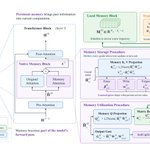



Today, we launched MemT-1.0-Pro #MemT, a memory-native model developed in collaboration with
@NVIDIAAIDev.
Built on NVIDIA Nemotron 3 Ultra, with distributed training powered by NVIDIA Megatron-Core and Megatron Bridge.
Here's how it compares to MemT-1.0-Flash:
🧠 554B parameters with native memory
📈 +4.76 pts on BEAM-1M
📈 +6.51 pts on MemoryAgentBench
Store history in native memory. Use it in later interactions — without keeping the original history in the query context.
Advancing memory for long-horizon AI agents.
🎮 Explore the model: huggingface.co/MemTensor/Mem…
📄 Technical report: arxiv.org/abs/2610.26825

Using a warehouse repair-ticket scenario, this article walks through long-term AI memory's lifecycle with concrete tests at each stage, using MemOS Cloud's async writes and deletion APIs.

1
138
This article defines six responsibilities for production agent memory: workflow state, ingestion, durable storage, retrieval with access control, context assembly, and lifecycle management.

Congratulations @JensenHuang, it's an honor to collab with your wunderschön @NVIDIAAIDev team.
Welcoming everyone to check out our open-source #MemT model built on #NVIDIA Nemotron 3 Ultra and technical report: huggingface.co/MemTensor/Mem…


Today, we launched MemT-1.0-Pro #MemT, a memory-native model developed in collaboration with
@NVIDIAAIDev.
Built on NVIDIA Nemotron 3 Ultra, with distributed training powered by NVIDIA Megatron-Core and Megatron Bridge.
Here's how it compares to MemT-1.0-Flash:
🧠 554B parameters with native memory
📈 +4.76 pts on BEAM-1M
📈 +6.51 pts on MemoryAgentBench
Store history in native memory. Use it in later interactions — without keeping the original history in the query context.
Advancing memory for long-horizon AI agents.
🎮 Explore the model: huggingface.co/MemTensor/Mem…
📄 Technical report: arxiv.org/abs/2610.26825
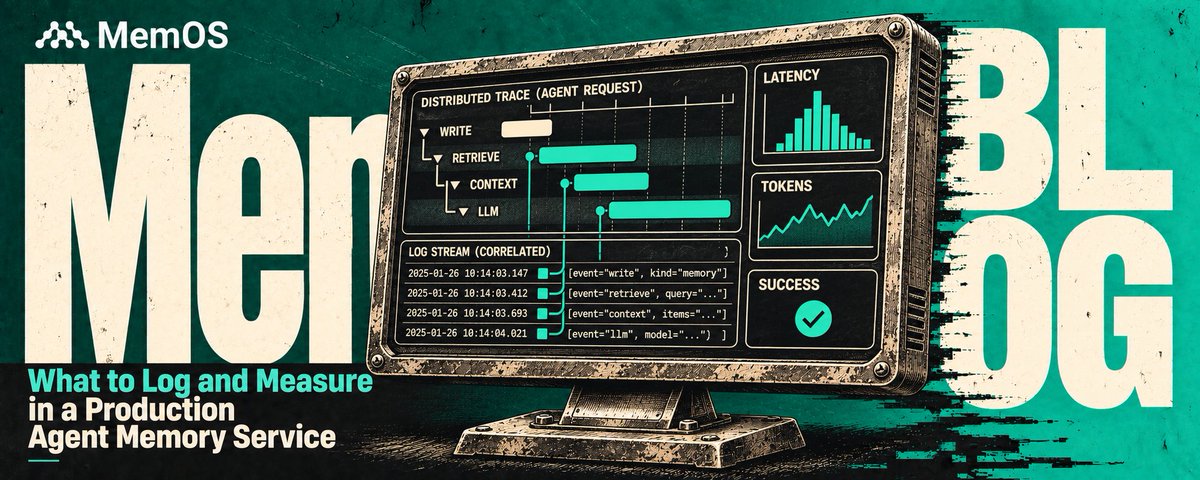
Find out where your agent’s memory workflow breaks. Learn what to log and measure from writes to final actions, spot retrieved memories that never reach the model, and use traces to target improvements in reliability, task success, and cost.
Find the right memory system for your production agent. Compare MemOS Cloud, Mem0, Zep, and LangGraph, then use a practical trial to test—so you can choose with confidence and understand the engineering work ahead.

A shorter prompt isn't the whole saving. Memory pays off only when prepared history is reused enough to cover its cost — and frequent corrections shift the break-even point. Measure total cost per passing task, not per request.

A demo where an agent remembers your name won't show how it handles a policy that changes. Choose a memory framework by the write, retrieve and correct path you're willing to own — then test it by withdrawing a customer's 60-day exception.

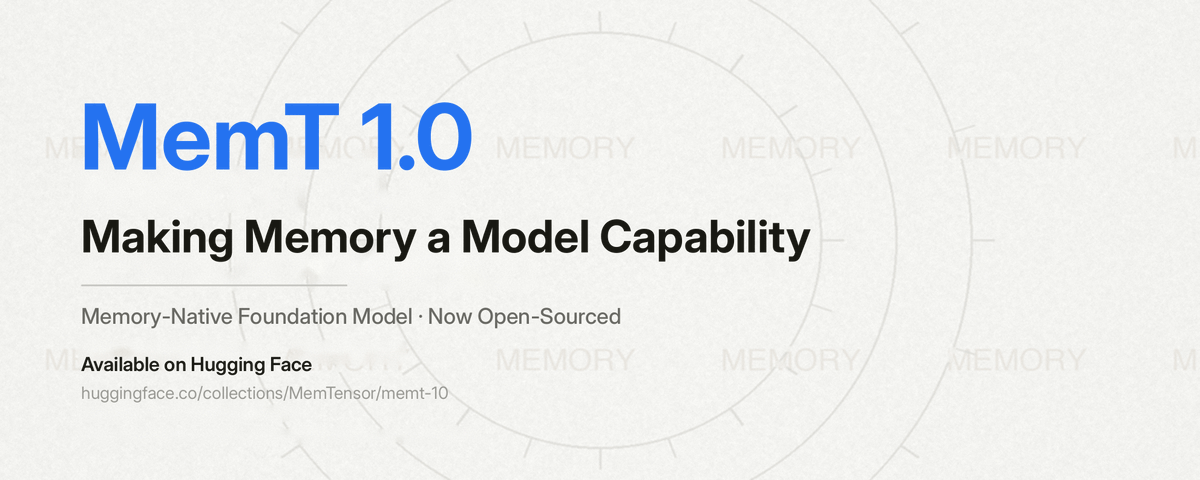
In this article, we introduce MemT 1.0, our open-source memory-native foundation model series, and explore its architecture, benchmark results, coding-agent applications, efficiency gains, and path toward memory-native evolution.
This article presents MemOS for cross‑session agent memory. It outlines key components and cloud APIs to store, fetch, modify and erase memories, alongside test workflows verifying memory behaviors across separate conversations.

This article explains MemOS’s time‑aware memory management. Leveraging metadata and version tracking, it supports direct and conversational corrections, letting agents tell apart up‑to‑date facts from outdated historical records.


Explore the architecture, models, and results.
Code: github.com/MemTensor/MemT-1.…
Models: huggingface.co/collections/M…

Without access to the original history at query time, the two models achieve average scores of 50.6 and 47.0 across 11 memory benchmarks, ranking #1🏅 and #2🥈 among the parametric memory methods evaluated.
We also explore experience reuse in coding agents: retrieved procedural experience is written into internal memory to help the model complete subsequent tasks.

1
3
546
