
Novice Researcher: Peeking over the shoulders of giants | ML, CV PhD student, @EPFL_en | ex-intern @Google AR/VR, Zürich | ex-Research Engineer @MercedesBenz
Switzerland and India
Joined October 2020
- Tweets408
- Following632
- Followers331
- Likes3.8K







Pinned Tweet
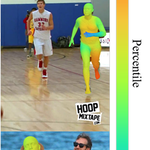
If you use SAM 3D Body for digital humans, robotics, or video generation, we have a cool new plugin for you: CLUE!
CLUE is an easy-to-use plugin (3 lines!) to make SAM 3D Body probabilistic, providing per-vertex uncertainty!
Details, Hugging Face Demo and other stuff in🧵
Megh Shukla retweeted

How long does a finding about LLMs stay true?
We re-tested 50 widely cited findings about LLM behavior (various biases, hallucination, etc). Within 15 months, most no longer held or had substantially reduced effects.
LLM findings has short shelf life zou-group.github.io/llm-clai…
Great job by @oq_35!


Megh Shukla retweeted

1/n Within 15 months of publication, most of the LLM claims we tested either no longer held or showed substantially diminished effects. How long does our knowledge of AI hold up? In our new study, we revisit 50 findings to see what fades, what persists, and what gets stronger. 🧵


😁 This project also marks the completion of my work in uncertainty estimation for digital humans! It started as a production impact at Google AR/VR, to filing a patent, and now releasing a paper. Completed a full R&D cycle with this project, though in a reversed timeline XD
1
1
390
More information in our paper: arxiv.org/abs/2610.24646
Work originated during internship at Google, and continued at EPFL :)

2
365
Megh Shukla retweeted

This semester I am teaching a new course on Agentic Systems, which explores the full stack of AI systems: from building and optimizing agent harnesses to serving and optimizing LLM serving infrastructure.
Students learn by building, measuring, and optimizing real agents and systems, balancing capability, latency, and cost.
Our goal is not just to teach today's AI technologies, but to prepare students to build tomorrow's.
All lectures, readings, and assignments are publicly available at cs2680.seas.harvard.edu
This thread followed by the top-voted response was really informative!
reddit.com/r/ArtificialIntel…

1
228
I don’t remember receiving a thank you email for reviewing before, so this one is greatly appreciated :D

28
1,139
Publications may already lose meaning. From what I heard, CVPR today is not really the same as CVPR a decade ago. Finally, in the absence of pubs, “pedigree” and connections may be the strongest reliable signal for research skills. This makes research less meritocratic…

At this point, "researchers" are basically DDoSing classic academia. It's pretty sad to see. Either someone comes up with, and executes, a CloudFlare for academia, or it's toast.
And the only thing i can think of that might have a chance to scale is more automation combined with a credit/point system like we've discussed a few times here on X over the years, but it needs simultaneous buy-in and coordination from all ~10 major AI conferences and journals, so it's a heavy lift.
But if nothing big happens, i think it's game over soon.

5
546
Megh Shukla retweeted

Wow, I'm honored and humbled that our 2016 perceptual losses paper with @AlexAlahi and @drfeifei was recognized with a Test of Time Award by @eccvconf!
It blows my mind that this is still a core ingredient in many modern pipelines, including the VAEs used in diffusion models


Megh Shukla retweeted

There is a rumor that Anthropic has discovered a non-invasive treatment to totally eradicate all cancers in humans, dogs and cats. It has a 100% success rate.
They plan to announce it at their IPO.
They are finalizing the final proofs and hope that no other competitor is capable of spending a bunch of compute and solve it before their finalized proof.


Megh Shukla retweeted

The naïvete is staggering. People submitting papers they are not capable of understanding will be what drives thoughtful people away from doing science.

Megh Shukla retweeted

Not a critique of the paper, but isn't inductive bias/ regularization the reason for *every* form of generalization?
Neural nets have a number of inductive biases due to the architecture as well as explicit or implicit regularizations.
The mere fact that weight magnitudes are limited (e.g. through regularization) makes the input-output function Lipschitz, which is the property you want to produce a smooth score function.