

GC, @Ethena_Labs | Principal, Rosehill Legal | Not your lawyer, unless I am | Tweets are not legal advice
Joined December 2017
- Tweets17.2K
- Following663
- Followers9.7K
- Likes30.6K








Zach Rosenberg (🥩,🥩) retweeted

Following today's allegations related to another third-party onchain dollar issuer and potential interactions with Lazarus Group and other illicit actors, we have received inbound inquiries from users and partners related to the design of the Ethena mint & redeem mechanism and related smart contracts.
Since inception, the mint & redeem contract for USDe has been designed and implemented as a fully permissioned, whitelist-only, and KYB/C gated system. By design, it is impossible to interact with the contract without passing our KYB/C procedures.
Every market maker and client who interacts with the smart contract is required to undergo rigorous screening for any sanctions and AML related activity, both onchain and offchain, before being granted access.
The contract was designed in this way for two reasons:
i) Security: if the only users who are interacting with the most sensitive piece of the architecture are known KYC approved entities, then the likelihood of any malicious hack on this contract is materially reduced.
ii) KYC & AML Standards: we adhere to what we see as industry standard expectations as an asset issuer to ensure our systems aren't directly accepting illicit funds from or connected to sanctioned entities and counterparties, such as North Korean sanctioned criminal organizations, or otherwise interacting with illicit counterparties e.g., money laundering.
Ethena's KYB/C gated whitelisting design follows the same general system implemented by both Tether and Circle for over a decade.
While permissioned mint & redeem is a less attractive user flow, which has at times been a competitive disadvantage for USDe compared to other products in DeFi, we have never contemplated or allowed for a permissionless mint design due to the obvious risks outlined above.
This is especially true when the collateral being accepted through the mint & redeem contract is then held with regulated custodians who have their own compliance obligations to adhere with and to whom certain representations on KYB/C adherence are required in order to utilize their custody solutions. Exposing regulated custodians to this risk is unacceptable in our view.
Further, as assets that are received via the mint contract are then deployed into regulated products, an improperly managed AML/KYC program can spread contagion to various third parties via commingled collateral pools.
In short, Ethena's design from day one has been implemented to prevent the exact issue reported on today.
For more details on the mint & redemption design and terms please refer to our documentation linked in the tweet below:

EXCLUSIVE: North Korean hackers and other illicit actors routed $518M through Sky’s Peg Stability Module, converting freezable $USDC into unfreezable $DAI and $USDS, with $101.9M directly linked to wallets including those behind the Bybit hack, per Inca Digital.
@sndr_krisztian reports.

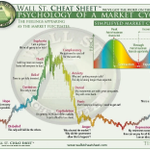
We just need to cool off for the next rally


In the last 4 months, I have not been to a local show where most vendors didn't have several 5+ figure cards in their cases. Not just that, but they have been looking to buy, and buy heavy.
On Sunday - the second day of a two day show in Baltimore - there will still many, many cases with huge cards in them. Vendors were buying pretty much everything they could.
I sold several items, and would have sold more - except vendors were completely out of cash. The last sale I made was to a vendor who needed to borrow from a neighboring vendor to complete the transaction.
Many of the sales I made were at last direct comps, which is unheard of. Why? Everything is going to continue going up. Everyone knows it. You're buying high to sell higher; counting your "fake losses" missed out on selling tons of inventory too early, not making that mistake again. You're all in; paper rich, cash poor. Doesn't matter. You're making it.
Thrill; Euphoria
4/
Zach Rosenberg (🥩,🥩) retweeted

all of the pro data center people have the entirely wrong theory of mind for their opponents
“don’t they know that data centers contribute to local taxes?”
“what if we gave communities free claude code subs?”
“they‘ll want data centers when ai cures cancer!”
too rational. these people think data centers are going to drink all of their water, take their jobs, and kill them.
you need to lie and misdirect.
“data centers use 1 billion gallons of water!” no they don’t. they actually *produce* water. common misconception.
or
it’s not a data center. it’s a very large Raising Cane’s. everyone loves Raising Cane’s.
or
“data centers are increasing our electricity bill!” no that’s joe biden. data centers are toasted.


We’ve got exclusive new polling on local data center development at @heatmap_news.
Over the past year, we’ve asked Americans whether they would support or oppose a data center being built near where they live.
We haven’t changed the wording. When we first polled the question a year ago, Americans were split 43-42 on support/oppose.
When we asked again in Feb, a bare majority opposed data centers.
Today, 75% of Americans say they would oppose a data center being built near where they live, and 61% said they would “strongly oppose” such a proposal.
It’s a swift, massive shift in US public opinion on a scale that I wouldn’t have once thought possible. More details, including the party ID & rural/urban breakdown, in my new story: heatmap.news/daily/data-cent…

Zach Rosenberg (🥩,🥩) retweeted

You’re arguing online with someone who can’t even bench their bodyweight


Zach Rosenberg (🥩,🥩) retweeted

The Digital Chamber is thrilled to welcome @ethena Labs as a new member!
Ethena is a digital asset platform focused on developing globally accessible, crypto-native financial products and infrastructure. Through its synthetic dollar, USDe, and associated infrastructure, Ethena aims to expand access to and utility of digital dollars and enable more efficient movement of capital across centralized and decentralized financial markets.
Post midterms seems like a good time to remind everyone to read these.
These prescient books walk through these cycles in history, explain why they happen, and what we can expect.
a.co/d/098wguHF
a.co/d/0d1xH0Cl

1
386
This is a fair callout (and was a big, weirdly quiet problem for a few years after the Tax Cuts and Jobs Act scaled down bonus depreciation over a period to zero, which was fully reversed by the Big Beautiful Bill).
The one caveat is it's not a loss of a "tax credit" as the OP says. Bonus depreciation is a deduction against taxable income (not a tax credit), which means a company needs taxable income to offset with the deduction for a full benefit to be realized in year one. Without taxable income, the deduction becomes a tax attribute carried forward to offset future income rather than a year one benefit.
For unprofitable companies (like OpenAI and many other AI labs), the loss of bonus depreciation is less of an immediate disincentive. Would hit the hyperscalers much harder.

No one seems to talk about the policy risk at the moment, so I'll have a go.
The current AI buildout is strongly supported by OBBB. The legislation includes various incentives in the form of tax credit, tax deductibles, and subsidies. I believe firms can save at least 15% of the AI CapEx in the presence of OBBB. Actually some incentives are too good to be true. For example, IRC Section 168(k), Permanent 100% Bonus Depreciation works like this. If a firm spends $100B on GPUs, it gets $21B tax credit at year 1. No amortisation what so ever. Much better than $4B a year for 5 years, if the firm can utilise the upfront capital in a profitable way. For hyperscalers and neoclouds, it's stupid not to spend as much now than later. Even if you have to pay higher interest payments, you pay them in several years. Besides, it is far less than the corporate tax rate 21%.
While it is meant to last after Trump's term ends, you never know if Dems might want to repeal it or to scale back certain items. OBBB has temporary provisions as well, which can be stopped early too.
Dems chance of sweeping the House and Senate is very high. Dems fought hard to scale it back last year -- they wanted to spend on health care benefits and climate control instead. If they sweep, they will definitely find their way to get some budget for health care benefits, which means scaling back OBBB. Trump can veto, but he will be a lame duck.
If Dems replace 168(k) with standard MACRS depreciation, for example, hyperscalers and AI labs will have far less appetite for spending upfront. If AI CapEx does get 15% haircut, companies in the AI buildout will have 15% less revenue. EPS will shrink and PE will be inflated.
Probably this is priced in at the moment. There is no other way I can explain the current price level.
AI driven productivity boost is a legitimate chance to bring debt to GDP ratio down. Do Dems care? Their argument might be that if the return of the capital is slow, then the spending has to be reduced. The hyperscalers' earnings this time is critical. $SPCX did very well. I hope $META, $GOOG, $MSFT, $AMZN all print out solid growth on their AI business.
1
3
480
Zach Rosenberg (🥩,🥩) retweeted
The total unrealized PNL exposure to Binance is ~$8.8m, far below the excess reserve fund of >$60m.
All information on the backing collateral and reserve fund can be found in the link below:
app.ethena.fi/dashboards/bac…
Our proof of reserve attestation run by several external parties will be provided in the coming hours and published on this thread.

Zach Rosenberg (🥩,🥩) retweeted
We are of a potential security incident related to Binance.
As a reminder all collateral with exposure to exchanges resides in off- exchange custodians, not directly with the exchange themselves.
As we learn more details on the incident we will provide updates here.
Ethena Labs submitted comments to Treasury on its proposed stablecoin rules under the GENIUS Act. We think Treasury is mostly on the right track. Our main point is simple: leave “payment stablecoin” defined the way Congress defined it, no broader.
1/
Unclear rules push builders offshore. If the lines are drawn clearly, new dollar-adjacent products can be enabled here in the US, with US oversight.
5/
1
5
242
Zach Rosenberg (🥩,🥩) retweeted

Never f*ck with a winning streak...
In this weeks Material Non-Public partner letter, I talk about where all this (new) money is coming from.
read below, txt me thoughts (my cell is in the outro):
materialnonpublic.beehiiv.co…
🫡💸
